BURY ME DEEP, IN A METALLIC CASE (1852)
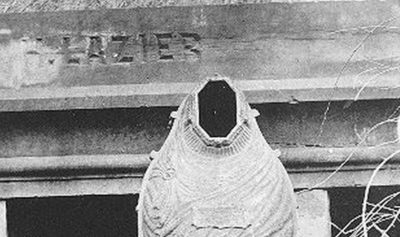
******************************************************************************************************************************** Brownstone Detectives investigates the history of our clients’ homes. The story you are about to read was composed from research conducted in the course of one of those investigations. Do you know the history of YOUR house? ******************************************************************************************************************************** Beware BODY SNATCHERS! Beware GRAVE ROBBERS! BEHOLD, the Fisk Metallic Burial Case! F.A. MORREL, UNDERTAKER AND DISTRIBUTOR, 57 MYRTLE In 1852, a Brooklyn Heights “sexton and general undertaker” by the name of F. A. Morrel, practicing at his “coffin-wareroom” at No. 57 Myrtle Avenue, was promoting to the Brooklyn public the latest design in funerary offerings – the Fisk Metallic Burial Case. Originally designed as a vessel that would keep a dead body from decomposing if the individual had died far from home, the Fisk Metallic Burial Case would soon “take on a new life,” so to speak, for those who wanted their nearby loved ones to keep from rapidly decomposing, as well. For this reason, many Fisk ads promoted their cases for the general preservation of the body – which was important to those whose burial case included a “viewing plate,” allowing for the living relatives to view the departed one’s face. “From a coffin of this description the air may be exhausted so completely as entirely to prevent the decay of the contained body on principles well understood,” noted Fisk’s patent, “or, if preferred, the coffin may be filled with any gas or fluid having the property of preventing putrefaction.” Another of the selling points of these cast iron […]
BURIED ALIVE IN BROOKLYN!
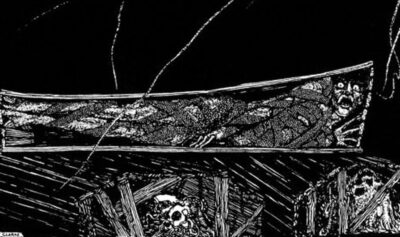
******************************************************************************************************************************** Brownstone Detectives investigates the history of our clients’ homes. The story you are about to read was composed from research conducted in the course of one of those investigations. Do you know the history of YOUR house? ******************************************************************************************************************************** Victorian Brooklyn was mortified at being buried alive. If newspapers and patents together are any indication of an age, then we know the fear was strong. Research performed toward the end of the 19th century indicated that approximately 700+ cases of being buried alive had been documented. Such premature burials apparently took place in nearly every major city, in numerous small towns, and across the world. Whether they were occurring in droves or not, though, was of little import. The overriding principal here was public perception. And the perception was this: Premature burials were happening ALL THE TIME. And perhaps they were. BROOKLYN & NEW YORK TESTAMENTS Brooklyn’s most famous case of being buried alive involved a Manhattan woman by the name of Virginia McDonald, who, after she had perished, was brought to Brooklyn and buried in Green-Wood Cemetery. The young woman’s mother, though, had “had a presentiment, shortly after her burial, that she was still alive.” The thought ate at the woman for some time until she decided to share her fears with her family members. They understandably attempted to assuage her, even resorting to joking with her when she could not be consoled. Finally, to settle her doubts, they had the casket opened for their mother. “The body was […]
THE CHANGING FACE OF MACON STREET (1908)
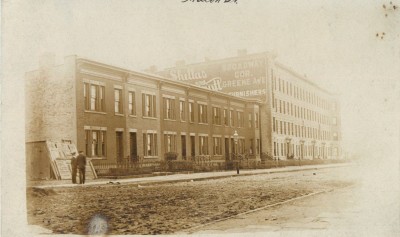
******************************************************************************************************************************** Brownstone Detectives investigates the history of our clients’ homes. The story you are about to read was composed from research conducted in the course of one of those investigations. Do you know the history of YOUR house? ******************************************************************************************************************************** While researching the history a local brownstone, we located an old postcard of a street in Bedford-Stuyvesant. The sepia paper photograph gives an idea of the innate promise of the neighborhood back in 1908 as it was still being built up with new brownstones, limestones, and rowhouses. That picture postcard, featured above, shows a stretch of Macon Street – replete with newly built rowhouses – that starts at the back of the Saratoga Library on Thomas S. Boyland Street (then, it was Hopkinson Avenue), and ends about halfway down the block before reaching a row of barrel-fronted 2-family houses and the one-time parking garage at the corner of Saratoga Avenue (now the Shirley Chisholm Day Care Center). Interestingly, this part of Macon Street still had its dirt (mud on rainy days) street as late as 1908. Residents of the area had been complaining to the City of Brooklyn (by 1908, the borough of Brooklyn) since the 1890s about the slow pace of street paving in the district. Home building had gone on at such a fast clip during this period that the city had struggled to keep up with the builders. The houses that are the focal point of the snapshot were the first put up on the block – what […]
WHEN SARATOGA AVENUE WAS YOUNG (1899)
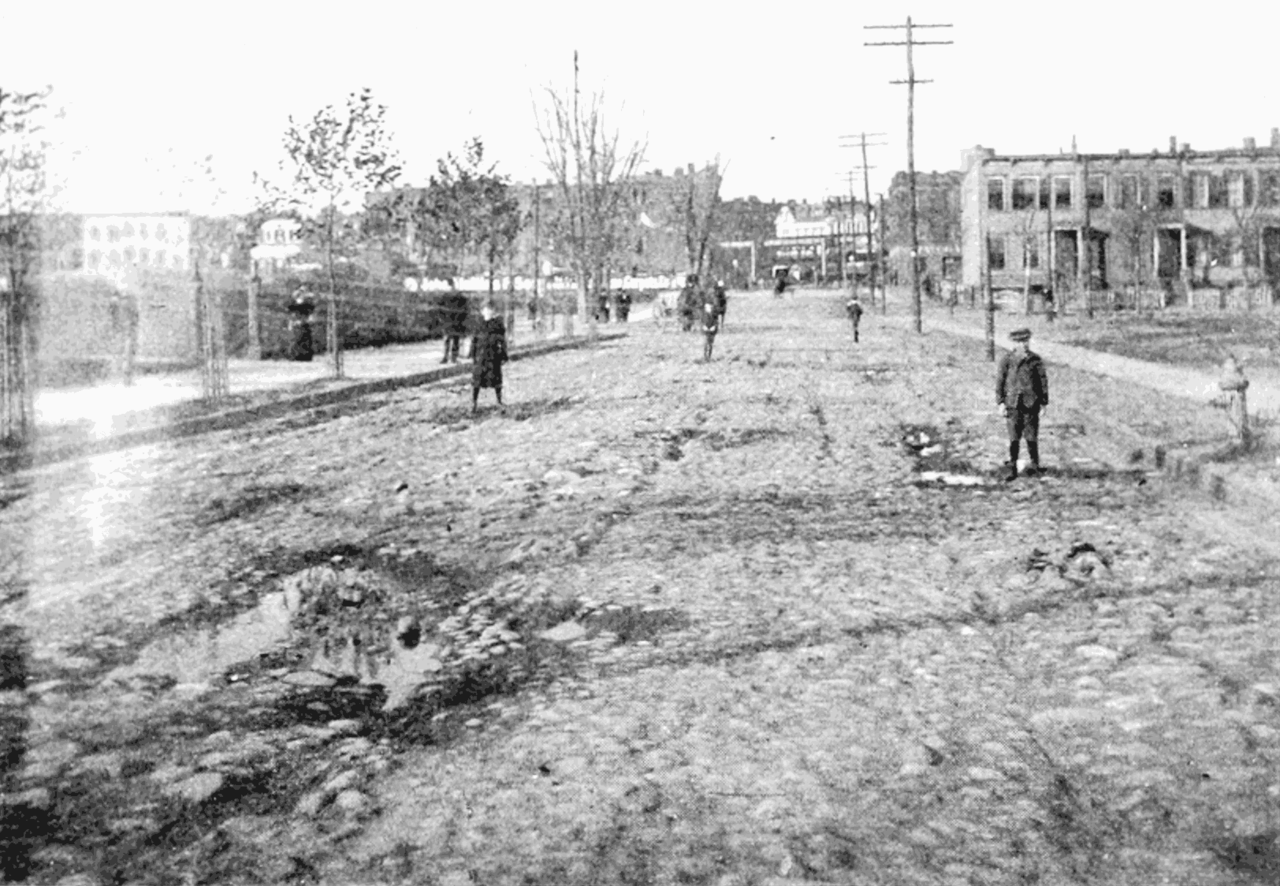
******************************************************************************************************************************** Brownstone Detectives investigates the history of our clients’ homes. The story you are about to read was composed from research conducted in the course of one of those investigations. Do you know the history of YOUR house? ******************************************************************************************************************************** We’d never seen this 1899 picture before – the cobblestones of Saratoga Avenue – taken from Macon Street looking north. To the left you see the gates of the 3-year old Saratoga Square Park and to the right, what was known then as Saratoga Field. A few years before this shot was taken, you would have seen the circus and the various Wild West shows of the time camping out on these two blocks, attracting crowds of people from miles around to the neighborhood. In the distance, you can see the elevated Brooklyn Rapid Transit track, known around this time as the Broadway Elevated, which had opened in 1893 and was a 2-track line at the time. That’s right – no express! And staring back at you are some of the folks who lived and played in the area. It appears from the shot that they were positioned by the photographer. They’re all standing still and upright. Across the street from the park (on the right side of the photograph) would soon be built the Arcadia Dancehall, a “modern dancehall for working girls,” where the modern dances of the day – such as the Bunny Hug and the Tango – were forbidden. Vice President Calvin Coolidge and Teddy Roosevelt’s son, Theodore, […]
A SPOTLESS TOWN IN SPOTTY CROW HILL (1903)
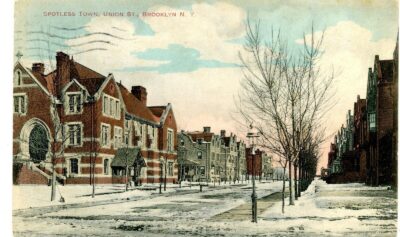
******************************************************************************************************************************** Brownstone Detectives investigates the history of our clients’ homes. The story you are about to read was composed from research conducted in the course of one of those investigations. ******************************************************************************************************************************** It was a novelty back then. An entire block of newly built houses was connected with underground cast iron heating pipes. “They’re all heated from a central heating plant,” the ad for the new houses stated. “To be free from worrying about the heating of one’s house is a blessing that you’ll appreciate.” “SPOTLESS TOWN” Frederick W. Rowe built them, and may have been inspired to use the name by a recent Broadway musical of the same title (which incidentally featured “a pair of midgets in a baby elephant costume and a dog trained to grab culprits by the seat of the pants” – it closed after one week). Who could fail, though, to see the sense of using a known name – one which, additionally, augured cleanliness?. Buyers were more and more attracted by the new homes being built in this “Eastern Parkway” section of town. Previously known as Crow Hill, comprised of a collection of shanties and pig sties, it entered a transitional stage and would later become the upper middle class Crown Heights around 1915. And these buyers were less and less interested in living in homes that already existed in the older areas – that were…well….less spotless. So the choice of name seemed appropriate for marketing purposes. BUT…CENTRAL HEATING??? By 1903, while central heating of […]
ROMEO & JULIET “COME TO” BROOKLYN (1866)
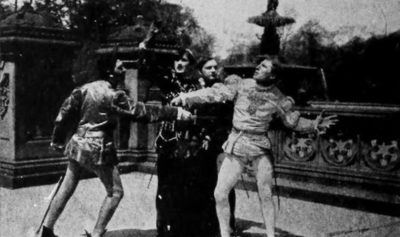
******************************************************************************************************************************** Brownstone Detectives investigates the history of our clients’ homes. The story you are about to read was composed from research conducted in the course of one of those investigations. Do you know the history of YOUR house? ******************************************************************************************************************************** The City of Brooklyn’s street grid system was still in its infancy in 1860, some 25 years after it had originally been laid out in Brooklyn maps in 1835. As builders began to buy up land, and as city elders watched the progress of speculative construction move continuously eastwards, it became apparent that some adjustments to the street grid were going to be necessary. SHAKESPEARE TO THE RESCUE Throughout the early 1860s, various New York State legislators from Kings County – likely in consultation with builders, land owners, and lawyers – began to plan these adjustments. These adjustments would come into being in two ways: 1) as extensions of certain streets through land that had originally been planned for building purposes, as well as 2) the closures of certain other portions of streets that had made other parcels of land unusable for building purposes. Thus, a legislative amendment to the Commissioners’ Map of the City of Brooklyn was in the works, and Brooklyn senators, having consulted professionals on the proposed changes, got to work on the wording to make the needed adjustments. In the end, six adjustments would be proposed – one of which was the creation of the very Shakespearean street moniker, Verona Place. “WHAT’S IN A NAME?” Considering the […]


