THE LURE OF A MAID’S TOILET (1907)
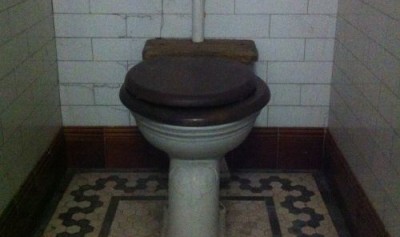
******************************************************************************************************************************** Brownstone Detectives investigates the history of our clients’ homes. The story you are about to read was composed from research conducted in the course of one of those investigations. Do you know the history of YOUR house? ******************************************************************************************************************************** As Bay Ridge developed in the early 20th century, and residents moved deeper into South Brooklyn, developers used some intriguing townhouse features to lure buyers to the section of Brooklyn. One of those features was a dedicated commode. SELLING BAY RIDGE With an open-carriage automobile of the period parked purposefully outside these new “one family stone houses,” the Bay Ridge Development Company confidently announced in their advertisement that it was building “the entire block on Seventy-fifth St. Parkway, Between 4th and 5th Aves.” Bay Ridge was becoming the latest new neighborhood around this time, as developers expanded out from the Park Slope area further south through open fields and towards the city’s pleasure grounds – Coney Island. Suddenly, those fields were becoming more and more attractive as speculators snatched up lots and blocks and began construction. The houses in this particular ad were all “of 7 rooms, bath, laundry,” and included a feature which dictated the class of these structures and their prime location – one which no well-heeled buyer could fail to notice – a “maid’s toilet.” The houses’s other features were “hardwood trim, attractively planned, superbly built,” and one that was rather recent for the time – “electric lights.” The company also offered two choices in ranges – both […]
HE KNOWS HIS JEWELS ARE SAFE (1892)
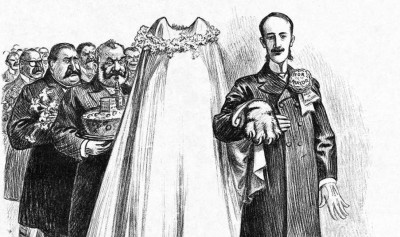
******************************************************************************************************************************** Brownstone Detectives investigates the history of our clients’ homes. The story you are about to read was composed from research conducted in the course of one of those investigations. Do you know the history of YOUR house? ******************************************************************************************************************************** When the daughter of a Tammany Hall “boss” is married, how does the new son-in-law protect their wedding gifts? By installing a jewel vault in the cellar of his brownstone, of course! THE JEWEL VAULT ON WASHINGTON PARK When Dr. Alexander F. Carroll married the eldest daughter of Brooklyn Democratic Boss, Hugh McLaughlin, in 1890, the New York Times reported that the “wedding gifts were of the most costly and elaborate nature.” “So valuable were they,” New York’s paper of record continued, “that when Mr. and Mrs. Carroll moved to their Washington Park home they had a great burglar-proof vault built under the sidewalk.” Apparently, all of the Boss’s numerous friends and supporters “remembered the happy couple substantially” which presented them with a good problem to have – how to safeguard their extreme amount of new-found jewel wealth. A list of the bridal presents “covered three columns in the Eagle,” noted The New York Sun, the presenters of which included then-President Cleveland. The value of the gifts were variously estimated at “from $100,000 to $200,000.” Mrs. Carroll was “very much worried because she has had to keep the mass of gold and silver received at the time of her marriage in the house and has had private detectives watching the premises.” […]
THE EFFECTS OF WAR ON BED-STUY (1918)
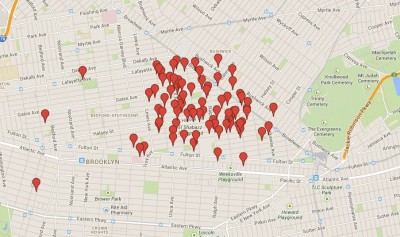
******************************************************************************************************************************** Brownstone Detectives investigates the history of our clients’ homes. The story you are about to read was composed from research conducted in the course of one of those investigations. Do you know the history of YOUR house? ******************************************************************************************************************************** During the brief period that the U.S. was engaged in WWI, the eastern section of Brooklyn’s Stuyvesant Heights section was decimated by its contribution of men to the war effort. Then, it was decimated a second time by the generous contribution it made of many of these mens’ lives. According to the honor rolls of the “Victory & Peace” memorial in Saratoga Park, approximately 105 men (and one woman) from the neighborhood made the ultimate sacrifice. There was a death on nearly every block of the district – often more. The MAP above shows with red pins the locations where some of these men lived – many of them who had left new wives, parents, and families waiting for them back home. The servicemembers, represented on this map by these red dots, never made it back home, though. Most were buried in American Cemeteries in France; some were re-buried here in the U.S. After the war, the Gold Star Mothers pilgrimages began to take place, as thousands of the mothers of these servicemembers made the government-sponsored trips to France in order to visit the last resting places of their children. Today, the specific memories of these citizens who grew up together, went to school together, played, learned, and competed together here […]
FINDING YOUR BROWNSTONE – IN 1924
******************************************************************************************************************************** Brownstone Detectives investigates the history of our clients’ homes. The story you are about to read was composed from research conducted in the course of one of those investigations. Do you know the history of YOUR house? ******************************************************************************************************************************** Have you ever wondered what your neighborhood looked like in 1924? Or 1951? Or 1996? Aerial photography exists of all of New York City’s neighborhoods and is available to view (and zoom in on!) for free just by visiting NYC Map (a service of the City of New York). Simply type your address in the box at the top of the page and click “Search.” Then – in the upper right hand corner of the map – click on “Map Type,” and select the year you would like to view. Here is a view of Stuyvesant East in Bedford-Stuyvesant (showing Saratoga Park) in 1924. As you might have guessed, you won’t be able to see the expressions on peoples’ faces with this imagery, but it will give you a good indication of what your neighborhood looked like in any of these years. For comparison’s sake, here is a view of the same section of Bedford-Stuyvesant (as above) – but for 1996. What differences do you note between the two pictures? Comparing the two maps, you can see some obvious changes. Other than the fact that the second image is in color and was apparently taken in the winter time, if you look closely, you can see how whole swaths of brownstones […]
SO, A TROLLEY WALKS INTO A BODEGA…. (1931)
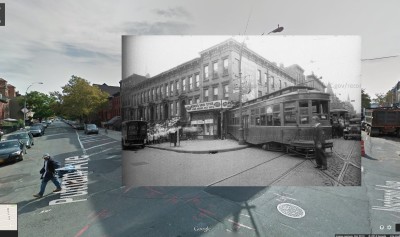
******************************************************************************************************************************** Brownstone Detectives investigates the history of our clients’ homes. The story you are about to read was composed from research conducted in the course of one of those investigations. Do you know the history of YOUR house? ******************************************************************************************************************************** We’ve all heard the famous opening line to the joke. But this one really happened. Rather, the streetcar “rolled” into the business, but only after jumping its tracks. This incident took place on 7 July 1931, at the corner of Putnam and Nostrand avenues in the Bedford-Stuyvesant section of Brooklyn. Fortunately, no one was killed, although six people were injured. Unfortunately, though, streetcar accidents had become a common occurrence in the days after streetcars stopped using horses for propulsion. And this was all too evident in Brooklyn, for within the past week, alone, four other streetcar crashes had occurred, injuring a total of 31 people. As a matter of fact, this was the final straw for Brooklyn’s D.A., who ordered an investigation into the “six B.M.T. trolley car accidents in the past few weeks.” His intention was “to determine whether or not there is cause for criminal proceedings.” It would have been understandable among many Brooklynites of the period if there were talk about returning the streetcar to the horse. For another story we’ve written about streetcars jumping their tracks, click HERE. Follow @BrownstoneDetec Share ———————————————————————————————————————– The Brownstone Detectives Brownstone Detectives is an historic property research agency. Our mission is to document and save the histories of our clients’ homes. From […]
THE PSYCHE OF No. 192 ST. JOHN’S PL. (1889)
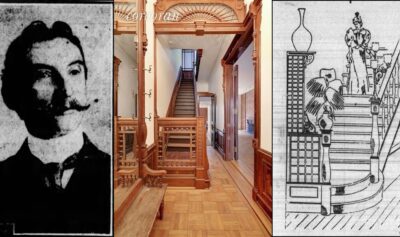
******************************************************************************************************************************** Brownstone Detectives investigates the history of our clients’ homes. The story you are about to read was composed from research conducted in the course of one of those investigations. Do you know the history of YOUR house? ******************************************************************************************************************************** Starting in the late 1880s, the Brooklyn Daily Eagle started a series of articles which described – in great length and detail – the interiors of individual newly-built or renovated houses. These houses were usually brownstones belonging to those affluent or upper-middle-class members of society. Not only did such articles describing the interiors of neighbors’ homes sell newspapers, but the articles also served as advertising directed at those in the market for a townhouse who wanted a home of their own. These advertisement-articles were placed, likely at the expense of the designers responsible for the “interior decorations” being described, as each piece often ended with what readers wanted to know: “Who did the work?” “THE WORK WAS DONE BY A. KORBER” Albert Korber, who went by “A. Korber,” was an architect and designer who settled in Brooklyn at the age of 15. Three years later he “started business on Adams street as a manufacturer of picture frames and moldings. Several years later he founded the decorating business which bears his name, with showrooms on Montague street and a factory for the manufacture of interior woodwork and furniture in South Brooklyn.” By 1889, Korber was 42, a successful decorator throughout the City of Brooklyn. Although he was held in high esteem for […]


