FINDING HISTORICAL PICS OF YOUR NYC BLOCK
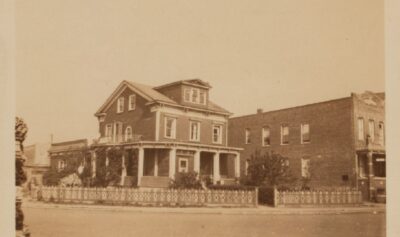
******************************************************************************************************************************** Brownstone Detectives investigates the history of our clients’ homes. The story you are about to read was composed from research conducted in the course of one of those investigations. Do you know the history of YOUR house? ******************************************************************************************************************************** Have you ever wondered what your block looked like 100 years ago? Well, now’s your chance to find out! Using a new website called OLDNYC, the opportunity is yours to try and locate historic New York City photos by location. The project, created by Dan Vanderkam in collaboration with the New York Public Library (NYPL), makes historic photographs (all pre-loaded and locate-able by an interactive map of the city) accessible by using a map. To find pics from your neighborhood, simply locate your neighborhood or street on the map and look for the red dots – which indicate that there are pictures available for these locations. The top right snapshot is one that we found of a row of houses near the intersection of Saratoga Avenue and Decatur Street, in the Ocean Hill section of Bedford-Stuyvesant. Below that is what this stretch of block looks like today. Vanderkam describes his site as “an alternative way of browsing the NYPL’s incredible Photographic Views of New York City, 1870s-1970s collection.” “Its goal,” he continues “is to help you discover the history behind the places you see every day.” Quite an admirable offering and a great way to access NYPL’s extensive collection of old photographs. This is going to be a valuable website for […]
THE FLIGHT OF MOSES MAY’S MAD COW (1865)
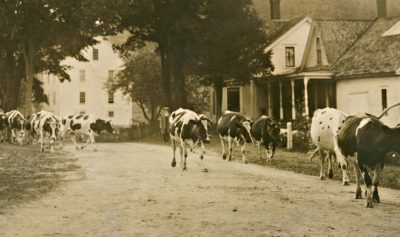
******************************************************************************************************************************** Brownstone Detectives investigates the history of our clients’ homes. The story you are about to read was composed from research conducted in the course of one of those investigations. Do you know the history of YOUR house? ******************************************************************************************************************************** Enjoy this old story about some Brooklyn cows getting loose outside of their normal environs – which, back in old Brooklyn, were quite often our city streets. While doing house research, we found a colorful little story in the Brooklyn Daily Eagle of 1865. It involves two Germans and an Irishman, as well as a supporting cast of a number of primarily immigrant Brooklynites. The story is led by a main character – a pretty “mad cow” – the kind with horns – that went rushing down Bushwick Avenue, having to be taken down by a “citizen,” whereupon it was delivered to a local slaughterhouse for gutting and the production of many sides of meat. Although the article does not expressly state such – stories from this period were famously short on important details – it appears that the original owner lost his cow to a number of very hungry Bushwick pre-hipster citizens. THE FLIGHT OF MAD BESSIE DOWN A VERY BUSY BUSHWICK To set the scene, it all started at about 4 p.m. on Bushwick Avenue in the 16th Ward. Mr. Moses May, a German immigrant of 136 Remsen Street, was driving a drove of cattle along the avenue, after a long day of their bovine grazing in a field, […]
HOW A CENSUS-TAKER SAVED OUR BLOCK (1900)
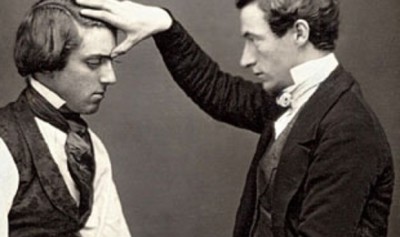
******************************************************************************************************************************** Brownstone Detectives investigates the history of our clients’ homes. The story you are about to read was composed from research conducted in the course of one of those investigations. Do you know the history of YOUR house? ******************************************************************************************************************************** I can tell you a little bit about every single family on my block. Well, not the present day families, of course – that might be a little creepy. Actually, it is a lot easier to extract such personal information about the families that lived on my block more than 100 years ago – in the year 1900. No, I am not a mesmerist or paranormal investigator. I don’t read cards or tea leaves. Nor do I make tables float or ask the spirit guides to knock in answer to my questions. I happen to use a less fantastic, more pedestrian source for this type of information for my answers. For, you see, I am a Brownstone Detective – and I use the 1900 Federal Census. I’M FROM THE FEDERAL GOVERNMENT AND I’M HERE TO HELP. The founders of our Federal government in the 18th century demanded that a decennial census be instituted. The demand was delineated within the U.S. Constitution, and the first attempt at listing Americans took place in 1790. The State of New York decided, too, that knowing who lived within its political boundaries was important. And so the state also began taking its own census in 1825. It was a decennial census, as well, which, in order […]
HORSEWHIPS, HARLEYS & HEROES ON CLASSON
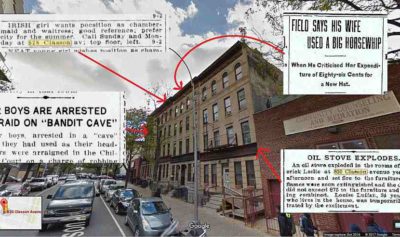
******************************************************************************************************************************** Brownstone Detectives investigates the history of our clients’ homes. The story you are about to read was composed from research conducted in the course of one of those investigations. Do you know the history of YOUR house? ******************************************************************************************************************************** “Every house has a story to tell.” That is how the Brownstone Detectives visualizes every structure, building, and house – as historical repositories for their human narratives. And the Brownstone Detectives, a for-hire historical research team, has investigated many of the stories that are a part of these narratives. And Brownstone Detectives has literally seen them all – from accounts concerning a house’s residents (unrequited love, murder, discrimination, &c.) to those involving the buildings themselves (explosions, fires, hidden rooms, &c.). “If you’re sitting in an old house right now – anywhere in this country – the human drama that’s taken place all around you would surprise the heck out of you,” said lead detective Brian Hartig. …NOW TO THOSE HORSEWHIPS… To give an example of the veritable goldmine of stories linked to every Brooklyn house, the detectives recently scratched the surface on a row of four connected tenement buildings in the Prospect Heights section of Brooklyn. The brick and brownstone tenement buildings at Nos. 820-832 Classon Avenue display a cross-section of the colorful tales that newspapers used to cover in their beats. In fact, due to the transient nature of the residents of these specific buildings over the 120 years of their existence, these structures hold an even larger number of the […]
TO DENY A “COLORED” BLOCK PARTY (1920)
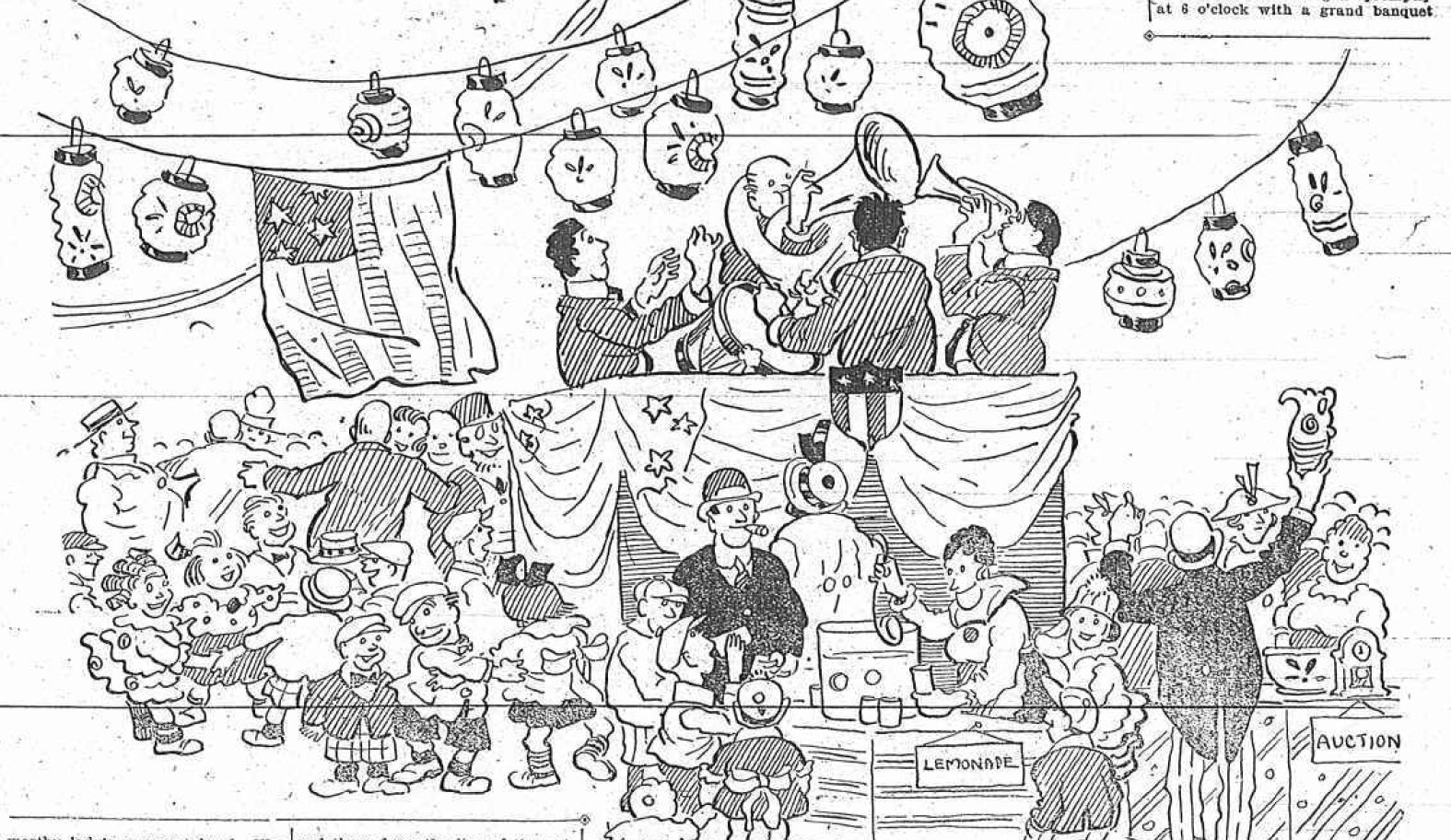
******************************************************************************************************************************** Brownstone Detectives investigates the history of our clients’ homes. The story you are about to read was composed from research conducted in the course of one of those investigations. Do you know the history of YOUR house? ******************************************************************************************************************************** Block party season upon us. It is a time of blocked-off streets, replete with the sounds of children happily playing, the smells of barbecues up and down the block, and carefree feelings of the beginning of summer. But this is also a time to remember some freedoms that were not always available to certain citizens – those freedoms for which struggles were necessary that they may be obtained. As such, it is instructive to remember how one group of people was often at the mercy of the whims of another. This story tells a tale that took place in 1920 when block party permits were not always so easy to obtain, particularly when the freedoms of those in the minority were proscribed by those in the majority… THE TRICKLE STARTS… In the mid-1930s, after the “A Train” had been extended into Brooklyn, African-Americans began to move in large numbers from Harlem into Bedford-Stuyvesant. Although the Eighth Avenue Express was the vehicle for that migration, the impetus was a desire for less crowded neighborhoods, more plentiful jobs (at the Brooklyn Navy Yard), and better housing conditions. The trickle that started this migration, though, began about 10 to 20 years earlier as African-American professionals of southern and Caribbean descent made their way to […]
THE DAY RIOTERS STORMED BROOKLYN (1895)
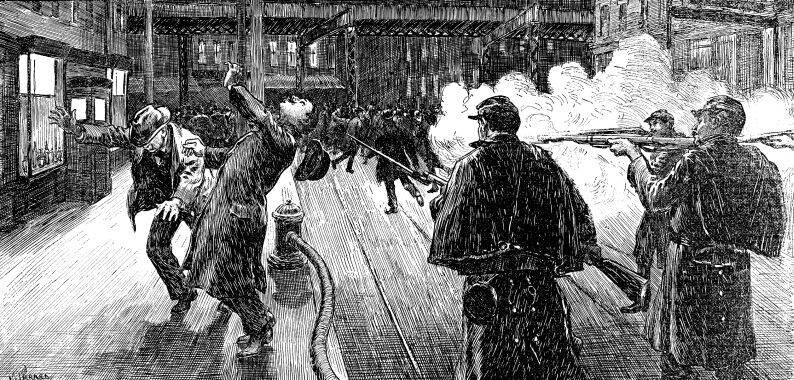
******************************************************************************************************************************** Brownstone Detectives investigates the history of our clients’ homes. The story you are about to read was composed from research conducted in the course of one of those investigations. Do you know the history of YOUR house? ******************************************************************************************************************************** (The above picture shows the New York State militia shooting a man on Halsey Street, near the corner of Broadway. You can see the recently erected elevated train line at the end of the block.) In 1895, Halsey Street near Saratoga Park had become a war zone. The Brooklyn Streetcar strike had begun on 15 January, and before the week was over the agitation would be in full force. The strike, which began with a walkout, would quickly devolve into a pitched battle between the Knights of Labor and streetcar workers on one side and the streetcar line owners, the police and the New York State Militia on the other. The main focus of much of the strikers’ attention in this part of Brooklyn, though, was the Halsey Street Rail Road Barns. These, located near the corner of Halsey Street and Broadway, were where the streetcar line stored its cars, quartered its horses, and from whence the line’s streetcars were dispatched. After the workers had called the strike, 5,500 of them would walk off the job for better conditions. The streetcar line owners (the lines were privately owned and operated at the time) countered this strike by calling in scabs who would attempt to operate the streetcars in the workers’ absence. […]


