SUBWAY DIGGING – GRAND ARMY PLAZA (1914)
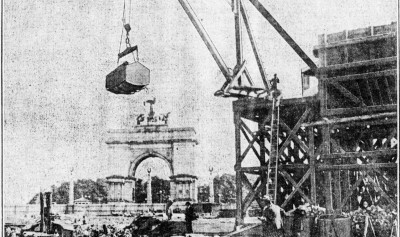
“Dirt is beginning to fly with telling effect in the excavations for the extension of the subway through Flatbush Avenue and out Eastern parkway,” noted the Brooklyn Daily Eagle in their 30 August 1914 edition. “The Above picture shows the big steam shovel at work close to the sailors and soldiers Monument at the Plaza of Prospect Park. Which is seen in the background. This excavation of the present subway will be constructed faster than the Fourth Avenue line has been because there are neither troubles about obtaining title to abutting lands nor the physical difficulties which reset the Fulton Street section of the Fourth Avenue line.” Follow @BrownstoneDetec ———————————————————————————————————————– The Brownstone Detectives The story you have just read was composed from extensive historical research conducted by The Brownstone Detectives. Our clients commission us to investigate the history of their – or their clients’ – historic properties. From our findings, we produce their very own hardbound House History Books. Our books are professionally written and laid out, containing illustrated and colorful narratives that bring the history of any house to life. Contact us today to begin discovering the history of your home.
The Reincarnation of Teddy Roosevelt (1912)
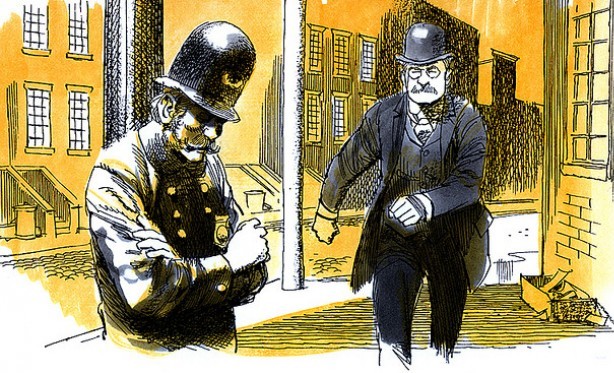
******************************************************************************************************************************** Brownstone Detectives investigates the history of our clients’ homes. The story you are about to read was composed from research conducted in the course of one of those investigations. Do you know the history of YOUR house? ******************************************************************************************************************************** 1 April 1912 – Brooklyn, N.Y. – A well-dressed man appeared in Brooklyn Police Headquarters two hours before sunrise on the 1st of April and, after introducing himself as the reincarnation of Theodore Roosevelt, “promptly dismissed all the lieutenants, detectives and policemen in the structure from the Police Department. “What appeared to be a merry jest on the part of the stranger was enjoyed until he attempted by rather progressive and aggressive tactics to yank some of the lieutenants out of the chairs and hurl them into the street in order to show his word must be obeyed,” The Evening Telegram of 1 April 1912 observed. “It then dawned on the smiling lieutenants, detectives and policemen that the reincarnation of the Rough Rider was not in any sense an April Fool joker.” “Teddy” – or Joseph Condon, of No. 142 Atlantic Avenue – was evidently very much under the impression, though, that he was – if not Theodore Roosevelt, himself – the reincarnation of same. “Roosevelt” thereupon imposed a three months’ fine on Policeman Franklin and then assigned him to Tottenville, Staten Island. When Franklin asked “Teddy” to show him the way there, Condon said he would not go until the dismissed lieutenants, detectives and policemen had left the building. After […]
THE TRAIN THAT RAN ABOVE LEXINGTON (1947)
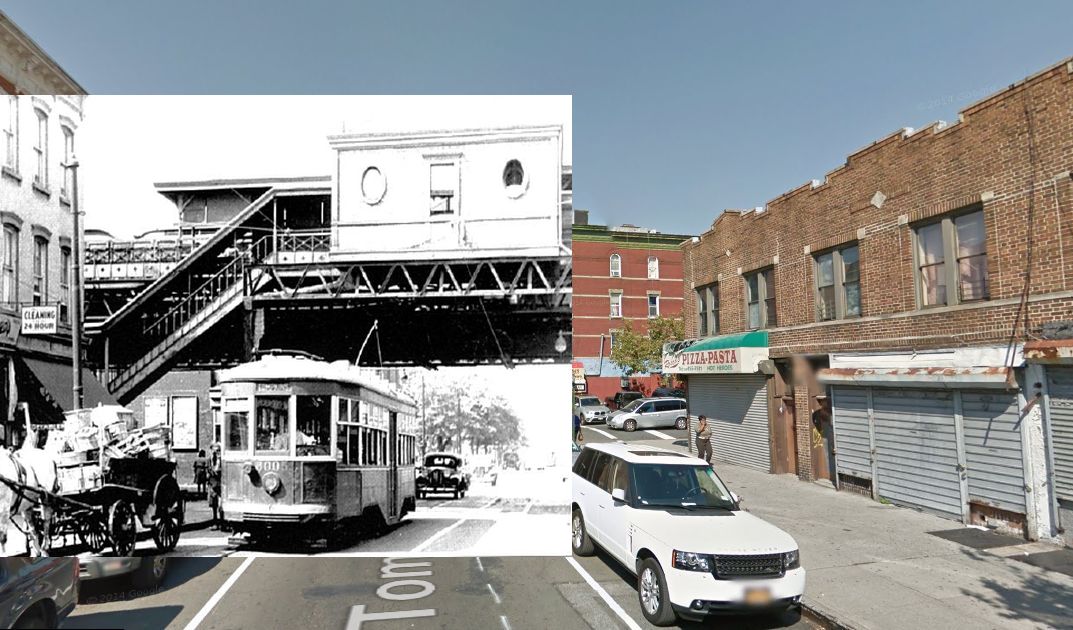
******************************************************************************************************************************** Brownstone Detectives investigates the history of our clients’ homes. The story you are about to read was composed from research conducted in the course of one of those investigations. Do you know the history of YOUR house? ******************************************************************************************************************************** Yes, there not only used to be a streetcar running down Tompkins Avenue in Bedford-Stuyvesant, but Lexington also at one time had sported its very own elevated subway train. Opening in 1885, the Lexington elevated train was in the vanguard of bringing owners and potential homebuyers to the Bedford and Stuyvesant Heights areas. The Lexington Avenue “el,” as it was called, split from the Myrtle Avenue elevated (yes, there was one up there, too) at Grand Avenue, where it headed down to Lexington then turned east and headed in the direction of Broadway. Taken in 1947, this picture shows the confluence of these two avenues and forms of transportation. You can also see automobiles of the period and an anachronism – even for the times – a horse with its cart parked along Tompkins. A few years after this picture was taken, demolition began on the elevated line. Read more about this line (and how long traces of it existed even after it had been demolished) on Forgotten New York. Follow @BrownstoneDetec Share ———————————————————————————————————————– The Brownstone Detectives Brownstone Detectives is an historic property research agency. Our mission is to document and save the histories of our clients’ homes. From our research, we produce our celebrated House History Books and House History […]
THE DIRTY, JERKY, FOUL “L” TRAIN (1892)
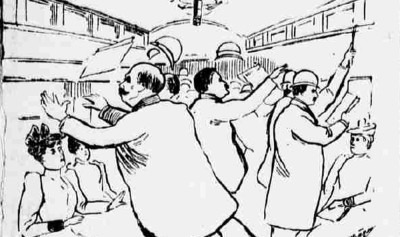
******************************************************************************************************************************** Brownstone Detectives investigates the history of our clients’ homes. The story you are about to read was composed from research conducted in the course of one of those investigations. Do you know the history of YOUR house? ********************************************************************************************************************************In 1892, the “L” Train was killing Brooklynites. At least that’s the impression you would have gotten if you were to read Joseph Pulitzer’s New York World in the early 1890s. The campaign that the newspaper developed to improve elevated service would have had you believe that the elevated train (the “L”) – which delivered passengers from the Brooklyn Bridge to their homes throughout the borough (and vice versa) – was just as liable to kill you as to get you safely home. If you had spoken to an “L” Train rider back then, too, you would have had further proof that all of this was true. Today, while the mode of travel and the specifics thereof, at their base, are different from those which we have at our disposal, many straphangers’ complaints concerning the slowness of the subway, the dirtiness of the cars and stations, and the lack of train cars, ring as true today as they did 125 years ago. Which begs the question, “Has anything really changed?” Here follows some of the prize-winning….ahem…..yellow journalism illustrations that may better illustrate the problems existent in 1892. “The crowding and pushing that you have witnessed to-night could be avoided if the Company would only put on more trains,” stated one rider. “I […]
DID YOUR BROOKLYN STREET FLOOD? (1912)
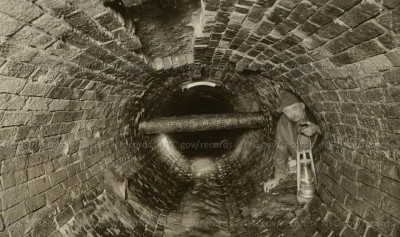
******************************************************************************************************************************** Brownstone Detectives investigates the history of our clients’ homes. The story you are about to read was composed from research conducted in the course of one of those investigations. Do you know the history of YOUR house? ******************************************************************************************************************************** By 1912, Brooklyn was drowning in rain water. The borough, by then, had installed so many more miles of cobblestone, macadam, and otherwise improved roads – than at any time in its past – that many of its streets would flood at the very hint of precipitation. In 1903, for example, the flooding was so bad that the Brooklyn Daily Eagle reported that “All the residences along Hancock, McDonough, Macon, Decatur, Bainbridge and Chauncey Streets were so flooded that residents on the ground floor apartments discovered upon waking that they were forced to go to the second floors to escape the waters.” The paths in Saratoga Park, according to one newspaper account, “had become running streams and benches were floating about.” The nearby Putnam and Halsey streetcars stopped running, as “it was impossible to take on any passengers, as the water was as high as the seats.” Thus, there finally came such an outcry from residents, who lived on the streets most prone to flooding, that the City decided to introduce more sewer lines to catch that water. At that time, to get an idea of what they were dealing with, the city sent out a small army of surveyors to gauge the lower lying areas of the city, so that […]
EDNA EGBERT BATTLES THE POLICE (1942)
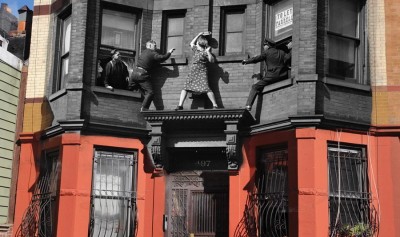
******************************************************************************************************************************** Brownstone Detectives investigates the history of our clients’ homes. The story you are about to read was composed from research conducted in the course of one of those investigations. Do you know the history of YOUR house? ******************************************************************************************************************************** I can never get enough of these pictures. The black & white snapshot above was from the New York Daily News archive – the blending of past and present within the shot was done by Marc Hermann, the Daily News’ one-time archive historian. These “overlappings” are the epitome of blending our rich history into our busy present. In this particular picture above, a photograph from the 1940s is morphed onto a present-day shot of the same building. It leaves you thinking, “Wow – whoulda thunk that this happened on that spot?” MRS. EGBERT CLIMBS THE LEDGE The lady in the picture with the mirror held above her head – that was Mrs. Edna Egbert. The photographer caught her in the ready-to-swing position, as a cop gets ready to dodge. The year was 1942 and Mrs. Egbert was living in the building at the time – No. 497 Dean Street (just in the next block from the Barclay’s Center today). But what made Mrs. Egbert go out onto the ledge? She was clearly distraught – but why? Mrs. Egbert, apparently, had a reason. In the past, year her son, Fred, had gotten married, joined the army, and had not written to his mother a single time since. As any mother in this […]


