THE LINCOLNS OF No. 25 CRANBERRY (1860)
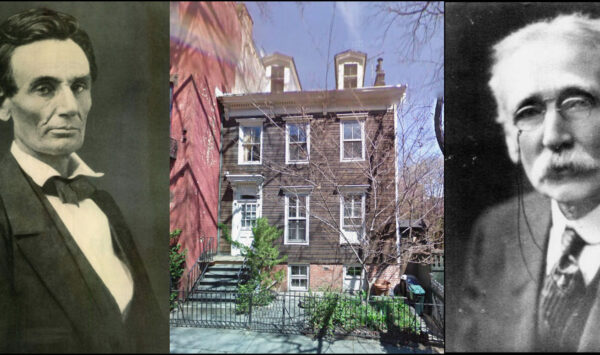
******************************************************************************************************************************** Brownstone Detectives investigates the history of our clients’ homes. The story you are about to read was composed from research conducted in the course of one of those investigations. Do you know the history of YOUR house? ******************************************************************************************************************************** Before Abraham Lincoln traveled to Brooklyn Heights, another Lincoln made it his home. In fact, on a Sunday morning in February of 1860, George B. Lincoln personally accompanied the future President on his famous visit to hear the Rev. Henry Ward Beecher preach at Brooklyn Heights’ Plymouth Church. Hailing from Hardwick, Massachusetts, George B. Lincoln arrived in New York City in 1836 at the age of 19. He engaged in the straw business for a number of years, dividing six of those years between New York and New Orleans, eventually setting his roots into Brooklyn soil around 1856, having established his dry good business across the river in Manhattan. Lincoln, like so many merchants of the period, preferred to live in Brooklyn Heights while keeping his business in New York City. (In fact, this was often how Brooklyn Heights real estate was advertised around the time – in terms of how quickly its businessmen could travel to New York City from Brooklyn.) Arriving around 1855, he initially rented a house at No. 54 Willow Street (future No. 62, now accupied by an apartment building). A few years later, however, in 1858-9, Lincoln had moved into No. 25 (former 45) Cranberry Street, where he would live for several years until being appointed […]
THE BOMBING OF BROOKLYN HEIGHTS (1892)
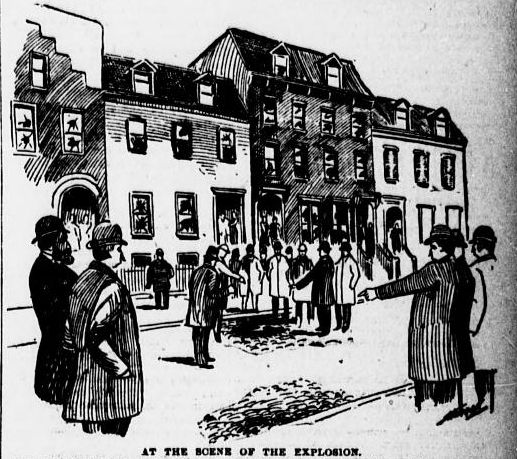
******************************************************************************************************************************** Brownstone Detectives investigates the history of our clients’ homes. The story you are about to read was composed from research conducted in the course of one of those investigations. Do you know the history of YOUR house? ******************************************************************************************************************************** It was just past 1 a.m. on a cool Saturday morning in the tony Columbia Heights section of Brooklyn. The police reserves of the Second Precinct, under the able leadership of Sergeant Joseph Carrougher, would soon be arriving on the scene. Carrougher’s desk sergeant had just awoken him out of a deep sleep at the Fulton Street police station. The sergeant had looked at him gravely in the dark of the room. “Somebody exploded a dynamite bomb on Willow Street.” “GROTESQUELY DRESSED, THE RESULT OF A HURRIED TOILET” When Carrougher arrived on the scene, he found Officer Seymour, “a portion of whose post was the scene of the explosion,” along with “a crowd of citizens” busily disturbing the crime scene. It was not too troublesome, however, having this crowd of citizens, “grotesquely dressed, the result of a hurried toilet,” tromping about the evidence. So long as they did not take anything that would assist in apprehending the guilty party. But many at the scene that night had begun amusing themselves “by digging out the fine white powder of the cobblestone with their penknives,” taking away samples. Sgt. Carrougher had seen it all in his 25 loyal years of dedication to the force. And while there were a number of clues that […]


