RISE & FALL OF THE STUYVESANT CLOWN (1895)
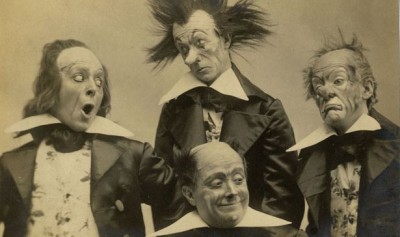
******************************************************************************************************************************* Brownstone Detectives investigates the history of our clients’ homes. The story you are about to read was composed from research conducted in the course of one of those investigations. Do you know the history of YOUR house? ******************************************************************************************************************************* Back in the early 1890s, in Stuyvesant Heights, there were clowns everywhere. Roaming and squeezing their little horns, making sad, droopy faces, and generally miming mischief. And everyone came to see them at Halsey Street and Saratoga where they paid a nickel a person to get in. Life for the clowns existed there for at least 20 years, until one day it all came to a halt. The developers had arrived and were threatening the home of the clown, threatening his very existence. BROOKLYN EXPANDS TO BUSHWICK By the mid-1890s, three blocks in the furthest reaches of the Eastern District’s Stuyvesant Heights had surprisingly remained untouched by speculative progress. While feverish land purchasing and selling had gone on all around this valuable real estate for the previous ten or so years, these dusty plots of land would continue to sit like the vestiges of the past that they were – unused farm land. Eventually, though, this land would be put to use by a bunch of clowns – the lots would begin, in 1891, to be referred to as the “circus grounds,” as traveling circuses and shows would begin annually to rent the land for their high profile extravaganzas. But the reign of the Stuyvesant Clown would be relatively short as, […]
THE NAVY BICYCLE SQUAD OF BROOKLYN (1897)
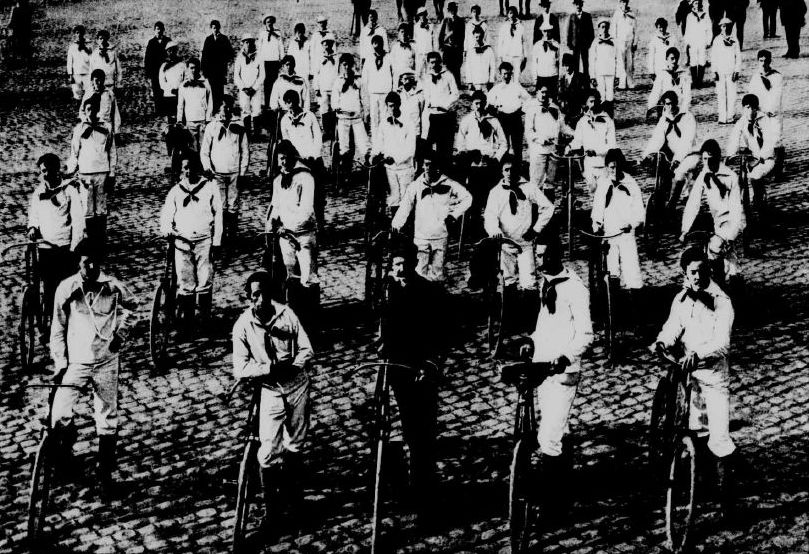
******************************************************************************************************************************** Brownstone Detectives investigates the history of our clients’ homes. The story you are about to read was composed from research conducted in the course of one of those investigations. Do you know the history of YOUR house? ******************************************************************************************************************************** Boy! But the Navy sure knew how to get around back in the day! These “wheelmen” – resplendent in their military uniforms – were organized not just for play, but for work. As bicycling was as much of a past time then as it is today, these men likely rode not only for their enjoyment, but to travel from station to station, as well – also representing the Navy in bicycling races. Headquartered at 56th Street in Brooklyn, the Second Naval Battalion was organized just before this picture was taken in July of 1897. It performed duty for the state during the Spanish-American war on coast signal service, guarding mine fields at Willets Point, in Queens, and on patrol duty in New York harbor aboard various vessels. From the New York Tribune of 4 July 1897, we have pictured above, “the first meet of the Bicycle Squad of the 2nd Naval Battalion at the Memorial Arch (Grand Army Plaza) in Brooklyn.” Follow @BrownstoneDetec Share ———————————————————————————————————————– The Brownstone Detectives Brownstone Detectives is an historic property research agency. Our mission is to document and save the histories of our clients’ homes. From our research, we produce our celebrated House History Books and House History Reports. Contact us today to begin discovering the history […]
SUNSETTING ON A BED-STUY BOULEVARD (1909)
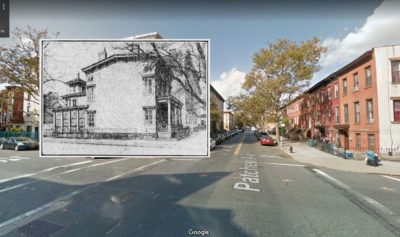
******************************************************************************************************************************** Brownstone Detectives investigates the history of our clients’ homes. The story you are about to read was composed from research conducted in the course of one of those investigations. Do you know the history of YOUR house? ********************************************************************************************************************************In 1909, a landmark was about to be destroyed. It was quite common, though, at the time for owners to tear down the antiquated wood-frame mansions that dotted Brooklyn’s landscape. Since the new brownstone houses had become all the rage in the 1880s, these tinder “firetraps” had become redundant, difficult to sell, and simply unstylish to live in. By the late 19th century, they were being sold, in many cases, for the value of their land as building lots. And with the demise of these historical artifacts, went some truly beautiful examples of mid-19th century architecture, few of which remain with us to this day. THE DE MILLE HOUSE The De Mille house was built around the middle of the 19th century for the family of that name, “and it has been a landmark in that region since the days when it was surrounded by open fields.” Yes, even Bedford-Stuyvesant – today chockablock with brownstone and masonry homes – was once – even before the advent of wood-frame homes – forested land alongside open virgin fields. As a matter of fact, the corner of Quincy and Patchen, in the 1850s, was little more than hills, dales, dirt lanes, and the vague promise of a future suburban city. “Broadway, which is nearby, was […]
CSI: MURDER ON THE PARK SLOPE? (1893)
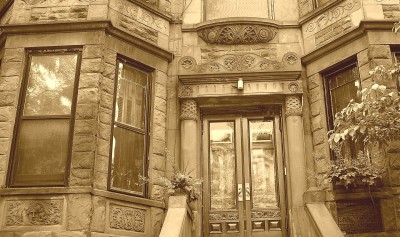
******************************************************************************************************************************** Brownstone Detectives investigates the history of our clients’ homes. The story you are about to read was composed from research conducted in the course of one of those investigations. Do you know the history of YOUR house? ******************************************************************************************************************************** When a badly decomposed body was discovered in the basement of a tony Park Slope brownstone, two of Brooklyn’s best detectives were put on the case. THE SETTING “Thomas Dempsey a retired merchant, who lives with his young wife and mother in law in a handsome brown stone house at 248 Garfield place, near Eighth avenue, rushed into the Bergen street police station in a fluster late yesterday afternoon,” reported the Brooklyn Daily Eagle, declaring “that he had just found his servant Edith lying dead in the basement of the laundry.” Dempsey was in an anxious state, the paper noted, observing that he wanted “the body removed without delay as it was badly decomposed and also to have the fullest investigation possible made by the police.” THE WEEK BEFORE THE DISCOVERY Mr. Dempsey, with his wife and mother in law, departed for a vacation trip to Asbury Park on 9 August 1893. They left the house and a pet pug dog in charge of Edith Moe, “a middle aged genteel looking woman” of 35, who was “of a very nervous disposition and who seemed dreadfully afraid to let her friends know that she was living out.” Mr. Dempsey’s mother-in-law, it was learned, had hired Edith, so Mr. Dempsey did not know […]
THE LOST ART OF MOVING HOUSES (1900)
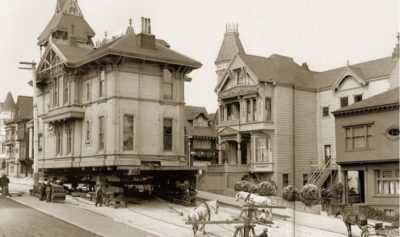
******************************************************************************************************************************** Brownstone Detectives investigates the history of our clients’ homes. The story you are about to read was composed from research conducted in the course of one of those investigations. Do you know the history of YOUR house? ******************************************************************************************************************************** An article in the 28 March 1900 edition of the Brooklyn Daily Eagle caught our eye the other day. It detailed an old practice of moving houses, and it took place in a time when the economics were such that their transport to another lot made more fiscal sense than tearing them down wholesale. In this story, however, the time it took to move this particular house took a toll on the neighboring residents. And, at one point, they gathered to tear the house down, themselves… THE HOUSE IN THE STREET The story took place in the early part of 1900 in Flatbush at the corner of Flatbush Avenue and Linden Boulevard. The subject was a frame structure that was being moved from that corner, although not quickly enough for local residents who protested the house’s temporary location on Linden Boulevard. And by “on Linden Boulevard,” we mean on the actual roadway itself. “A frame building stands in the middle of Linden boulevard, at its junction with Flatbush avenue. The building bears the sign of Vanderveer & Williamson, real estate agents,” the reporter started his story. Vanderveer & Williamson, we discovered – through combing the newspaper’s archives – were Adrian Vanderveer and Adrian N. Williamson, who had, by this point, had […]
THE ANATOMY OF A RACE RIOT (1862)
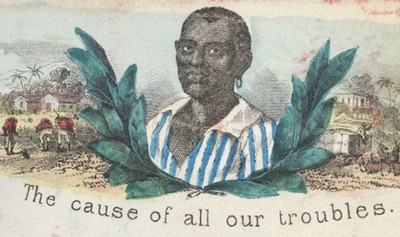
******************************************************************************************************************************** Brownstone Detectives investigates the history of its clients’ homes. The story you are about to read was composed from research conducted in the course of one of those investigations. ******************************************************************************************************************************** “Yesterday afternoon, one of the most disgraceful riots, which has ever happened in this city, took place…” So began the Brooklyn Daily Eagle‘s lead article about an “anti-Negro” riot that had taken place the previous day in the Red Hook section of Brooklyn. “…which, but for the timely appearance of the police, aided by some citizens, might have resulted in a most fearful tragedy.” HOW THE RIOT STARTED Days before the riot, though, “two (black) men who work in the rozin factory at the foot of Sedgewick Street were returning home from their work and stopped at Grady’s liquor store, in the neighborhood of the factories, to take a drink.” When a white man went to enter the establishment, he asked the “colored men” to move out of the way. When they refused, the spark that would light the kindling appeared. Of course, resentments and ill feelings had been brewing for some time, and this event, apparently, provided the “justification” for the backlash that was to come. After this minor liquor store incident – all through the night and into the next morning – various sorts of wild stories began to circulate and rumors to spread, including, unsurprisingly, unfounded accounts about “struck at the negroes with their clubs.”.” Then, when the morning arrived upon which the riot was incited, […]


