THE LONG SLOW DEATH OF REID SQUARE (1870)
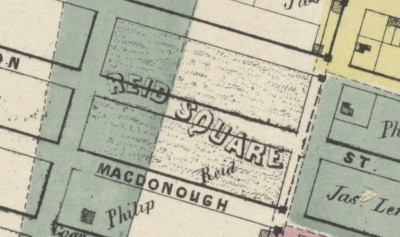
******************************************************************************************************************************** Brownstone Detectives investigates the history of our clients’ homes. The story you are about to read was composed from research conducted in the course of one of those investigations. Do you know the history of YOUR house? ******************************************************************************************************************************** Laid down by the Brooklyn street grid commissioners in the 1830s, Reid Square was a planned park that was to be comprised of two of Brooklyn’s city blocks in the Town of Bedford. Named after the owner of the farmland that the once-future park was to grace, Philip Reid, Reid Square never ended up being developed. The Square was to be bounded by Reid and Stuyvesant Avenues and Halsey and MacDonough Streets. Macon Street, which, for all intents and purposes, would have passed directly through the square at its center, was to be closed at that point. In 1869, however, as the park had been laid out but not improved, the Committee on Opening Streets of the Brooklyn City Common Council met and proposed a resolution to “draft an act to the Legislature to close Reid Square and lay down Macon Street from Stuyvesant to Reid aves.” This proposal was adopted and later in April of 1869, the Legislature passed the act, dooming Reid Square to an historical footnote. It is quite probable that powerful real estate speculators at the time forced the planned public square into its stillborn state, allowing the properties on these streets to be broken up into lots and then sold at auction for development purposes. Follow @BrownstoneDetec […]
SOLVING YOUR BROWNSTONE’S I-CARD MYSTERY
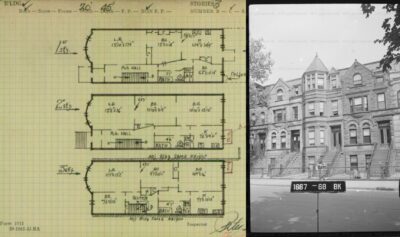
******************************************************************************************************************************** Brownstone Detectives investigates the history of our clients’ homes. The story you are about to read was composed from research conducted in the course of one of those investigations. Do you know the history of YOUR house? ******************************************************************************************************************************** One of the many weapons in the arsenal of the New York City old house detective is an official city document known as the I-Card. Many homeowners have heard of them, few know what they are, and even less have ever seen one. The reason is simple – the I-Card was never meant for public consumption. WHAT IS THE “I-CARD”? The I-Card is a paper record that the City of New York used, starting in 1902, for documenting the required building improvements of tenements and multiple-dwelling buildings, and for regulating the use of these type buildings. The I-Card came about around the turn of the last century when the “progressives” started focusing on building codes, sanitary conditions, and safety issues in the tenements. The Tenement Act of 1901 regulated these issues, requiring old tenement building (pre-1901) to bring their buildings up to this code and post-1901 buildings to be built according to the provisions in the new Act. So, the city came up with a way to track the required improvements that certain buildings had to have made. (The “I” in “I-Card” refers to “improvements made” on a structure after its construction.) What was being regulated here? Primarily things like making sure that a tenement had proper and adequate fire-escapes and […]
THE “GREAT UMPIRE” FANS WEE WILLIE (1922)
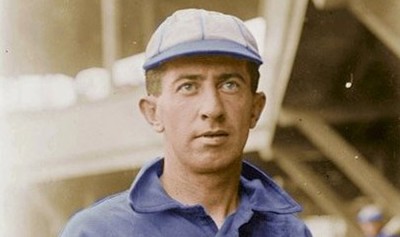
******************************************************************************************************************************** Brownstone Detectives investigates the history of our clients’ homes. The story you are about to read was composed from research conducted in the course of one of those investigations. Do you know the history of YOUR house? ******************************************************************************************************************************** When we research the histories of our clients’ homes, we inevitably uncover stories that tell part of the narrative of our neighborhoods. Today, we present a short piece on a ballplayer who was once so famous – and such a great player – that he was nicknamed “the Brooklyn Astor” for what he was paid to played for a Brooklyn ball club. This was Wee Willie “Hit ’em, where they ain’t” Keeler who predicted his death at moments after the strike of midnight on New Years Eve. ************************************************************************************************ Hall of Famer Wee Willie Keeler, known for his “hit ‘em where they ain’t” strategy, was “born and bred” in the “Eastern District” of Brooklyn. As a matter of fact, he lived at two particular addresses – and went to school and played ball at another two – all within today’s Bedford-Stuyvesant. Keller, who played primarily for the Brooklyn Superbas and the Baltimore Orioles from 1892-1910, was referred to as the Brooklyn Millionaire when he retired. Keeler had been the first ballplayer to be paid $10,000 a year. He died, though, a pauper, living in a dim second floor apartment at 1010 Gates Avenue and having never married or sired a child. In ill health toward the end of his life, he grew […]
A CURE FOR WEALTH ON CLINTON AVE (1895)

******************************************************************************************************************************** Brownstone Detectives investigates the history of our clients’ homes. The story you are about to read was composed from research conducted in the course of one of those investigations. Do you know the history of YOUR house? ******************************************************************************************************************************** Along an avenue shaded with tall oaks and plane trees once sat the home of a rich old recluse who’d been swindled of nearly all of her life’s savings in her declining years. A “tumble down” and “badly dilapidated old three story frame house,” the structure “stood forlornly upon the lot at 439 Clinton Avenue in Fort Greene,” noted the Brooklyn Daily Eagle. The roof of the house was “surmounted by a queer little cupola, and the whole structure looks as if it might fall in at any moment.” In short, the Eagle sardonically noted, the house looked as if the owner, Mrs. Caroline Barry, had lived in it ever since the death of her husband “without either painting it or repairing it in any way.” The Eagle was likely going a bit over the top with regards to the house’s condition, as it seemed much out of place situated between stately structures of brick and brownstone all along Clinton Avenue. But as the house has been gone for more than 100 years now, it is impossible to know what its actual state was for certain. What we do know, though, is what it looked like from a drawing done by the newspaper and from Sanborn Fire Insurance maps. From the […]
CONEY’S 6 M.P.H. COASTER OF FEAR (1884)
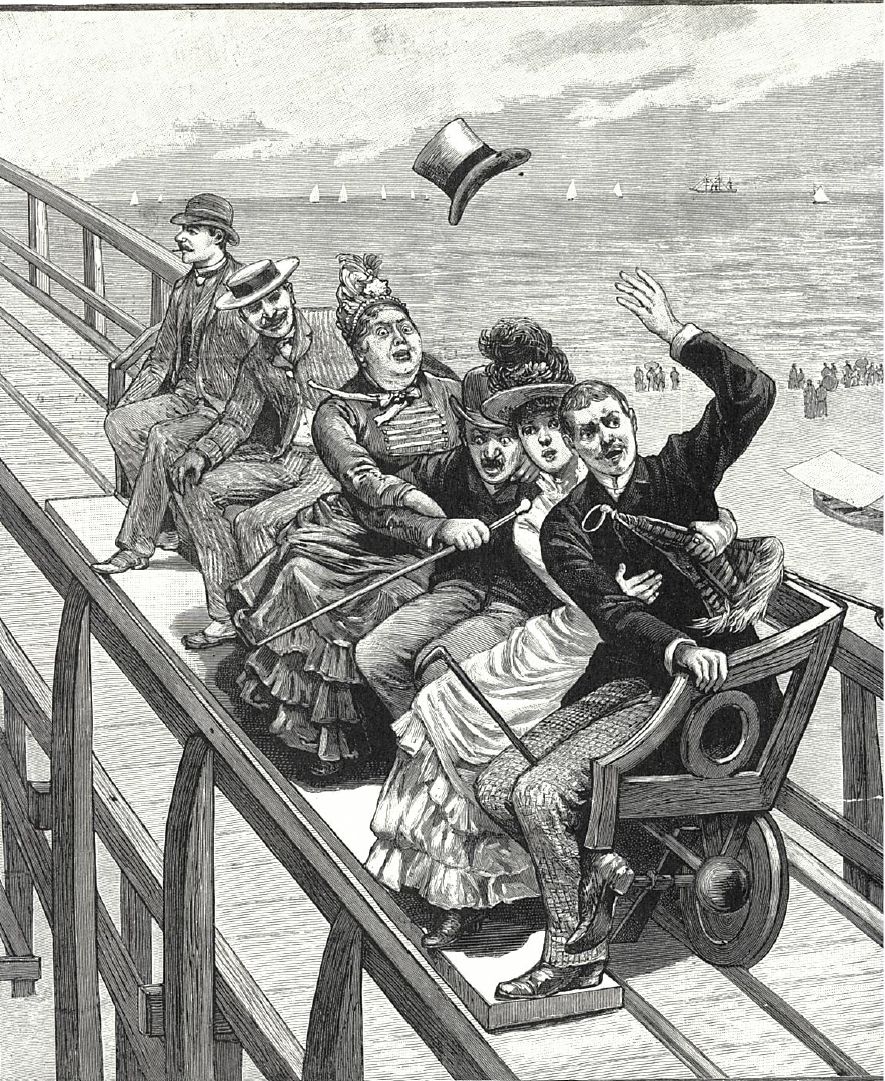
******************************************************************************************************************************** Brownstone Detectives investigates the history of our clients’ homes. The story you are about to read was composed from research conducted in the course of one of those investigations. Do you know the history of YOUR house? ******************************************************************************************************************************** When we research the history of our clients’ homes, we always come across the odd, the interesting, the unbelievable, and the ironic. Sometimes, though, we come across the FUN! In 1884, the original Coney Island thrill-ride was born – its first roller coaster – The Switchback Railway. No, it did not utilize a “90-degree vertical drop, followed by a 100-foot loop and a zero-gravity roll, along with dives, hills and a corkscrew — all within two minutes,” as the current Thunderbolt does. It did not reach speeds of 55 miles per hour. And it did not cost $10 million to build. The Switchback Railway, though, was the first roller coaster designed as an amusement ride in America. It was the coaster that sparked the first wave of the roller coaster mania in the United States. And it warranted LaMarcus Adna Thompson, the creator of the unprecedented coaster, the title “Father of Gravity.” Based upon a coal-mining train that had started carrying passengers as a thrill ride in 1827, to ride the Switchback set you back a mere 5 cents. Riders would climb a tower to board the large bench-like car and then were pushed off to coast 600 feet down the track to another tower. And its speed? Just over 6 […]
A STREETCAR JUMPS ON SACKETT STREET (1929)
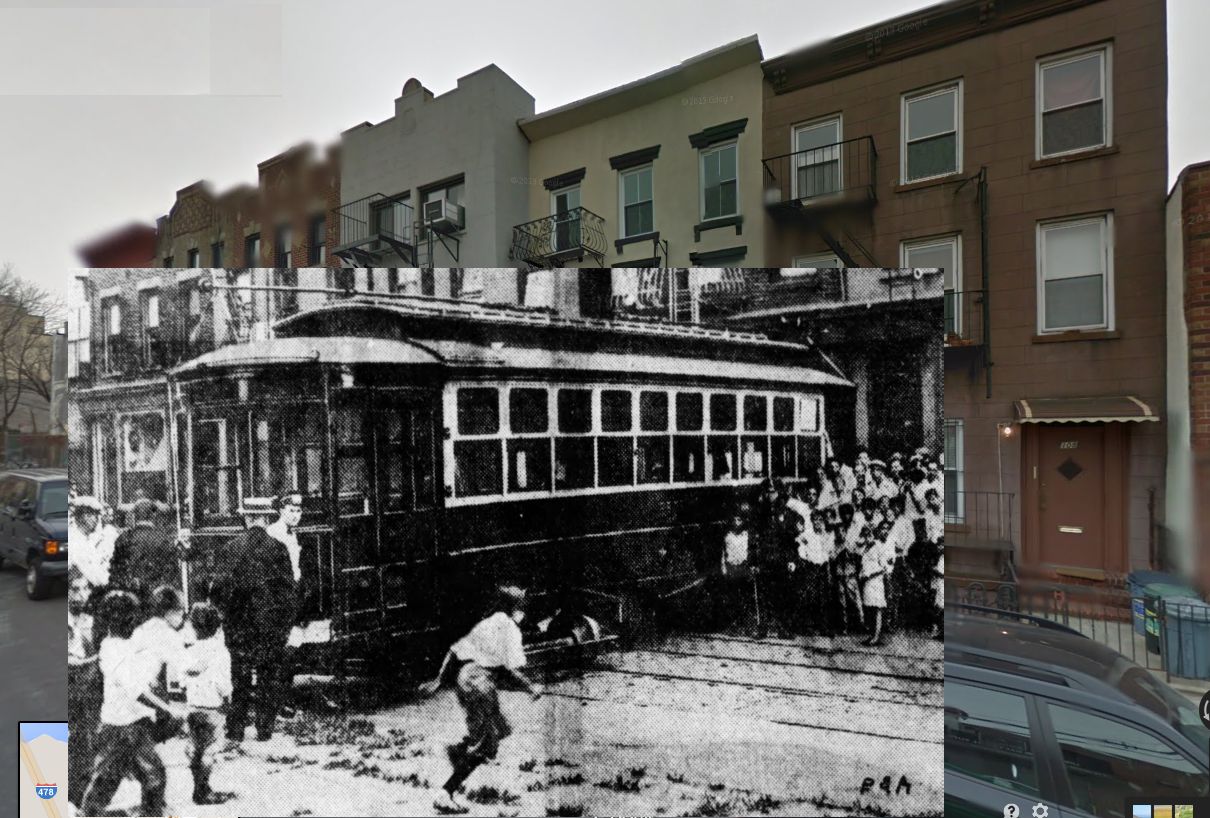
******************************************************************************************************************************** Brownstone Detectives investigates the history of our clients’ homes. The story you are about to read was composed from research conducted in the course of one of those investigations. Do you know the history of YOUR house? ******************************************************************************************************************************** If you bought a house that a streetcar had once crashed into – would you know about it? When researching the history of a client’s house, these are the stories that literally MAKE a House History Book. They are the stories that make the biggest splash – but in this case, a CRASH… But to the story… Back in the day, streetcars used to crash into buildings from time to time. The motormen’s reasons for this were usually that the car jumped the track while it was making a turn onto another street or avenue. In this instance, though, the motorman could only say that the streetcar “jumped,” but it does not appear that he was able to explain why – because he was operating the car in a straight line uphill on Sackett Street. While doing some research on a client’s home recently I saw this picture and I thought, “I didn’t even know that Sackett had a streetcar line!” Apparently, though, the line ran up and down the street back when it went both ways. The street must have been amazingly congested with these things going both ways! One day, in the Fall of 1929, though, that streetcar – starting on its run up the “slope” – literally “jumped” […]


