DR. DOLITTLE OF BROOKLYN HEIGHTS (1910)
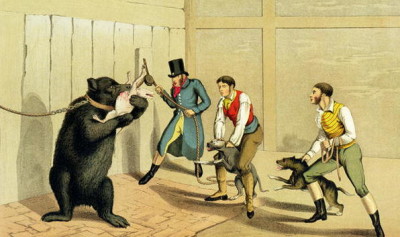
******************************************************************************************************************************** Brownstone Detectives investigates the history of our clients’ homes. The story you are about to read was composed from research conducted in the course of one of those investigations. Do you know the history of YOUR house? ******************************************************************************************************************************** All neighborhoods have their odd birds. In the early part of the 20th century, Brooklyn Heights had Harold S. Burnett. Burnett, known throughout Brooklyn as a keeper and handler of exotic animals, birds, and reptiles, was often in the newspapers, either because of his escapades with his animals, or because of the other one involving the divorce of his wife. And Burnett had quite the collection of animals – from boa constrictors, to lizards, to game cocks, to fighting dogs and bucking broncos. There didn’t seem to be an animal that Burnett would not consider handling. THE DAY THE BEAR APPEARED One day, Burnett confessed to a friend his desire to own a bear. So, when that friend returned from a hunting trip, he sent a bruin to Burnett as a gift. “He lives in Flatbush and bagged it on a hunting trip,” Burnett explained how he came by the animal. “But the bear was so large they had to take the doors off the hinges to get it in the back yard and it was such a fierce brute that I couldn’t let it get out of its cage.” “SO I DECIDED TO HAVE IT SHOT.” At some point after having the animal in his backyard for short period, Burnett […]
HAPPY “SURGE PRICING” NEW YEAR! (1867)
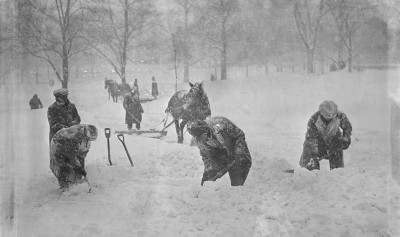
******************************************************************************************************************************** Brownstone Detectives investigates the history of our clients’ homes. The story you are about to read was composed from research conducted in the course of one of those investigations. Do you know the history of YOUR house? ******************************************************************************************************************************** A blinding snowstorm welcomed in the New Year in the City of Brooklyn in 1867. From “daylight and until early noon” the snow was “falling, falling fast,” as “thousands of juveniles commenced the year industriously, by earning their New Year’s gifts, in sweeping and shoveling the snow off the sidewalks. ” In spite of the snowfall, the Brooklyn Daily Eagle reported that “there never were so many open houses and never so many callers.” SURGE PRICING IN 1867 “Callers, as a general thing, didn’t mind the snow much, while to the keepers of livery stables, the appearance of the morning air, filled with its myriad snow flakes, became a vision, exceeding in its richness the fabled mines of Golconda.” In a word, these taxi drivers were seeing dollar signs within the Brooklyn snowfall. And the harder the snow fell, the more money their sleighs would be bringing in. “They knew that the light wagons for which they had been paid in advance, would not be taken out, and for sleighs they could charge such prices as they chose.” Like a modern-day taxi service – upon which rested no fixed rates – these 19th century taxi hacks would begin to set new prices on their services, determining – based upon the wiles […]
BROOKLYN’S “GREAT WHITE HURRICANE” (1888)
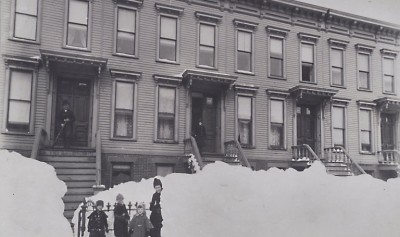
******************************************************************************************************************************** Brownstone Detectives investigates the history of our clients’ homes. The story you are about to read was composed from research conducted in the course of one of those investigations. Do you know the history of YOUR house? ******************************************************************************************************************************** “Brooklyn awoke this morning to find itself in the hands of the blizzard.” So read the morning edition of the Brooklyn Daily Eagle almost 130 years ago on Monday, 12 March 1888, about the record snowstorm that, over a day-and-a-half period, dropped up to three feet of snow on the city, produced sustained winds of 40 miles per hours, and created snowdrifts in some places in excess of 50 feet! Nearly all transportation was shut down completely and many Brooklynites were confined to their homes for up to a week. While the city slept the rain that had rendered last evening slightly unpleasant had turned to snow, the wind had increased to a tempest and all life was driven from the streets. Street cars were unable to proceed. The horses were detached and taken to the nearest place of shelter. The inmates of the cars saw the huge drifts of snow pile up above the window ledges, heard the shrieks of the wires above their heads and did not leave the cars unless an open house was very near at hand. It was about 1 o’clock when the storm became furious and it raged for ten hours with undiminished violence. Those who ventured out during the morning were treated to a […]
GIVING BATHS TO BROWNSVILLE (1905)
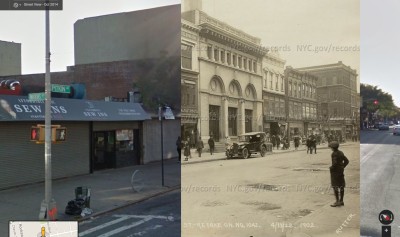
New York City has always been known for its progressiveness. Its mayors and city council seemed always to be trying to improve conditions for the masses – either out of a true passion to do good – or for the votes. In the 1890s, it was all about relieving its citizens from the oppressive heatwaves that were hitting the city by passing out free ice to all who would stand in line for it. At the turn of the century, it would be all about cleanliness and health. THE RISE OF THE BATHS According to 1908’s Modern Baths and Bath Houses, “out of 255,000 inhabitants of tenements…only 306 had bathtubs in the houses where they lived.” This, apparently, was appalling to the better classes which felt that the lower classes had to be scrubbed clean, thereby giving rise to the reference to Saturdays being the bath day. And so the bath house movement began, which was all about improving “the public health, dignity and upward mobility for those living in tenements.” In 1905, Pitkin Avenue’s public baths were opened. According to a blog post by Cory Seamer of Brooklyn Relics, the building used for Pitkin Avenue’s Public Bath is now used for something else: “Designed by architect A.S. Headman, the Pitkin Avenue Public Bath was built in 1903 at a cost of $84,456….the building’s façade has been heavily modified. The ground floor has been partially demolished and retro fitted with a glass storefront, the cornice has been removed and the […]
A BROOKLYN CHRISTMAS TREE PROJECT (1927)
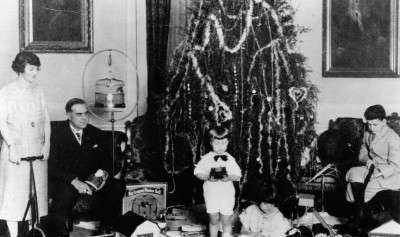
******************************************************************************************************************************** Brownstone Detectives investigates the history of our clients’ homes. The story you are about to read was composed from research conducted in the course of one of those investigations. Do you know the history of YOUR house? ******************************************************************************************************************************** What did Brooklyn boys and girls do on Christmas morning in 1927? Well, they probably opened a present or two, played with their toys, frowned at their new underwear, and such. But later on when the kids had played their toys out – or, in poorer families, if there weren’t many toys to give out to children, the ever-diligent Brooklyn Daily Eagle‘s Junior Eagle section had a cut-out project with which such children could amuse themselves. No, it was not a Red Ryder BB gun, (those wouldn’t be introduced for another ten years), but it was something, and it must have worked as such projects were often included in the pages of this newspaper throughout the year. And it is amazing what occupied childrens’ minds back then. So, try it – if you like – this Christmas. Click on the picture and follow the directions. You never know. “Cut out the trees. Crease on dotted lines and paste the four together, each at right angles to the other, as shown in the sketches.” Follow @BrownstoneDetec Share ———————————————————————————————————————– The Brownstone Detectives Brownstone Detectives is an historic property research agency. Our mission is to document and save the histories of our clients’ homes. From our research, we produce our celebrated House History Books […]
A COLLAPSE, A DEATH, & AN INQUIRY (1912)
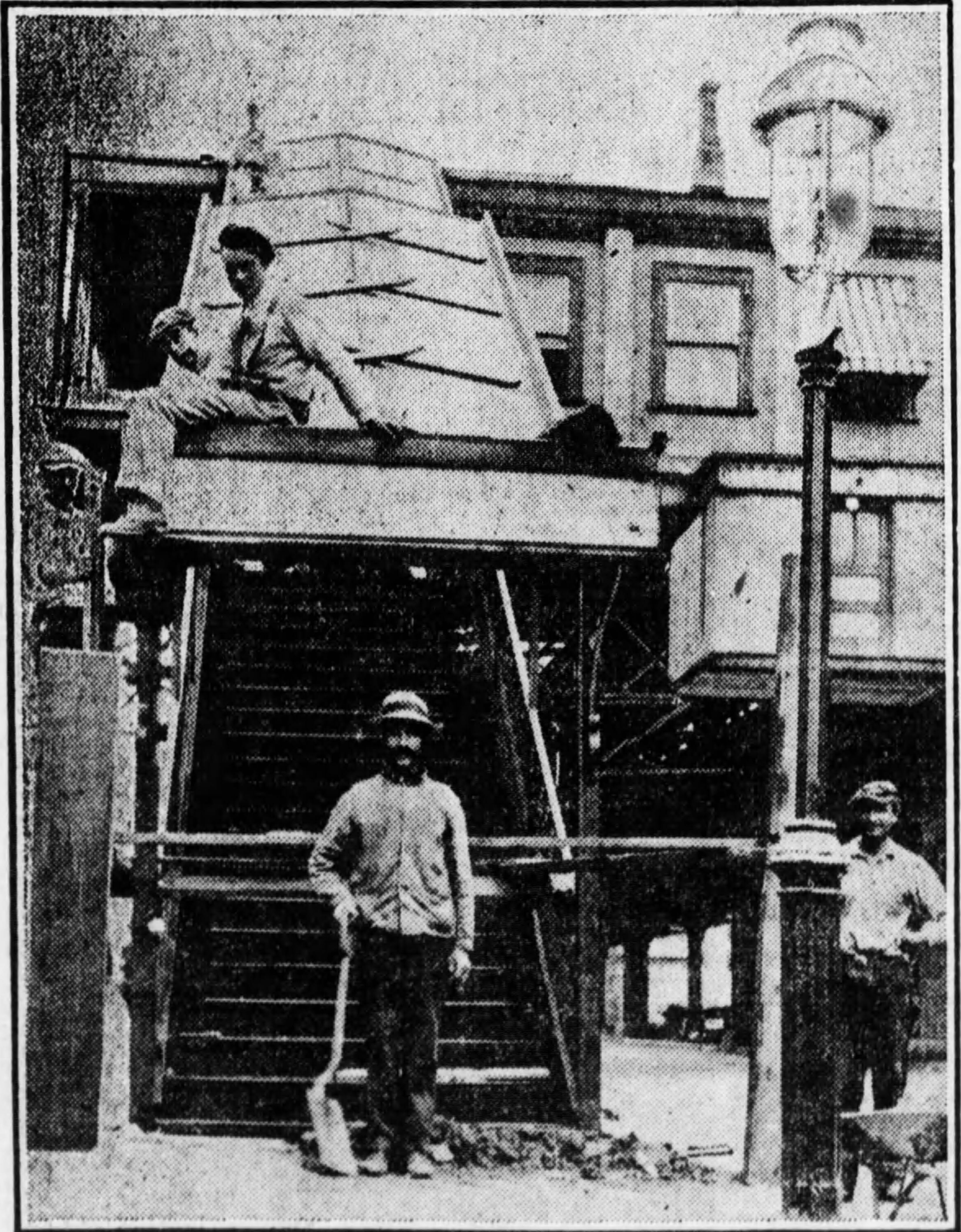
******************************************************************************************************************************** Brownstone Detectives investigates the history of our clients’ homes. The story you are about to read was composed from research conducted in the course of one of those investigations. Do you know the history of YOUR house? ******************************************************************************************************************************** It happened just before Christmas of 1912. A young husband in the prime of his life rushes to buy a last-minute Christmas gift for his beautiful wife. With the pearl necklace safely deposited in his suit-coat pocket, he dashes to catch the train that is approaching. Rushing up the stairwell to the Long Island Rail Road (L.I.R.R.) platform, he quickly reaches the top step. As he turns the corner to run for the platform, he barely senses the very stairwell beneath him shifting almost imperceptibly beneath his feet. Then, as a loud crack reports his entire balance has shifted, and he is suddenly in a terrifying free-fall. Seconds later the young husband’s body is covered with tons of – what had seconds before been – concrete stairs. This fatal collapse of the L.I.R.R. stairwell occurred at Atlantic and New York avenues, and was subsequently blamed on the corrosion of two cast-iron posts which supported the entire concrete structure. The tragedy on the L.I.R.R. stairway at New York and Atlantic avenues ended in the sudden death of a well-known art expert, David H. Cochran of 113 Macon Street. THE BEGINNING OF A “BIG” INQUIRY The very day afterward, as the finger-pointing already began to take place, a “big” inquiry was established which […]


