THE SURPRISE OF AUNT PATSY
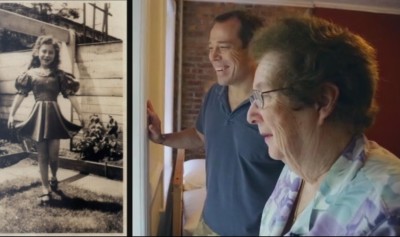
******************************************************************************************************************************** Brownstone Detectives investigates the history of our clients’ homes. The story you are about to read was composed from research conducted in the course of one of those investigations. Do you know the history of YOUR house? ******************************************************************************************************************************** Last year, after an extensive search, I had the pleasure of discovering “Aunt Patsy.” Having located a nephew of hers in Tennessee, I informed him (a bit nervously) about my project – I was writing a book about our Macon Street house (who writes a book about their own house?) – and told him that I’d love to talk with her (if it was possible). I was surprised to learn that she lived quite close by – the next borough over, actually, in Floral Park, Queens. He gave me her telephone number, telling me she would love to see the house again. “She’s quite a character,” he half-warned and half-encouraged me. Over the following months, Patsy and I talked on the phone for stretches at a time about the house, her childhood memories of the block, and sometimes about nothing in particular. Often, she asked me about my family, my work, and about my life in Bedford-Stuyvesant. Through these conversations we began to develop a relationship that was at once effortless and engaging. In a way, at some point during our talks, she “became” Aunt Patsy. Born in 1936, Patsy lived at my Macon Street house for the first 15 years of her life. Her mother, who was in her 40s […]
THE NAMING OF A CLINTON HILL HOUSE (1850)
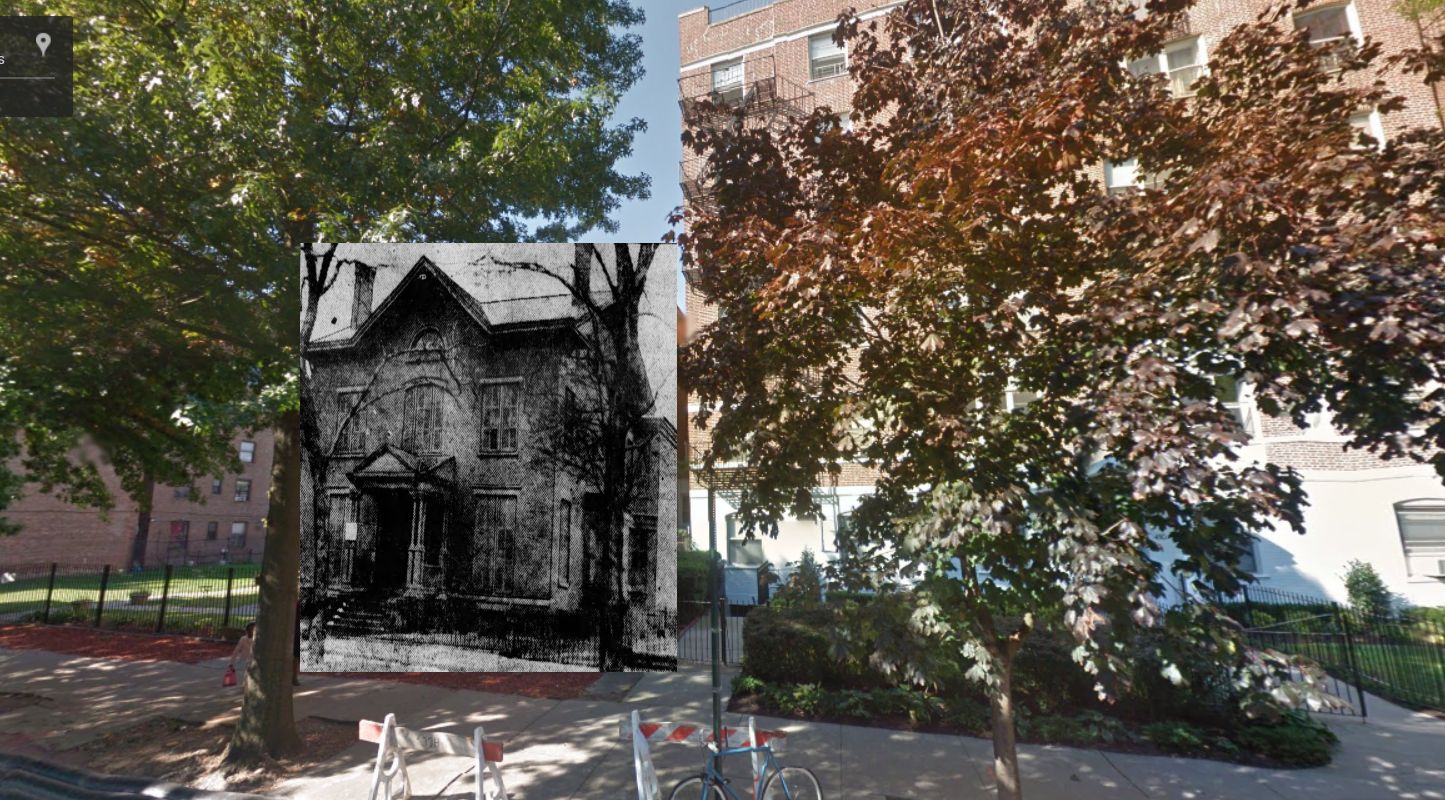
******************************************************************************************************************************** Brownstone Detectives investigates the history of our clients’ homes. The story you are about to read was composed from research conducted in the course of one of those investigations. Do you know the history of YOUR house? ******************************************************************************************************************************** When a house becomes commonly referred to by the owning family’s name, it can be expected that this family 1) built the house, 2) had lived there for some time, or 3) were well-known in the city. Robert Jackson (R.J.) Kimball embodied two of these indicators (No.’s 2 & 3). The Kimballs lived at No. 436 Clinton Avenue since the mid 1880s, and R.J., himself, was very well known. He was an active socialite who rose to build his fortune through banking and real estate. A senior member of the firm, R.J. Kimball & Co., a member of the stock exchange since 1866, and a trustee of the Pratt Institute, his name was very well-known throughout New York City and Brooklyn. Although Kimball passed in 1903, his wife continued to own the house until she sold it in 1921. 436 CLINTON ENTERS A NEW ERA In 1921, after the house had been vacant for a few years, a man by the name of Alfred H. Bromell of No. 59 Livingston Street, noticed the abandoned structure. Probably recognizing it for its value and status as a residence, he purchased the house and large lot. The plot was described as “60X200, which extended back to Vanderbilt av., where there is a garage,” and […]
DID BROOKLYN GIRLS SMOKE? (1887)
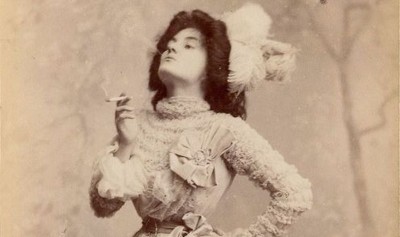
******************************************************************************************************************************** Brownstone Detectives investigates the history of our clients’ homes. The story you are about to read was composed from research conducted in the course of one of those investigations. Do you know the history of YOUR house? ******************************************************************************************************************************** “There are more women in the City of Brooklyn who smoke cigarettes than any one…would ever dream of.” So floated the words of a Fulton street cigar store proprietor one evening in 1887, after a boy “of 12 or 13 years of age” entered and asked him for “a package of the same kind she got last night. “I was paid to find out why. So, going to the source, I found a few men who talked. Actually, they sang like canaries. And I kept good notes.” TRACKING A RUMOR TO ITS SOURCE The cigar store I walked into was doing a brisk business. But the customers were men. All men and, from time to time, a few boys. Playing the bored customer, I perused the tobacco boxes, fiddled with the cigar cutters, and then spotting the proprietor – rather he spotted me! – he struck up a conversation. Like most customers who either didn’t know what they were looking for or had ulterior motives, I told him that I was just browsing. Taking him into my confidence just then, I asked him where all of his female customers were. Arching an eyebrow, he shot me a knowing glance, patted the side of his nose, and waved a hand before me, […]
COULD COLORED MEN PUT OUT FIRES? (1898)
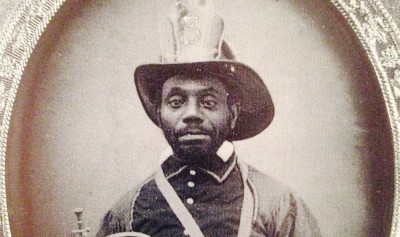
******************************************************************************************************************************** Brownstone Detectives investigates the history of our clients’ homes. The story you are about to read was composed from research conducted in the course of one of those investigations. Do you know the history of YOUR house? ******************************************************************************************************************************** In 1898, a Brooklyn – and New York City – “first” occurred when Fire Commissioner John Jay Scannell assigned the first black man to serve in the Fire Department in Brooklyn. William H. Nicholson, of No. 200 Myrtle Avenue, was a 29-year-old former cement tester who had been born in Virginia. He would become, in a number of ways, the precursor to the many first blacks to be “allowed” to integrate society’s historically “white” institutions in the century to follow. While, in 1891, Wiley G. Overton, another “colored man,” had been the first to be appointed as a patrolman on the Brooklyn police force, Nicholson, as a fireman, was still entering into a conflagration of his own. Patrolman Overton had found his existence on the force to be terminally difficult. Assigned to patrol the Brooklyn “colored district,” he had been transferred around to several precincts because no white officer would sleep in the same dormitory with him. His very presence in every station house had “caused trouble.” Finally, after being subjected to all sorts of “annoyances,” Overton had been “practically hounded from the force” a few years after his appointment. And it was likely that Nicholson knew this. Now, Nicholson had become the Fire Department’s unofficial test case for “colored integration.” […]
“PLAIN” GIRLS SHOULD GO TO COLLEGE (1911)
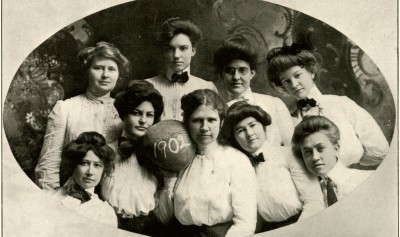
******************************************************************************************************************************** Brownstone Detectives investigates the history of our clients’ homes. The story you are about to read was composed from research conducted in the course of one of those investigations. Do you know the history of YOUR house? ******************************************************************************************************************************** It’s tough being plain. But if you go to college you increase your chances of getting that “MRS” degree. So said Brooklynite Imogene Kelly who, while in her senior year at Wellesley College in Massachusetts, was editor-in-chief of the school’s newspaper, Wellesley College News. The top scribe’s job gave the sensible young lady ample opportunity to place her thoughts before her adoring public. After her piece about the necessity of homely girls attending college to increase their chances of marital bliss, though, Kelly hadn’t much of an audience at all. WHY GIRLS GO TO COLLEGE In an article in the Brooklyn Daily Eagle, Kelly was showcased for her viewed of the necessity of a college education. “The unattractive girl, in order to equalize her chances for a husband with the less plain girl, must do so by getting an education,” Kelly reported. “The girl who is attractive and good looking need not secure a college training in order to fulfill her marriage destiny.” Kelly’s story, though, earned her an audience far beyond the campus of Wellesley, as it was picked up by a number of news services and printed in many places around the country. “The girls at Wellesley, as a rule, are not beautiful, and for that reason these girls […]
BUTCHER, BAKER, UNDERTAKER (1895)
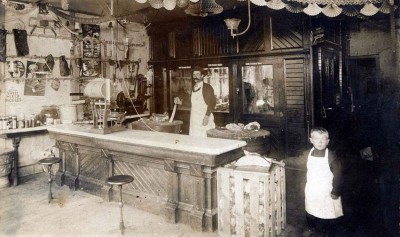
******************************************************************************************************************************** Brownstone Detectives investigates the history of our clients’ homes. The story you are about to read was composed from research conducted in the course of one of those investigations. Do you know the history of YOUR house? ********************************************************************************************************************************As the sleeping giant that is Bedford-Stuyvesant’s Ralph Avenue begins to awaken from its slumber, it is tempting to take a look back at some of the businesses that once lined this bustling thoroughfare. STUYVESANT EAST OF YORE The eastern section of Stuyvesant was alive with industry in the late part of the 19th and the early part of the 20th centuries. As houses had recently been built along the main streets, stores, schools, and churches had gone up along the avenues and on corners, dotting the landscape with their offerings. The neighborhood, after its initial build-up in the 1890s, became completely self-sufficient in terms of goods and services. Residents of Macon Street, like those from the other streets in the neighborhood, found themselves surrounded by a variety of offerings that would allow them – and their servants, in some cases – to satisfy the needs of their families easily and quickly. THE BUSTLING BUSINESS CORRIDOR THAT WAS RALPH AVENUE Starting in the late 19th century, Ralph Avenue became a busy local business corridor filled with a wide variety of shops and stores that suburban families needed to support households of consumers. Since its inception, the avenue had public transportation, in the way of horse-drawn omnibuses and then later a streetcar line, […]


