THE CANUCK NURSES OF 172 LAFAYETTE (1909)
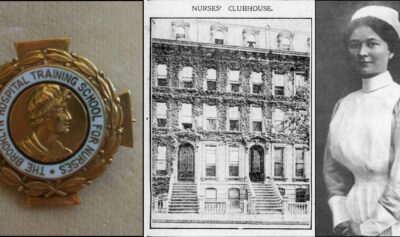
******************************************************************************************************************************** Brownstone Detectives investigates the history of our clients’ homes. The story you are about to read was composed from research conducted in the course of one of those investigations. Do you know the history of YOUR house? ******************************************************************************************************************************** During the late 19th century, when much of New York City’s brownstone stock was constructed, many of these townhouses were initially used as the clubhouses for any number of the organizations and clubs existent then. There were Republican and Democratic clubs, bicycling clubs, social clubs, actors’ guilds, athletic clubs, and countless other organizations dedicated to the betterment and/or pleasure of their memberships. Those clubs with the money and the membership were able to afford to purchase – or rent – a brownstone for the use of its membership. In 1909, at No. 172 Lafayette Avenue, a club for graduates of the “Brooklyn Hospital Training School for Nurses” – which was “always in reach of doctors” – was set up,” noted the Brooklyn Daily Eagle. The purpose of the club was as a social center and a business office for nurses, as well as a location where they could “entertain their friends.” The Nurses Club, only in existence for a “couple of years” by that point, had – in that short period of time – made “enviable progress.” Previously located at No. 255 Carlton avenue, it was not long before the capacity of that house was taxed to its limits. In 1909, the pressure became so great that this larger clubhouse on […]
TENDER FEET IN STUYVESANT HEIGHTS (1910)
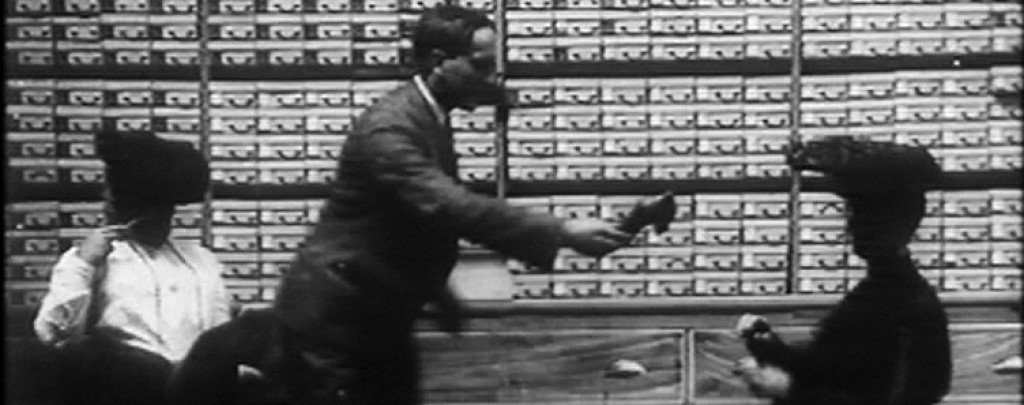
******************************************************************************************************************************** Brownstone Detectives investigates the history of our clients’ homes. The story you are about to read was composed from research conducted in the course of one of those investigations. Do you know the history of YOUR house? ******************************************************************************************************************************** Charles I. Clark seemed to be all about helping womens’ tired, aching feet. From 1900 until 1923, at the intersection of Halsey Street and Broadway, sat Clark’s shoe store, above which was posted a sign that ran the width of his building (at the cornice): “THE CLARK SHOE.” In Clark’s store, one of his shoe lines was “Grover’s Soft Shoes for Tender Feet,” a footwear design for women who were both sensitive and sensible. The location of his store was an excellent one. Just outside of it was the stairway leading to and from the Halsey Platform for the Brooklyn Rapid Transit elevated train. People heading into Manhattan passed his store on their way to the elevated trains, and those returning from “the City” detrained there. Additionally, in 1910, according to the Brooklyn Daily Eagle, Clark had invested in a major remodeling on the front of his store, which “considerably improved its appearance.” Clark had “electric lights in concealed prism reflectors in the ceiling” which gave “ample illumination after nightfall” and “made the store bright and cheerful.” So, there was every reason in the world for any woman who shopped along the Broadway business corridor to have purchased a pair of sensible shoes in Clark’s store – if she had tender […]
WHEN MAY DAY WAS MOVING DAY (1847)
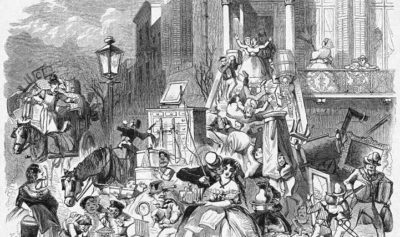
******************************************************************************************************************************** Brownstone Detectives investigates the history of our clients’ homes. The story you are about to read was composed from research conducted in the course of one of those investigations. Do you know the history of YOUR house? ******************************************************************************************************************************** Imagine, as a New York renter, waiting with dread every year for May 1 to arrive. It meant that you, like many untold thousands of other renters in the city, had to move. Now, consider the competition for hiring moving vans and movers – and the surge pricing associated with every aspect of it. This was exactly what took place in New York City on the first day of May starting in the early 19th century and lasting for about 120 years through WWII. While the annual event may have originated as a custom, the tradition was actually couched in law in 1820 when an act of the New York State legislature was passed into law, mandating that all housing contracts were valid unto the first of May (unless the day fell on a Sunday, in which case the deadline was May 2). In other words, the landlord basically had his tenants by the law. And it rarely ended well for the tenants. According to the New York Times, February 1, sometimes known as “Rent Day,” brought landlords togive notice to their tenants what the new rent would be after the end of the quarter, and the tenants would spend good-weather days in the early spring searching for new houses and […]
THE SNATCHING OF ST. JOHN’S STOOPS (1970)
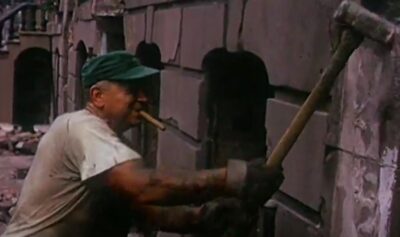
******************************************************************************************************************************** Brownstone Detectives investigates the history of our clients’ homes. The story you are about to read was composed from research conducted in the course of one of those investigations. Do you know the history of YOUR house? ******************************************************************************************************************************** In the 1970s, a row of stoops belonging to St. Johns Place brownstones were destroyed. You may notice them today as you walk down St. Johns Place and wonder at the stoop-less brownstones and wonder why they look so much like brownstone, but – for some reason – cannot be. These Victorian brownstones on the north side of St. John’s Place between 5th and 6th avenues – Nos. 35 to 67 – were, at that time, in an extremely derelict state. A part of the slums of the Park Slope section of Brooklyn, they were being transformed into working class housing, apartments for low-income families. A part of the conversion of these brownstones to apartments was the removal of their stoops. This extreme adjustment to the façades of these buildings had the benefit of allowing them to have just one entrance – on the ground level – through which all apartment dwellers would access their apartments. If you ever wondered what that destruction looked like, you’re in luck! In this short amateur film, these stoops can be seen being systemically removed from the fronts of their brownstones. The film is in color, lasts approximately seven minutes, and gives a taste of 1970s Park Slope. Follow @BrownstoneDetec Share ———————————————————————————————————————– The Brownstone Detectives […]
A STREET GROWS IN BROOKLYN (1845)

******************************************************************************************************************************** Brownstone Detectives investigates the history of our clients’ homes. The story you are about to read was composed from research conducted in the course of one of those investigations. Do you know the history of YOUR house? ******************************************************************************************************************************** The growth of brownstone Brooklyn took place over a great many years. The long contiguous lines of rowhouses rocketed skywards across the city through the economic good times, as well as – at a less robust pace – through the many debilitating recessions. But rocket they did, leaving the footprints of the many contractors and builders who changed the landscape of Brooklyn into a City of Houses. Another mark that the contractors and builders left – although one not as celebrated today – was the complicated system of flagging, pipes, sewers, cisterns, streetlamps, and sometimes trolley tracks, that lined the streets and led to those very rowhouses. Each delivery and receiving system that connected each rowhouse to the city was an important step toward the development of the city. Before each row of houses was constructed (and sometimes while they were being constructed, or even soon afterwards), the development of each street and neighborhood was an important part of attracting the homeowners to Brooklyn. THE BIRTH OF BOERUM HILL Boerum Hill had only recently been planned for with a street grid system that would develop alongside of a vast network of sidewalks, sewers, street lamps, gas lines, and water mains. At this time, however, in the 1840s, it barely resembled such […]
SPRING BRINGS THE BEAN SHOOTERS (1863)
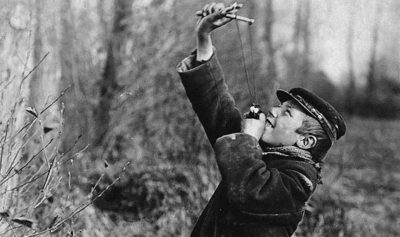
******************************************************************************************************************************** Brownstone Detectives investigates the history of our clients’ homes. The story you are about to read was composed from research conducted in the course of one of those investigations. Do you know the history of YOUR house? ******************************************************************************************************************************** There were a LOT of bad little boys in Brooklyn in the 19th century. Sifting through old issues of the Brooklyn Daily Eagle, the Standard Union, and other Brooklyn papers, I come across evidence of this on a daily basis. Of all the crimes that I see having been committed, one of the most common – and interesting – is the work of the “bean shooters.” When I was a kid I had a bean-shooter myself – and I did the same thing. There were a lot of broken window panes in my neighborhood – some I was found guilty of breaking – and most others of which I got away scot free of any blame whatsoever. (There was always the suspicion, though, that I was the culprit.) But I digress. Let’s rewind, though – further back to the mid- to late-1800s, and take a look at the work of my fierce little boy predecessors. BEAN-SHOOTING IN 19TH CENTURY BROOKLYN While sling shots (or often called “slung shots”) were a constant presence in the hands of gang members and criminals (they were outlawed by the New York State Legislature in 1849), it seems that the use of such a device by boys, with any degree of consistency, did not come until […]


