REMODELING IN THE VICTORIAN AGE (1894)
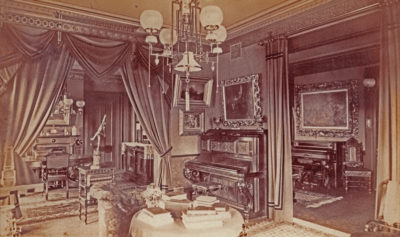
******************************************************************************************************************************** Brownstone Detectives investigates the history of our clients’ homes. The story you are about to read was composed from research conducted in the course of one of those investigations. Do you know the history of YOUR house? ******************************************************************************************************************************** In the early 1890s, Good Housekeeping magazine published a series of articles by Mrs. Oliver Bell Bunce – the wife of the author – on the proper maintaining of a household. The following piece expounded upon the decoration of homes in the late 19th century – what was “in” and what was not. It may not serve as a guide to how every home was kept, but it does give a peek into how some interior decorators were thinking on the subject. Also, as the Bunces lived in New York City, the article can be seen through the lens, more specifically, of laying out the preferred interior use and decoration of a brownstone or townhouse. WHAT TO DO WITH MY LADY’S HOUSE n this age, when home decoration has been reduced to a science, when artistic treatment is looked upon with so much favor, when every part of a room which is unsightly can. if the good caretaker knows the value of art and its properties, be made attractive, a homely object will, under her hands, become a thing of beauty, and many an eyesore develop into an enduring charm. For the treatment of doors, there are various ways and methods by which they can be adapted to circumstances. We will […]
THE “GOETHE” AT No. 461 GREENE AVE. (1890)
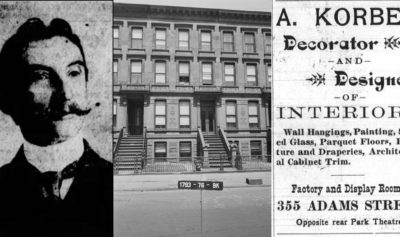
******************************************************************************************************************************** Brownstone Detectives investigates the history of our clients’ homes. The story you are about to read was composed from research conducted in the course of one of those investigations. Do you know the history of YOUR house? ******************************************************************************************************************************** Starting in the late 1880s, the Brooklyn Daily Eagle started a series of articles which described – in great length and detail – the interiors of individual newly-built or renovated houses. These houses were usually brownstones belonging to those affluent or upper-middle-class members of society. Not only did such articles describing the interiors of neighbors’ homes sell newspapers, but the articles also served as advertising directed at those in the market for a townhouse to have a home of their own. These advertisement-articles were placed, likely at the expense of the designers responsible for the “interior decorations” being described, as each piece often ended with what readers wanted to know: “Who did the work?” WORK WAS DONE BY A. KORBER Albert Korber, who went by “A. Korber,” was an architect and designer who settled in Brooklyn at the age of 15. Three years later he “started business on Adams street as a manufacturer of picture frames and moldings. Several years later he founded the decorating business which bears his name, with showrooms on Montague street and a factory for the manufacture of interior woodwork and furniture in South Brooklyn.” By 1889, Korber was 42, a successful decorator throughout the City of Brooklyn. His specialty was making the entrance to a house […]
A BLACK PORTER ON WHITE 12TH ST (1901)
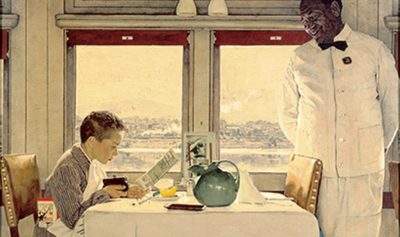
******************************************************************************************************************************** Brownstone Detectives investigates the history of our clients’ homes. The story you are about to read was composed from research conducted in the course of one of those investigations. Do you know the history of YOUR house? ******************************************************************************************************************************** Back in Victorian Brooklyn, segregated neighborhoods were the norm. The only blacks that most whites expected to see on their streets were those who worked there as maids or who participated in other working class trades. Blacks – commonly referred to then as “coloreds” or “Negroes” – rarely lived cheek-and-jowl with whites. On the rare occasion that a black family moved into a white neighborhood, an enormous amount of pressure was usually placed upon the family to move out immediately. It was for this reason that most neighborhoods remained segregated by the turn of the century. One such “Negro” family moved into the Gowanus section of Brooklyn in 1901, at No. 198 Twelfth Street, between Third and Fourth Avenues. It was not long before the family’s new white neighbors started to show their own colors as they began – very publicly in the newspapers – to register their extreme displeasure and disgust at the “intruders” on their block. This was a very highly charged story, to be sure, but was it factual? Or, was it generated to sell a house? The Brownstone Detectives investigated… WHOLE BLOCK EXCITED OVER ADVENT OF NEGROES… This story took place in the summer of 1901. Reported by the Brooklyn Daily Eagle, it seemed a sensationalist piece, […]
MAD DOGS & BROOKLYN MAYORS (1844)
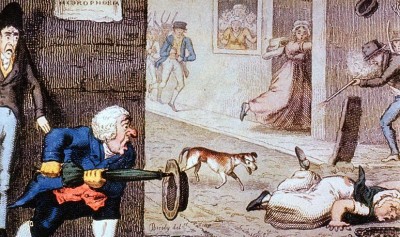
******************************************************************************************************************************** Brownstone Detectives investigates the history of our clients’ homes. The story you are about to read was composed from research conducted in the course of one of those investigations. Do you know the history of YOUR house? ******************************************************************************************************************************** In Brooklyn in 1843, there was a dog problem. A MAD dog problem. The people of Brooklyn – in what makes up Brooklyn Heights and the Downtown Brooklyn area today – were getting fed up with the number of strays, a good number of which were exhibiting “mad” tendencies, biting Brooklynites from time to time. A newspaper of the period complained of how “our streets are filled with miserable, half-starved curs whose dismal howlings make night hideous.” They demanded, thus, that a law be enacted to “shield us from that frightful malady – hydrophobia.” A FEAR OF WATER Back in the day, the disease that we know today as rabies was called hydrophobia. The disease was labeled hydrophobia – or a fear of water – because its subjects were not only unable to swallow water, but they had such a fear of it that it sent them into spasms or running from its very presence. And, of course, there was no cure for hydrophobia. Although, there was no shortage of quacks who sold “instant cures” to the masses through the mails or in their offices – such as the goodly Dr. S. Bachelder, across the East River at 343 Broome Street on Manhattan. Bachelder offered “Thompsonian and other Botanic Medicines” for […]
THE “IMPOSING” VIEW FROM OCEAN HILL (1848)
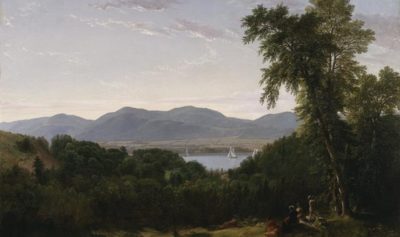
******************************************************************************************************************************** Brownstone Detectives investigates the history of our clients’ homes. The story you are about to read was composed from research conducted in the course of one of those investigations. Do you know the history of YOUR house? ******************************************************************************************************************************** Before there was Ocean Hill—the Bedford-Stuyvesant neighborhood—there was Ocean Hill—the section of Green-Wood Cemetery. Whether one influenced the other is lost to the ages. What is clear, however, is that both locations got their names from a geographical point from which a body of water could clearly be viewed. “At this point, now known as Ocean Hill,” described a contributor (whose pen-name, revealingly, was Investment) in an edition of the Brooklyn Daily Eagle published just a few years before the Civil War began, “we have reached the highest point on the avenue (Fulton Street) and the most commanding elevation of ground in the city; and which, for grandeur, beauty and variety of its scenery, cannot be surpassed. “The ocean view,” Investment continued, “is especially grand and imposing.” Investment, whose contribution to the paper existed as a thinly veiled promotional piece for Brooklyn, was describing the “advance in the value of Brooklyn real estate.” From Fulton Ferry he advanced down Fulton Avenue to “gather such information as will enable the public to form an intelligent estimate as to the present and prospective value of property on and near this great thoroughfare.” “At this point Fulton avenue is distant but a few hundred feet from Atlantic avenue on the south, and Broadway on […]
A JUNGLE MARCHED THRU BED-STUY (1900)
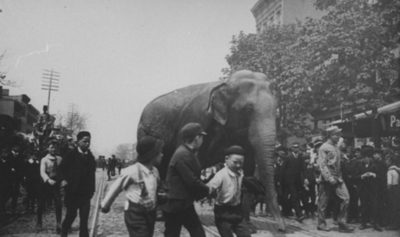
******************************************************************************************************************************** Brownstone Detectives investigates the history of our clients’ homes. The story you are about to read was composed from research conducted in the course of one of those investigations. Do you know the history of YOUR house? ******************************************************************************************************************************** The grey mastodons pounded threateningly down Howard Avenue past the gloomy darkness of Saratoga Square Park. Lumbering slowly around the corner onto Macon Street, they let forth a great trumpeting roar, swaying rhythmically to and fro. As their long, great shadows danced menacingly on the canopy of the park’s trees, cast vaguely by the faint light of the omnipresent red and green flickering colored torches, they presented a terrifying and foreign spectacle. Hundreds of small boys darted in and out of the gathering throngs to view the intimidating beasts, instilling in the air a noticeably heightened excitement which spread further and further down the block, as the presence of these creatures became known. As these majestic monsters moved towards 738 Macon Street, they let out their crushing roar which now could be felt more by the bones than by the ears. A great moan of excited joy leapt, in a synchronized response, from the lips of the visually excited crowd as each and every person lining the Macon Street parade route viewed the very first elephants. As the grey forms, dabbled in red and green light, diminished in size on their trek towards Ralph Avenue, they were replaced by the great humpbacked dromedaries with their inartful steps and studied looks of […]


