BOERUM HILL TIMEWARP! (1922 vs. 2018)
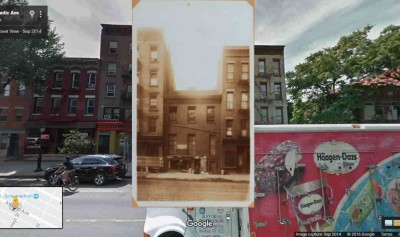
******************************************************************************************************************************** Brownstone Detectives investigates the history of our clients’ homes. The story you are about to read was composed from research conducted in the course of one of those investigations. Do you know the history of YOUR house? ******************************************************************************************************************************** It’s always a blast to compare old photographs of Brooklyn streets with what is there now. Often the old buildings, street lamps, and flagstone sidewalks are long gone, but sometimes you are discover a treat that makes the journey worthwhile. With a little help from the internet it’s easy to make these comparisons and then to even bring the past back to life. Using the Old NYC app, which allows you to search a map of the city to find locations where old New York City pictures were taken (and are stored at the New York Public Library’s Digital Collections), you can search for any address within the five boroughs. With some luck you might find an actual picture of the building or location you are looking for. With our case, we were looking for street addresses on Atlantic Avenue. Searching the database, we found 336 Atlantic Avenue. The picture was described as “336 Atlantic Ave., south side, west of Hoyt Street,” and this particular photograph had a little more information than you usually get on this site – information on the building’s conveyance from one owner to the next, likely around 1922. The caption at the library’s site further notes that the photograph showed “a home bought by Mrs. Pruize […]
FOOLS AMONGST THE PENNY HUNTERS (1895)
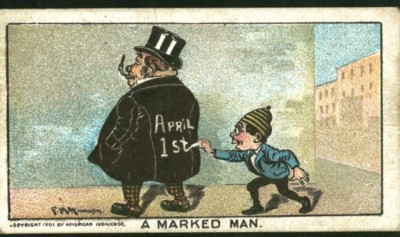
******************************************************************************************************************************** Brownstone Detectives investigates the history of our clients’ homes. The story you are about to read was composed from research conducted in the course of one of those investigations. Do you know the history of YOUR house? ******************************************************************************************************************************** April Fool’s jokes have a long and colorful tradition of the instigation of harmless pranks on hapless “fools.” They have often been played with great success on their unsuspecting targets at least since the 16th century. In 1895, one April Fool’s joke brought about not only the public mockery of one Brooklyn businessman – but also a great loss of some “small change.” THERE’S GOLD IN THEM THAR PENNIES! On April Fool’s Day in 1895, a Bath Beach business man, John Brodie of Bay Seventeenth street let his greed get the best of him. On that fateful day a “stranger entered Brodie’s collecting agency office” and “let out the secret that all the 1892 cents would be recalled and that their value had suddenly jumped to 8 cents each.” The reason, it was averred, was that “by mistake some gold had become mixed up in the copper.” Brodie saw a chance to make a great profit, but only if he acted swiftly and quietly. He, thus, “sent his office boy around to the different banks and secured fully $50 worth of coppers. Not satisfied with this he visited various stores at Bath Beach and gathered in all the pennies he could.” But Brodie could not keep the secret of the path […]
THE BABY FARM OF UTICA AVENUE (1890)
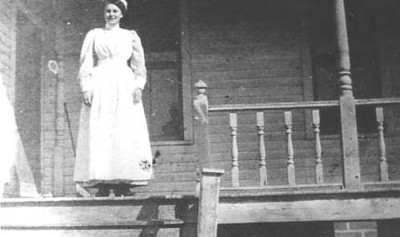
******************************************************************************************************************************** Brownstone Detectives investigates the history of our clients’ homes. The story you are about to read was composed from research conducted in the course of one of those investigations. Do you know the history of YOUR house? ******************************************************************************************************************************** The red flags began to go up slowly – one by one – as babies began to die. After Annie Smith, 1 month and 14 days old, it was wee Cora Tanner, just 7 days old. With two infant deaths being reported within the same month from a private residence at 126 Utica Avenue, Inspector Corcoran of the Department of Health was detailed to look into the matter. THE INSPECTION Arriving at 126 Utica Avenue, Inspector Corcoran discovered a “two story frame structure in which are available for maternity and nursery purposes four small rooms and an attic apartment.” Tending this facility, according to the Brooklyn Standard Union, was a Mrs. Emily V. Wilson, her daughter, and a nurse. Onsite, though, was also one baby and five women “patients.” Corcoran asked Mrs. Wilson to show her license, upon which request “she produced two documents given her by the Department of Health.” The first, dated 12 September 1886, granted permission to board four children at 100 Utica avenue, while the other bearing the date of 18 June 1888, permitted her to keep six children at 795 Herkimer street. She had no license for 126 Utica Avenue. At this point the inspector asked to view the house’s register, “which the law requires of […]
THE NYC “CORONAVIRUS” OF 1918 (1918)
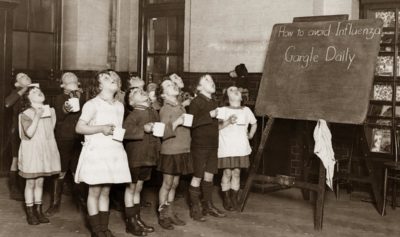
******************************************************************************************************************************** Brownstone Detectives investigates the history of its clients’ homes. The story you are about to read was composed from research conducted in the course of one of those investigations. ******************************************************************************************************************************** In 1918, the world was facing a pandemic. Influenza was on the march and it was killing more people than World War I ever could. Soldiers were dying before they could reach the front. School children were losing their lives at alarming rates. WHERE DID INFLUENZA COME FROM? According to History.com, the term influenza became commonplace to describe the disease, at least in Britain, in the mid-1700s. At the time, it was thought that the influence of the cold (influenza di freddo), along with astrological influences or the conjunction of stars and planets (influenza di stelle), caused the disease. In 1892, Dr. Richard Pfeiffer isolated an unknown bacterium from the sputum of his sickest flu patients, and he concluded that the bacteria caused influenza. He called it Pfeiffer’s bacillus, or Haemophilus influenzae. Scientists later discovered that H. influenzae causes many types of infections—including pneumonia and meningitis—but not influenza. Researchers finally isolated the virus that causes flu from pigs in 1931, and from humans in 1933. THE SPANISH FLU IN NYC The first “modern” flu pandemic occurred in 1889 in Russia, and its sometimes known as the “Russian flu.” It reached the American continent just 70 days after it began and ultimately affected approximately 40 percent of the world’s population. The flu pandemic of 1918 is sometimes known as the […]
THE CAT MAN OF GWINNET STREET (1896)
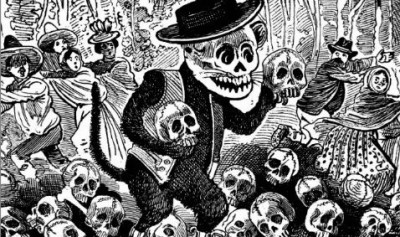
******************************************************************************************************************************** Brownstone Detectives investigates the history of our clients’ homes. The story you are about to read was composed from research conducted in the course of one of those investigations. Do you know the history of YOUR house? ******************************************************************************************************************************** Haasen-pfeffer is a German dish best served hot. A traditional German rabbit stew, it was brought over to the US by immigrants. (Hase is German for “hare,” and pfeffer is German for “black pepper.”) Although rabbits are the chief ingredient in the old-world dish, German immigrants in the early days of the country would often substitute squirrels. But never cats. Until Herman Fritsch appeared on the scene in Williamsburg in 1896. THE CAT MAN OF GWINNET STREET The locals were first alerted to the possible rabbit substitute in their stews when several neighbors heard a terrible racket occurring one night at Fritsch’s home, 168 Gwinnett Street (now Lorimer Street). As the neighbors listened, they began to hear a horrible howling coming from his rooms above a liquor store. They thought the cries sounded like “the screams of a child or woman in distress.” A consultation amongst several of the neighbors quickly took place, after which they decided that “murder was surely being committed in Fritsch’s apartments.” So Officer Lang of the Clymer Street Station was called for. While the neighbors waited, though, there was a last despairing shriek. And then all was still. OFFICER LANG ON THE JOB By the time Officer Lang arrived, “not a sound was heard” within the […]
“THE HATS TEMPTED MARY” (1890)
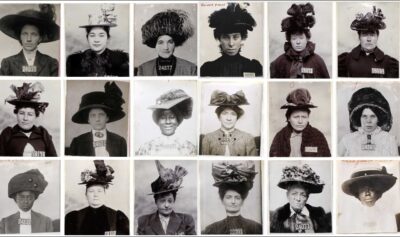
******************************************************************************************************************************** Brownstone Detectives investigates the history of our clients’ homes. The story you are about to read was composed from research conducted in the course of one of those investigations. Do you know the history of YOUR house? ******************************************************************************************************************************** A cursory search through old newspaper archives of the 1890s and early 1900s will produce a large number of incidents whereby patrons of dry goods, and other such stores, were summarily and stealthily robbed by clandestine crooks. Solomon Milkman’s Millinery House – at 442 & 444 Fulton Street – was no exception. A wholesale hat store primarily patronized by women, it soon became the target of thieves looking for money packaged in tiny, easily hidden and transportable containers – purses. The first thieves, though, saw the store itself as the easy target. Usually women, they pilfered mostly feathers, buttons, and other accouterments for the embellishment of women’s hats. In 1890, the first of Milkman’s thieves made the morning papers when a wealthy South Brooklyn woman was caught red-handed, so to speak, stealing goods valued at $3. She would not give her name to the police, as her husband was well-known, so they referred to her as Jane Doe. The police kept her – and her husband’s – identities secret and allowed the wealthy businessman husband of hers to escape humiliation. The following year, in 1891, Nora Duffy, 19, of 79 Sackett Street, was the next identified thief. A “tawdrily dressed young woman,” she was noticed by a detective of Wechsler & […]


