BROOKLYN WOMEN LIKE FOREIGN HELP (1915)
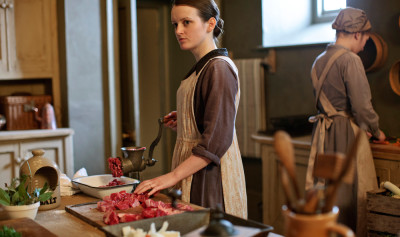
******************************************************************************************************************************** Brownstone Detectives investigates the history of our clients’ homes. The story you are about to read was composed from research conducted in the course of one of those investigations. Do you know the history of YOUR house? ******************************************************************************************************************************** American housewives have always been fond of foreign servants. Brooklyn women were – 100 years ago – more than typical of that trend. Very much like today’s dependence on foreign help (primarily labor from those of Mexican extraction), this trend was likely due – back in Victorian and Edwardian Brooklyn – to an eagerness on the behalf of these women, to have the work in a land where they had few options, as well as to an eagerness, on the behalf of the homeowners, to having cheaper, more dependable labor. Such “help” in the house, according to the New York Times, “freed women from many chores and enabled them to use their time to enhance their moral character and educate themselves – to paint, do needlework, write, engage in physical activity and travel.” The demand, though, for “foreign-speaking girls,” in particular, was “strong,” a 1915 report from a Brooklyn labor office noted. And it was so “especially in Brooklyn,” they noted, where many second generation immigrants lived and thus presented an atmosphere where “a very large number of positions are now waiting for girls who are Polish, German or Scandianvian.” A look at the census of a typical Brooklyn block of the period would produce as many as 10-20 live-in servants, […]
B’KLYN GALS SEEK LEAP YEAR COWBOYS (1912)
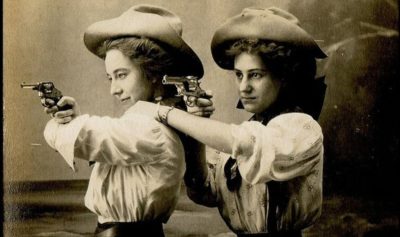
******************************************************************************************************************************** Brownstone Detectives investigates the history of our clients’ homes. The story you are about to read was composed from research conducted in the course of one of those investigations. Do you know the history of YOUR house? ******************************************************************************************************************************** “Come on boys; don your riding chaps, brush up your sombrero and dig out your rusty six-shooter and look-like a moving picture hero!” So started the article in the Sacramento Bee in April of 1912 about two Brooklyn sisters who were looking far afield for long-distance leap year affairs. Alma and Lou Bahn of 546 Washington Avenue, a boarding house between Fulton Street and Atlantic Avenue known as The Berwick, were taking this leap year business seriously, it seemed, and the men of the borough of Brooklyn, it seemed, could not hold down the sisters’ adventuresome spirits. “They want to correspond with you and perhaps the corresponding may lead to love and to the altar,” continued the Bee story. “The girls apparently realize that California is overrun with cowboys and that some of them are so dare devil and roguish that they buy their chewing gum in cigar stores,” continued the Bee. “Therefore, they ask for the names of several in order that they can each pick out a ‘nice’ cowboy and not a Black Bart the second or a California Jesse James. “The Brooklyn belles do not give their ages, but their pictures indicate that they are, or were, young. That they are not idle flirts seeking to catch some […]
“MORALS OF MINNIE” ON GARFIELD PL. (1912)
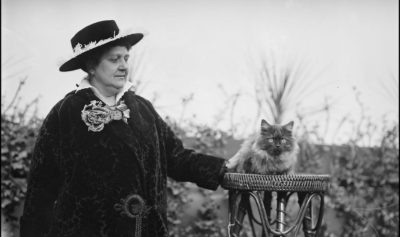
******************************************************************************************************************************** Brownstone Detectives investigates the history of our clients’ homes. The story you are about to read was composed from research conducted in the course of one of those investigations. Do you know the history of YOUR house? ******************************************************************************************************************************** In 1912, a Park Slope cat named Minnie found herself in some hot water. According to a complaint, Minnie’s claws had allegedly performed some serious mutilation to a neighbor’s roof. Here, now, are the details of: THE CURIOUS CASE OF THE CAT THAT CLAWED Location – Garfield Place (between 6th and 7th avenues). Suspect’s address – No. 182 Garfield Place, the Inasmuch Home for Aged Women. Claimant’s address – No. 178 Garfield Place, home of one William Albert Robbins, attorney. Suspect – one “Minnie,” a white Persian, and allegedly “immoral,” cat. THE WANDERINGS OF THE “INASMUCH” Around 1909, the Inasmuch Home for Aged Women moved from its previous location on Bergen Street to its new home at No. 182 Garfield Place in Park Slope between 6th and 7th Avenues. The Inasmuch (sometimes referred to as the “In-As-Much” by sloppy journalists) was a “charity” home for “aged women who are unable to get into other homes,” run through contributions and donations. It was founded in 1905, a few years before the move to Garfield Place. At that time, it existed in the Gowanus at No. 390 Douglass Street, and later moved to (what would become) the Boerum Hill section at No. 226 Bergen Street. By 1920, when it was finally closed, the […]
HOOCH RAID IN A PARK SLOPE SLUM (1922)
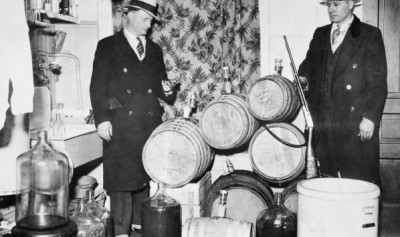
******************************************************************************************************************************** Brownstone Detectives investigates the history of our clients’ homes. The story you are about to read was composed from research conducted in the course of one of those investigations. Do you know the history of YOUR house? ******************************************************************************************************************************** Everybody was “thirsty” in 1922. Not everyone, though, wanted to pay the price of the drink. While the wet laws during the 1920s were none too popular with many Brooklynites, most of these residents, for safety reasons, though, did not want the hooch being made under their own roof. As a result, there was no shortage of citizen reports to the police of active neighborhood mash stills. Even in the slums of Park Slope. A CASE IN PARK SLOPE One of these stills was “uncovered in a flat occupied by Daniel Beshara, at 721 Union street” where it was discovered that the hooch was being made in a makeshift still in the middle of the night. Not only illegal, the operation, powered by open flames, was also dangerous. Beshara and his cousin, James Pamperi, who also lived in the building, were arrested in the act of producing mash. “In the Pamperi home were found fourteen barrels of mash,” claimed the Brooklyn Standard Union newspaper. “That dwellers in the tenements are becoming aroused over the fire peril is shown by the great number of complaining letters which have been sent” to the district attorney, demanding that he stamp out these “moonshine dens.” ASST. D.A. SNYDER TO THE RESCUE In a grand response […]
GREENWICH VILLAGE MOVES TO BROOKLYN (1921)
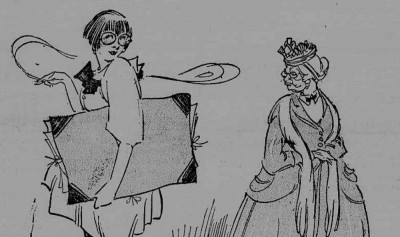
******************************************************************************************************************************** Brownstone Detectives investigates the history of our clients’ homes. The story you are about to read was composed from research conducted in the course of one of those investigations. Do you know the history of YOUR house? ******************************************************************************************************************************** “Greenwich Village is moving to Brooklyn. No, there isn’t a catch in it. It’s so.” So began the cover story of Magazine and Book section of the New York Sun from Sunday, 24 April 1921. “The new site of village activities,” the article explained, “was Brooklyn Heights.” And hair was short. It could have easily been 2017. THE BOHEMIAN LIFE OF BROOKLYN HEIGHTS The story, written by Hannah Mitchell – who would later become the editor of The Scarsdale Inquirer – took on the aura of the modern day true-life story associated with the small-town girl who’s moved to New York City in the past 5-10 years, and, finding she could not afford it – because she could not – had determined she would swallow her pride and halve her rent by moving to Bushwick, thus living (and defending) the bohemian life. Mitchell, who justified her move to Brooklyn Heights as just a slide over to another Greenwich Village with benefits, ballyhooed the pros of the Brooklyn Heights apartment and how it far surpassed that of the Greenwich Village. “From the outside these places are made attractive by little painted panels, frescoes over the doorways, and other quasi-exotic decoration,” Mitchell explained. “Inside they have the virtue of being freshly plastered and […]
THE WHITE ELEPHANT OF AVENUE “O” (1914)
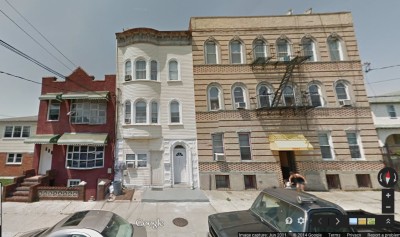
******************************************************************************************************************************** Brownstone Detectives investigates the history of our clients’ homes. The story you are about to read was composed from research conducted in the course of one of those investigations. Do you know the history of YOUR house? ******************************************************************************************************************************** We came across an old newspaper photograph from 1914, republished 30 years later in an old newspaper in 1954. This picture not only celebrates our first entry for a house in the Flatlands section of Brooklyn, but it specifically illustrates a “long-familiar landmark in Old Flatlands.” So noted the text accompanying the picture in the Old-Timers section of the Brooklyn Daily Eagle from May of 1954. Having stumbled across this interesting picture, we were curious to learn if the 2-story and basement structure in question – No. 5407 Avenue O, Brooklyn – was still there, and, by the way, if it was still “white.” So, we looked the address up on Google Maps, expecting to find a shopping mall or a 1940s era soap factory, and – miracle of miracles – there it was! There is a “newer” house to the left of it now, and it seems to have been faced with some vinyl siding (yes, white), but the house appears to be largely as it was back in 1914. The story accompanying the pic in the 1954 article reads as follows: “THE OLD WHITE ELEPHANT”-This picture, taken in 1914, shows a long-familiar landmark in Old Flatlands located at 5407 Avenue O.” COMPLETE FAMILY “The Di Carlo family is shown. […]


