BROOKLYN’S FIRST GENTRIFIER (1814)
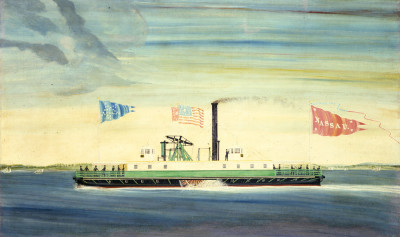
******************************************************************************************************************************** Brownstone Detectives investigates the history of our clients’ homes. The story you are about to read was composed from research conducted in the course of one of those investigations. Do you know the history of YOUR house? ******************************************************************************************************************************** It was the evolution and availability of transportation which initiated this whole Brooklyn gentrification hubub. But it started earlier than most people realize – in 1814. HOW A FERRY RIDE HELPED MAKE BROOKLYN THE ORIGINAL SUBURB A 2014 New York Times article laid out the story of how Manhattanites began their adventures in outer borough living – specifically, Brooklyn – when they started looking for cheaper digs and some lebensraum, or “elbow room,” in 1814. Regular ferry service, from Manhattan to Fulton Street in Brooklyn, started in that year when the twin-hulled Nassau, of the Fulton and South Ferry Company, carried “549 passengers, one wagon and three horses” to the borough. AMERICA’S FIRST COMMUTER Was Brooklyn where it all began? The New York Times article noted that the first man to board that ferry on 10 May of 1814 could “justly be called America’s first commuter.” Whether this claim is justifiable or not, another claim might be “justly” made: The ferry service which began on that day could arguably have kick-started the birth of gentrification. Throughout the century, as workers on Manhattan sought and found affordable housing in Brooklyn, farmers were pushed from the land. Like many selling their brownstones in Brooklyn today, though, they made tidy profits in the exchange, […]
THE “OLD LADY OF HALSEY STREET” (1935)
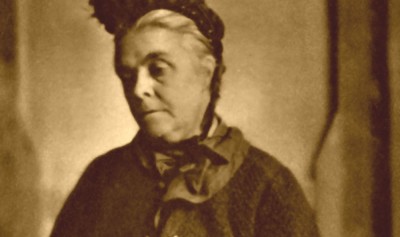
******************************************************************************************************************************** Brownstone Detectives investigates the history of our clients’ homes. The story you are about to read was composed from research conducted in the course of one of those investigations. Do you know the history of YOUR house? ******************************************************************************************************************************** It’s the type of story that modern-day house-hunters dream of – a brownstone that, since it was built, has been occupied by the same elderly lady who rarely left the house and never “modernized” it. The gas fittings were original. The details were untouched. Even the furniture was from the 19th century. Its nickname was the “Treasure House,” and it was owned by the “Old Lady of Halsey Street.” THE LIFE AND DEATH OF MARY V. WELSH When Mary V. Welsh died in April of 1935, she had been known as the “Old Lady of Halsey St.” She got the name because little was known about her other than the fact that none of her neighbors was old enough or had lived on the block long enough to have remembered her moving into her house at 425 Halsey Street. The neighbors always remembered her simply being there. She dressed in a style of 50 years previous, never spoke to anyone on the street, and had cats – 9 or 10 of them, as far as they were counted. A relic of another time, the neighbors took notice of her only as the anachronism that she was to them – a connection with a time long forgotten. After her body was found, […]
HAPPY BIRTHDAY, NEW YORK, NEW YORK! (1985)

******************************************************************************************************************************** Brownstone Detectives investigates the history of our clients’ homes. The story you are about to read was composed from research conducted in the course of one of those investigations. Do you know the history of YOUR house? ******************************************************************************************************************************** Start spreading the news! Exactly 35 years ago today (7 February 1985), Frank Sinatra’s “New York, New York” became the official anthem of “the city that never sleeps”! According to the New York Times (the official record of New York City) it was Mayor Ed Koch who proclaimed (but not through an official “proclamation”) the tune to be New York City’s official song. In a 22 February 2017 article, the Times wrote: Today the song is often paired with last call at a tavern, or the final strikeout of a Yankees game, and when it was belted out by Sinatra in 1978 at Radio City Music Hall, it instantly resonated with audiences, said James Kaplan, author of “Sinatra: The Chairman.” “Sinatra alchemized the bombast, the recalcitrant, yes, even boastful, up-all-night spirit of the city itself,” Mr. Kaplan said. While Ol’ Blue Eyes made it an anthem, it wasn’t always Frank’s tune. Written by the songwriting team of John Kander and Fred Ebb (the men behind the musicals “Cabaret” and “Chicago”), the song was first performed by Liza Minnelli in Martin Scorsese’s 1977 film “New York, New York.” “But when Sinatra heard it, he took an instant liking to it,” Mr. Kaplan said, “and when Sinatra performed the song, he conveyed its emotional […]
THE SLOW MUTATION OF “THE REGINA” (1902)
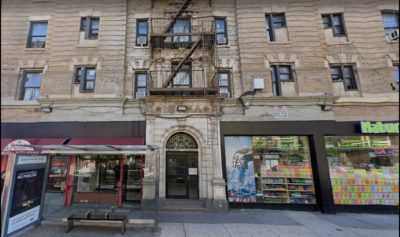
******************************************************************************************************************************** Brownstone Detectives investigates the history of our clients’ homes. The story you are about to read was composed from research conducted in the course of one of those investigations. Do you know the history of YOUR house? ******************************************************************************************************************************** In the historical research work we do for clients, we uncover old photos of their buildings in newspapers and in other archives. It is common to see that changes have taken place with these structures over the years, but these changes are not always readily apparent. Check out the following pics of this Crown Heights apartment building. See what you notice has changed in almost 120 years. Caption: “This is a picture of the Regina, a large apartment house recently bought by John Mollenhauer, the sugar refiner. It stands on the southwest corner of Nostrand avenue and Pacific street. It was built by E. J. Maguire. The building is in the heart of the St. Marks section. The transaction was partly exchange and partly cash. The building is valued at $90,000. Mr. Mollenhauer has invested extensively in property in the St. Marks section, owning several other apartment houses built by Mr. Maguire and many fine private houses. Mr. Mollenhauer lives in the Eastern District.” Follow @BrownstoneDetec Share ———————————————————————————————————————– The Brownstone Detectives Brownstone Detectives is an historic property research agency. Our mission is to document and save the histories of our clients’ homes. From our research, we produce our celebrated House History Books and House History Reports. Contact us today to begin […]
PARK SLOPE URNS vs. BASEBALL BATS (1914)
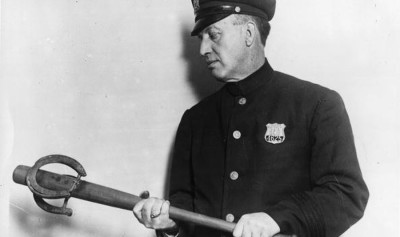
******************************************************************************************************************************** Brownstone Detectives investigates the history of our clients’ homes. The story you are about to read was composed from research conducted in the course of one of those investigations. Do you know the history of YOUR house? ******************************************************************************************************************************** On a still warm September morning in 1914, residents of the homes along the first block of Prospect Park Southwest woke to find something out in front of their houses distinctly off-kilter. As they exited their limestone rowhouses, several of them were shocked to see what appeared to be concrete rubble strewn up and down the block along the sidewalks and within their gates. Leaving their doors and approaching their gates, they began to realize the inanity of the cause – many of their decorative concrete urns, which had been perched peacefully upon the short columns flanking their front gates, had been destroyed overnight. As neighbored surveyed the block, there seemed to be no method to the madness of the demolition of these pieces of architectural ornamentation. Simply put, some neighbors had theirs undisturbed, while others’ urns were a pile of concrete on the sidewalk. The blame was quickly laid squarely at the feet of the local youth – toughs, rowdies, gangs, hoodlums. HOODLUMS It was a common story of the day. Gangs of loafers gathered on corners assaulting women verbally as they passed into the park. Roughs fighting along certain streets at odd hours of the mornings. Rowdies, after drunken trips to Coney Island, ending their nights on a high […]
A WILLOW GREW IN BROOKLYN HEIGHTS (1938)
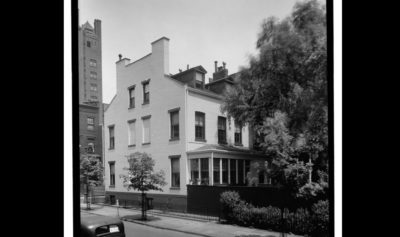
******************************************************************************************************************************** Brownstone Detectives investigates the history of our clients’ homes. The story you are about to read was composed from research conducted in the course of one of those investigations. Do you know the history of YOUR house? ******************************************************************************************************************************** (In September of 1938, one of the deadliest and most destructive tropical cyclones to hit Long Island, New York, “The Long Island Express,” wrecked havoc on the peninsula and much of Brooklyn, as well. In addition to killing 682 people and damaging or destroying more than 57,000 homes (causing property losses of $4.7 billion in today’s dollars), the hurricane knocked down innumerable trees. One of the more famous trees to lose its life in that storm was a willow tree of unknown age which sat in the yard of Brooklyn Heights’s No. 57 Willow Street. Some claimed that it was this tree that gave the street its name.) *********************************************************************************************** From the Brooklyn Daily Eagle, Mon., 31 October 1938 (by columnist Maxwell Hamilton): “At the rate timber fell around us during the Hollywood hurricane last September (ed.’s note-“The Long Island Express” was one of the deadliest and most destructive cyclones to strike Long Island, New York), it would have been a flagrant case of playing favorites to select any one particular crashing tree and honor it with front-page billing. And yet, if the evidence gathered by our secret agents is worth any salt at all, it would appear that we all missed up on one leafy upheaval that was genuine news. We […]


