ANALYZING A QUINCY STREET VICTORIAN (1902)
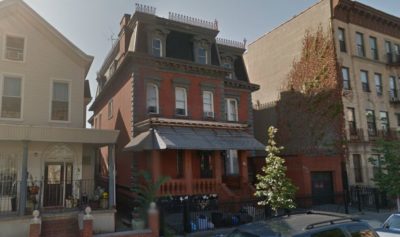
******************************************************************************************************************************** Brownstone Detectives investigates the history of our clients’ homes. The story you are about to read was composed from research conducted in the course of one of those investigations. ******************************************************************************************************************************** In 1902, Quincy Street, between Bedford and Nostrand avenues, had become a leader in the Bedford District in block beautification initiatives. A forerunner to the Greenest Block campaign that would come 70 years later, the campaign in 1902 would be called “Block Beautiful.” Because the campaign had become so popular that year, this block of Quincy Street would have a number of pictures of its houses published in the Brooklyn Daily Eagle. Here we have three shots of 186 Quincy Street – the home of Daniel Winant (a dealer in hotel and steamship food supplies) – which the Eagle called “the old Joseph C. Hoagland residence.” It was, they noted, a “double mansion of red brick, with a large lawn on one side, one of the finest of Hill residences.” So apparently, even back then, Clinton Hill was encroaching upon the Bedford section. 😉 The first picture, above, is a Google Maps northwest facing view of the house is from 2014; that is followed below by two more shots – a newspaper photograph from 1902, and then, another Google Maps shot from 2016. WHAT DIFFERENCES DO YOU NOTICE BETWEEN THE FOLLOWING TWO PICS!?!? Follow @brownstonedetec Share ———————————————————————————————————————– The Brownstone Detectives Brownstone Detectives is an historic property research agency. Our mission is to document and save the histories of our […]
BROOKLYN DREAMS OF ELECTRIC SHEEP (1903)
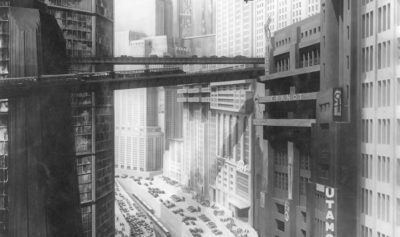
******************************************************************************************************************************** Brownstone Detectives investigates the history of our clients’ homes. The story you are about to read was composed from research conducted in the course of one of those investigations. Do you know the history of YOUR house? ******************************************************************************************************************************** In 1903, the Brooklyn Daily Eagle printed a fantastical futuristic story that gave insight into what Brooklyn’s imaginative residents may have suspected was the future for their borough. Entitled, “Brooklyn in 1999,” it was subtitled, “When Electricity Has Gone Out of Fashion and the B. R. T. Has Air Line Franchises” – a hopeful nod at the speed of progress, as well as a cynical snipe at how, ironically, “nothing ever really changes.” Like most “dreams” of the future, this one was rather reflective of the then-present, albeit including the compulsory automatic-everything and instantaneous air travel. One thing is a certainly, and that was the 1903 Brooklynite’s token view of “the help,” which was, in this case, the omnipresent Irish kitchen girl, who lives on in the form of an automaton with a fairly common Irish name… ********************************************************************************************* “The iron bridget’s out of order again this morning,” complained Mrs. Bobbidge, as her husband came out to the diningroom in his dressing gown and slippers. “Bother!” was Mr. Bobbidge’s remark. “This’ll make the fourth morning this month that I have been late at the office. He glanced at the clock. It was half past 10. He had only half an hour in which to get his breakfast and reach his desk. “We’ll […]
A WOOD FRAME DEATH SENTENCE (1914)
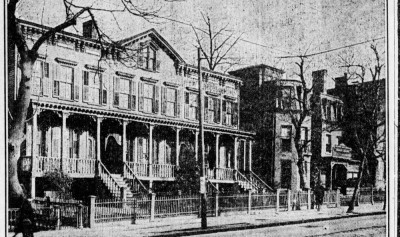
******************************************************************************************************************************** Brownstone Detectives investigates the history of our clients’ homes. The story you are about to read was composed from research conducted in the course of one of those investigations. Do you know the history of YOUR house? ******************************************************************************************************************************** Wood frame dwellings were once the norm in Brooklyn. Before a series of laws were enacted in the mid-1800s remanding that houses be constructed of “non-flammable” materials, houses had generally been made of wood. And wooden houses existed everywhere because they were simple to build, cheap in their construction and costs of materials, and their primary element – wood – was everywhere available. As “non-flammable” construction – mostly brick and brownstone – became the norm throughout the borough, these old structures were systematically torn down and replaced with the newer buildings. So, today, when you see a wooden house anywhere in Brooklyn – esp. closer to the city center – you are seeing a rare commodity, as what’s left of these structures is being torn down all around us by developers planning who are building larger and higher-occupancy buildings in their place. Back in 1914, though, people were generally tired of the wood structures – happy to see them meet the wrecking ball to be replaced by brick and mortar. So, no one lifted an eyebrow that year when the Park Slope YMCA purchased three of these type structures – with plans to level them for their new building. THE “Y” BUYS THREE TEAR-DOWNS In late 1914, the YMCA on the […]
THE CHANGING FACE OF A STOOP (1921)
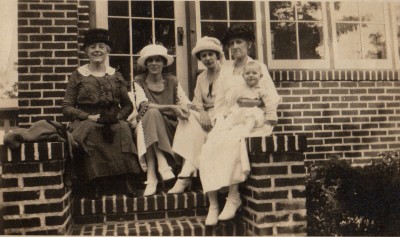
******************************************************************************************************************************** Brownstone Detectives investigates the history of our clients’ homes. The story you are about to read was composed from research conducted in the course of one of those investigations. Do you know the history of YOUR house? ******************************************************************************************************************************** In 1921, the Nilsen family purchased their Bay Ridge home at 8719 Colonial Road. Immediately, it seems, they began to document a lifelong record of their family’s generations, all surrounding one of the more iconic features attached to a Brooklyn home – their stoop. With a fascinating collection of photographs arranged in a chronological order, Bonnie Nilsen – whose father, Frank, is in most of the photographs – laid out her family’s record of life on the stoop of the original Nilsen family home. (The original record – along with Bonnie’s other photographs – can be seen at her website, BonnieNilsen.com.) In the meantime, though, we’d like to share a few of the more “stoop-central” photographs below. (See if you can spot the changes over the years.) Follow @BrownstoneDetec Share ———————————————————————————————————————– The Brownstone Detectives Brownstone Detectives is an historic property research agency. Our mission is to document and save the histories of our clients’ homes. From our research, we produce our celebrated House History Books and House History Reports. Contact us today to begin discovering the history of your home.
THE WINDSOR TERRACE ASH HOLE (1903)
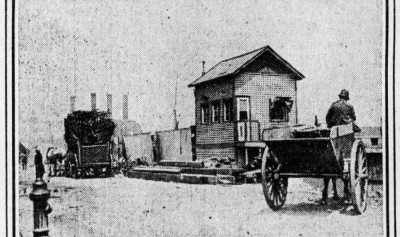
******************************************************************************************************************************** Brownstone Detectives investigates the history of our clients’ homes. The story you are about to read was composed from research conducted in the course of one of those investigations. Do you know the history of YOUR house? ******************************************************************************************************************************** Nobody likes an ash hole. It is a given fact. They’re a nuisance. They’re an eyesore. And everyone would rather they go somewhere else than stick around and continue to bother them. So, when a wealthy real estate operator and contractor, a Thomas McCann, who owned the land in Windsor Terrace where the ash hole was to go – what today comprises the backyards of Nos. 637 – 641 17th Street – determined to sell the land to an ash hole operator, all hell broke loose. For many years a dumping ground for the Street Cleaning Department and various contractors, the triangular plot of land, was now up for sale to the City. McCann, the owner, claimed the land to be quite valuable at $12,500. The City, though, thought it was really only worth less than half of that, at $5,700. The City’s real estate expert, the man who’s opinion about land might have mattered the most, and “who went over the property carefully,” thought it was worth only $1,132. The neighbors, who would have to deal with the ash hole if it moved in next door, seemed to be the only ones who really knew the value of living next to an ash hole – $500. In the end, the […]
A BROOKLYN GENTRIFICATION STORY (1900)
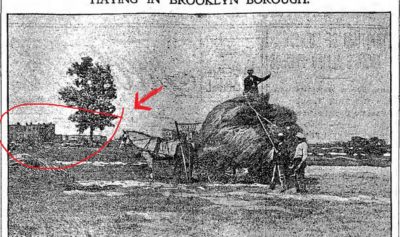
******************************************************************************************************************************** Brownstone Detectives investigates the history of our clients’ homes. The story you are about to read was composed from research conducted in the course of one of those investigations. Do you know the history of YOUR house? ******************************************************************************************************************************** (ABOVE: “Haying In Brooklyn Borough” shows farmers haying in the foreground while a row of new brownstones interlope in the background.) Chances are, if you are sitting anywhere within Brooklyn at this very moment, then you are sitting on what had once been a farm. Brooklyn began existing as farmland in the 1600s and it began to end that existence in the late 1800s and early 1900s. It was around this time that, in July of 1900, an intrepid Brooklyn Daily Eagle reporter took a trip out to the furthest reaches of Brownstone Brooklyn to see where the confluence of brownstones and farm horses collided. What he found made great copy. And it showed a more rustic world that had very recently existed in such neighborhoods as Bed-Stuy, Crown Heights, Prospect Lefferts Gardens, and other sections of the Eastern District (before houses were built there). The rural district that he trekked was the one that we now refer to as East New York. HAYING IN EAST NEW YORK As our reporter walked further and further south along Pennsylvania Avenue, he saw a district filled with streets and lots as far as the eye could see – which ran in this manner all the way down to Jamaica Bay. Those streets and […]


