BOYS WILL BE “PONY BOYS” (1915)
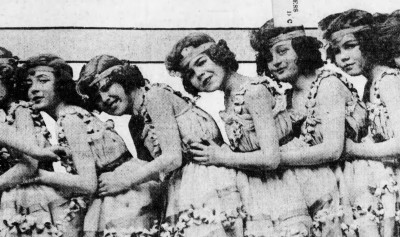
******************************************************************************************************************************** Brownstone Detectives investigates the history of our clients’ homes. The story you are about to read was composed from research conducted in the course of one of those investigations. Do you know the history of YOUR house? ******************************************************************************************************************************** In the early part of the last century, a Brooklyn school boy could put on a dress with nary a thought of it. Cross-dressing – for one night of the year, at least – became so popular with some prep school boys, that they looked forward to it eagerly every year, along with their admirers. This cross-dressing showcase was known as the “Pony Ballet,” the most popular part of the fundraiser put on by Poly Prep which was performed by the pre-pubescent boys of the Poly Prep Country Day School. At the Brooklyn Academy of Music, where the spectacle was celebrated annually, it was not only acceptable for every 10-year-old boy to wear a dress – it was expected. “In 1915’s show the ballet was composed of a dozen youngsters from the lower grades of the school made up as girls. They made the liveliest and most attractive collection of ‘ponies’ seen on the stage in a long time.” A few years later, in 1917, such songs as “I’m a Regular Man Down Here,” and “Hello, Mr. Dream Man,” were sung with bravado in the show “Three Queens.” But the cake must have been taken by the Poly Prep boys in 1914 when the “girls” came out in “doll baby dresses […]
HAS YOUR BROKER BEEN FOOLING YOU? (1905)
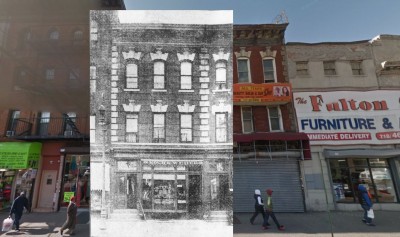
******************************************************************************************************************************** Brownstone Detectives investigates the history of our clients’ homes. The story you are about to read was composed from research conducted in the course of one of those investigations. Do you know the history of YOUR house? ******************************************************************************************************************************** In 1905, No. 838 Flatbush Avenue was only a few years old. But it was already on its third tenant. The Brooklyn Daily Eagle opened its Flatbush office at No. 838 (today, No. 834) that year, forcing Weber & Koch realtors out the door. The building had been constructed by Captain Henry Hoffman. Hoffman, referred to as captain from his sailing days, was the sole surviving member of the crew of the schooner America which had brought the America‘s Cup to the United states in 1851. In business life, Hoffman was a big man in New York society, having been a millionaire coal merchant, though, in 1905, and reputedly (according to many sources – amongst them the Daily Eagle) the wealthiest man in Flatbush at the time. Hoffman had originally expected to use the site for the real estate dealings he dabbled in. Soon after building the structure, however, Hoffman would sell and move on. The new owners would be the borough’s premiere newspaper, the Brooklyn Daily Eagle, which would maintained the office as a branch of the newspaper up until around the late 1920s. In 1918, however, part of the building was taken up by another organization. The Flatbush Chamber of Commerce established itself there. All this from an unassuming […]
GOD’S OIL & LUBE SHOP (1903)
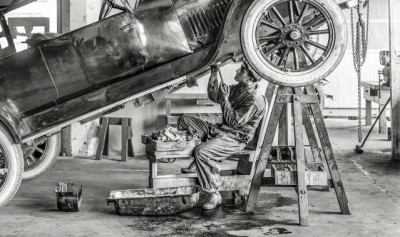
******************************************************************************************************************************** Brownstone Detectives investigates the history of our clients’ homes. The story you are about to read was composed from research conducted in the course of one of those investigations. Do you know the history of YOUR house? ******************************************************************************************************************************** By 1903, builder Wilfred Burr had moved into his second decade of house building, putting up brownstones and limestones around Stuyvesant Heights at a quick clip. Within his first decade in the profession he had managed to build hundreds of them. He was just 35, and was living with his wife, son, two daughters, and his mother-in-law (and two Swedish servants) at 555 Jefferson Avenue, but he was starting to become restless with the monotony. Able to purchase lots, put up buildings and sell them – almost with his eyes closed by this point – he began to look for something additional to do with his life outside of the construction business, seeking some way to spend his expendable income on an investment that excited him – something that was new and different. The new automobiles held that cache. They were fast, they were complicated – and his wife did not like him driving them. BUILDING THE AUTOMOBILE At some point, Wilfred and one of his bowling partners, secretary of the St. James Bowling Club, Robert W. Haff, had hatched the idea to bring a new and exciting automobile company to Brooklyn. This new-fangled piece of machinery was in its infancy, but more and more people – especially those with expendable […]
LEARNING TO BOOGIE IN WILLIAMSBURG (1857)
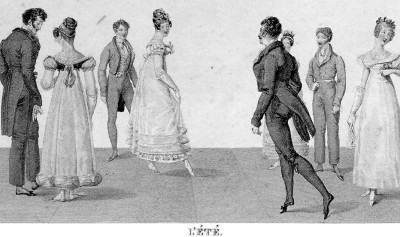
******************************************************************************************************************************** Brownstone Detectives investigates the history of our clients’ homes. The story you are about to read was composed from research conducted in the course of one of those investigations. Do you know the history of YOUR house? ******************************************************************************************************************************** People loved to dance back in the 1800s. Their dancing was mostly formal, almost mimicking a prepared act, but it took place in social settings allowing participants to display a good amount of that godly grace their lives often lacked. And people danced not just to exercise, but to socialize, to entertain themselves, and to hear about the latest news from their old and new friends. And everyone wanted to know the latest dances so that they were not embarrassed in such polite company, or so that they could – at the very least – discuss these dances intelligibly. THE 19TH CENTURY’S DISCO In 1857, the Lancers’ Quadrille was all the rage – and by “all the rage,” I mean “ALL THE RAGE.” It seemed that every dance school was teaching it, every tongue was wagging about it, and every newspaper dance academy ad offered its instruction. The Lancers’ Quadrille was a dance performed by four couples – it was a precursor of sorts to the square-dance, albeit a more refined square dance where everyone dressed supper classy and pretended to be nobility. SQUARE DANCIN’ IN BILLYBURG (W/PROF. TRENOR) In Williamsburgh, there existed Professor Trenor’s Private Dancing Academy, at No. 90 South Eighth Street near the East River. It was likely […]
THE SEVEN SISTERS OF LINCOLN PLACE (1906)
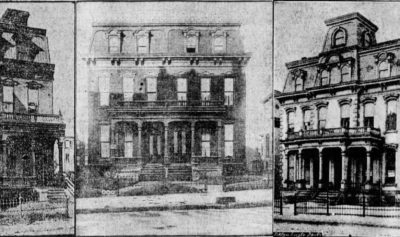
******************************************************************************************************************************** Brownstone Detectives investigates the history of our clients’ homes. The story you are about to read was composed from research conducted in the course of one of those investigations. Do you know the history of YOUR house? ******************************************************************************************************************************** If the Big Bad Wolf had had anything to do with it, he would have always voted for the predictability of a good detached wood-frame villa. It had gotten him far in his day and, what’s more, it had gotten him fed. But it wasn’t the Three Little Pigs’ hairy nemesis that was making housing decisions in Park Slope, Brooklyn around the turn of the last century. Rather, it was the Pigs, themselves, who wanted more modern, sturdier, up-to-date brick and masonry structures. THE DEATH OF VILLAS In early 20th century Brooklyn, a combination of home buyers’ indicators was guiding downward the valuation of older Victorian-era properties. First of all, impacting the long-term downward trajectory, there were the laws promoting fire zones that prevented structures built with wood frames from being constructed going forward. There was also their susceptibility to fire (which prompted these fire zones in the first place). And there was their age – a large number of free-standing villas still around in Brooklyn at the time were at least 25 years old – most others were many years older that that. Most visible, however, were the tastes of the early 20th century home buyers which leaned heavily in the direction of sturdy masonry buildings. The variable, however, which […]
THE HUNGRY BURGLARS OF HENRY ST. (1890)
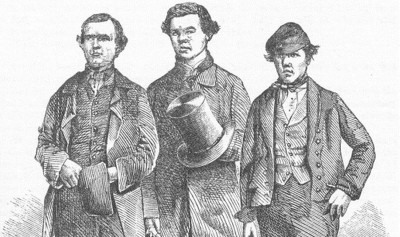
******************************************************************************************************************************** Brownstone Detectives investigates the history of our clients’ homes. The story you are about to read was composed from research conducted in the course of one of those investigations. Do you know the history of YOUR house? ******************************************************************************************************************************** Not all burglars are intent on “getting in and out quick.” And so it was when, in 1890, two Brooklyn thieves, during a burglary of a Brooklyn Heights home, actually interrupted their own burgling in order to sit down and enjoy a full meal – before carting off their substantial haul. It was in the wee hours of a February morning when the men were prowling about for a target of opportunity. Approaching Henry Street, they noticed the corner house at No. 303. The entire house was dark and so, hopping the fence, they approached the back of the residence to check the kitchen windows. Finding them closed and locked, they forced one of them open, then entered the house. The Brooklyn Daily Eagle noted that the burglars, at this point, began to help themselves to “everything they could find on the basement floor.” In the process they “broke open the cook’s trunk and stole $18 of her savings,” and “carried away silverware and a clock valued at $60.” Before going, however, finding themselves hungry and realizing they were in the house’s kitchen, they located the dishware and glasses, and fastidiously set the table. Soon, they were all seated and enjoying “a substantial meal of meat, bread, cake, and other articles […]


