FROM A TUDOR TO A BOX (1926)
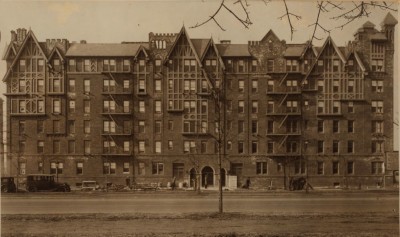
******************************************************************************************************************************** Brownstone Detectives investigates the history of our clients’ homes. The story you are about to read was composed from research conducted in the course of one of those investigations. Do you know the history of YOUR house? ******************************************************************************************************************************** It’s a given fact that we all age. It is not such a given that we all do it well. These impressive Tudor revival apartment houses were going up everywhere throughout the outer reaches of Brooklyn in the mid 1920s. The style was appealing to the Brooklynites of the Roaring ’20s, especially those who did not want the responsibility of the upkeep of a full house, had some money in their pocketbooks, and wanted a style of home that was not only visually appealing, but was also different from the stoic – and by then dated – townhouse. The “ultra modern elevator apartment house” at 1800 Ocean Parkway in Gravesend boasted an “ocean view” and apartments with cedar closets, a vapor heating system, tiled kitchens, spacious foyers, an incinerator, and selections of apartments with three, four, or five “huge” rooms each. They were renting for a princely $60 to $95 a month. No one, at the time, could have expected that these grand apartment houses would have aged so disgracefully. In this case, time has been particularly unkind. While this building may very well be structurally sound today, everything that had once made this building stand out from its neighbors – and contributed to its great “visual appeal” – has either […]
A “9-YEAR-OLD HABITUAL DRUNKARD” (1900)
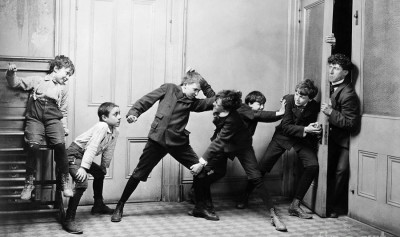
******************************************************************************************************************************** Brownstone Detectives investigates the history of our clients’ homes. The story you are about to read was composed from research conducted in the course of one of those investigations. Do you know the history of YOUR house? ******************************************************************************************************************************** A few years ago today, the internet was abuzz with the story of a 9-year-old boy who drank, smoke pot, and was abusive to everyone. Maybe scandalous in today’s world, but back in the 19th century it was apparently a more common occurrence. In a world where 9-year-olds were habitually asked to run down to the corner bar and get their father’s (or mother’s) beer pail or growler filled, such boys were plentiful. BOARDING BOYS Children were also less protected, as we all know, back in the day. They were frequently even boarded with other families in the neighborhood, or shipped off to those who advertised their services in the newspapers. These latter were usually those who were house- or room-rich (had enough extra room for children wherever they lived), but didn’t necessarily have the income needed for getting by. Boarding children was just another way of making ends meet. “BOARD – TWO OR THREE CHILDREN wanted to board; will be instructed. Apply at 98 Troutman st.,” read one ad, for instance, appearing in the Daily Brooklyn Eagle in 1885. But it was not always those seeking boarders who had the bad children who drank, smoke, and cursed. At the very same address listed in the ad above, 98 Troutman Street, […]
WATCHING THE (HOUSE) DETECTIVES…

Have you ever wondered about the people who once lived in your house? Where did they sleep? How did they dress? Were they bankers, doctors, carpenters, engineers…? What were the hopes that encouraged them to go on and the secrets that kept them awake at night? Well, if you live at 738 Macon Street in the Bedford-Stuyvesant section of Brooklyn – which is a decidedly very low probability – then you are privy to the answers to these questions. And more. Brownstone Detectives, an historical investigation team, published 738 Macon Street: The Story of a House, a 170-page full color coffee table book laying out the history of the brownstone house at that address. Published in 2014, it was their first book of many others to follow. Since then, they have gone on to publish more than 50 others for homeowners in Brooklyn and Manhattan. And they plan to expand soon to the remaining boroughs and eventually to the tri-state region. Their first book – like the many that have come after it – spanned the ownership of the house for many generations, including the ownership of the land that the house was built on back to the time of the original Dutch settlers. The story is revealed in a manner that seamlessly weaves the individual owners’ stories into one continuous and flowing narrative. Rich, colorful pictures, ancestral documents, newspaper clippings, and architectural records fill the almost 200-page hardbound document. FALLING INTO HISTORY… Brian Hartig, the chief Brownstone Detective, fell […]
DRAPED IN OLD GLORY AT 159 ADELPHI (1905)

******************************************************************************************************************************** Brownstone Detectives investigates the history of our clients’ homes. The story you are about to read was composed from research conducted in the course of one of those investigations. Do you know the history of YOUR house? ******************************************************************************************************************************** “Few men have lived lives of greater adventure and achievement than John Quevedo, whose body, in a flag-draped coffin, lies at his home, No. 159 Adelphi street, Brooklyn.” So read an article in the Duluth Evening News of 9 February 1905. “Fifty years in the United States Navy, a member of the crew that, under Commodore Perry, opened Japan to Western civilization, one of Farragut’s men in the big sea lighting of the Civil War and, greatest of all, one of the gallant crew that under Schley dared the perils of the frozen North and rescued Greely from his starvation camp at Cape Sabine. Such is the record of John Quevedo. “A Spaniard born, he had been in the American Navy since he was 16. His father was a bluejacket before him, and his son fought under Dewey at Manila, and is now instructor of gunnery at the Brooklyn navy yard. “For the past decade John Quevedo has been the storekeeper at the navy yard ever since a shell fell on his feel on board the Boston and incapacitated him from further active service. Two weeks ago the veteran was attacked by paralysis and gradually sank into death.” A GREELY RESCUE HERO “Of all his adventures, he spoke most proudly of […]
THE DAY BED-STUY WAS BORN (1895)
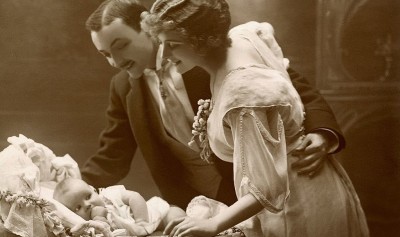
******************************************************************************************************************************** Brownstone Detectives investigates the history of our clients’ homes. The story you are about to read was composed from research conducted in the course of one of those investigations. Do you know the history of YOUR house? ******************************************************************************************************************************** Bedford-Stuyvesant, known coloquially as “Bed-Stuy,” is a section of Brooklyn that conjures as many mental images as there are residents of the district. With a past as colorful and storied as any other section of the borough, its ups and downs, though, seem to have been much more extreme. One only need consider the district’s unofficial slogan for much of the past 30 years, “Bed-Stuy: Do or Die,” to dredge up a very recent period sadly associated with images of guns, drugs, and gang violence. But this more recent history is not the point of this story. We want to go further back to try and understand how Bedford, which was formerly a village built up around the intersection of Bedford Avenue and what would become Fulton Street, joined with the developing neighborhood of Stuyvesant Heights. The official birthdate of Bedford-Stuyvesant has always been a moving target depending on the reference made or its actual source. Any discussion of its original designation would need to consider the fact that the term “Bedford-Stuyvesant” came about colloquially, and so unofficially, at first, but later took on the mantel of authority. WAS BED-STUY BORN IN THE ’30S? The majority of designations have placed Bed-Stuy’s birthday squarely within the 1930s. The New York Times, in […]
MURDER AT No. 248 PRESIDENT ST (1916)
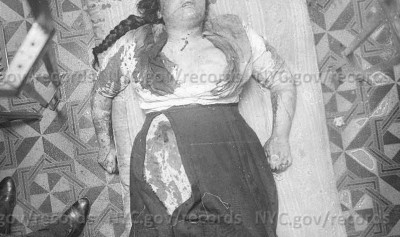
******************************************************************************************************************************** Brownstone Detectives investigates the history of our clients’ homes. The story you are about to read was composed from research conducted in the course of one of those investigations. Do you know the history of YOUR house? ******************************************************************************************************************************** Joseph Russo had a good reputation. He was a 26-year-old longshoreman with a strong work ethic. But when his wife was discovered with a bullet between her eyes, Detective Coughlin figured he would search the place. And when the dust had settled, the police were in possession of nine weapons and Russo was in lock-up. INVESTIGATING THE CRIME Carroll Gardens by this time had changed from the lower middle class Irish neighborhood that it had once been, into a working-class Italian community with numerous Italian criminal gangs. Violence was a common daily occurrence and reports of abductions, shoot-outs, and kidnappings for ransom were often in the papers. Still, the police had, during the investigation, come to believe that “the bullet that killed his wife was fired accidentally.” Russo told the police that he had been “cleaning an automatic pistol about 10 P.M. with his wife seated across the table from him with the baby, Anthony, in her lap.” After Russo had removed the magazine, he had forgotten that “a cartridge had been left in the chamber.” Then, apparently, continuing to clean and oil the weapon, Russo pulled the trigger and the cartridge “exploded.” First, gracing the face of the baby, whom Rose had seated on the table, the bullet then “entered […]


