“HE CAME TO FIX THE ELECTRIC WIRE” (1938)
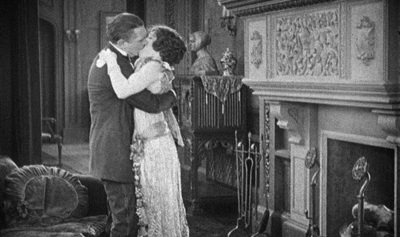
******************************************************************************************************************************** Brownstone Detectives investigates the history of our clients’ homes. The story you are about to read was composed from research conducted in the course of one of those investigations. Do you know the history of YOUR house? ******************************************************************************************************************************** “And if thow take a wyf unto thyn hoold, Ful lightly maystow been a cokewold.” With these words – and others – the Wife of Bath, in Shakespeare’s “Chaucer,” attempted to secure the hand of the knight by frightening him with the possibility of becoming a cuckold, a man whose wife is sexually unfaithful. The word has survived down the ages used in most derisive ways, but mostly as a lesson that men should pay more attention to their wives and take caution, particularly if they are pretty, that they do not “wander.” In 1938, this very tale unfolded for a mechanical engineer, whose wife “employed in a swanky Lexington Ave., Manhattan, hotel,” had the misfortune of being “caught in the act.” THE STORY ABOUT THAT “ELECTRIC WIRE” The whole story started when Thomas Goodfellow’s wife, Mary “Mae” Goodfellow, “a comely brunette,” one day left her husband and visited friends of theirs, Mr. and Mrs. Rafael of No. 628 40th Street. Along with her visit to Manhattan came her story that “she had had some trouble with her husband and asked for shelter.” Mrs. Rafael allowed Mrs. Goodfellow to remain and when the Rafaels left for Central Islip for the summer, “Mrs. Goodfellow was still there.” While Mrs. Goodfellow resides in […]
A BUFFALO SOLDIER ON HERKIMER ST. (1930)
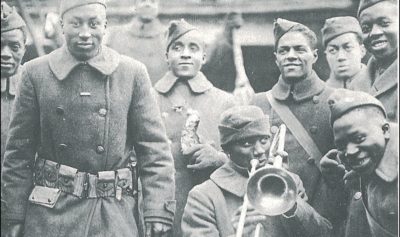
******************************************************************************************************************************** Brownstone Detectives investigates the history of our clients’ homes. The story you are about to read was composed from research conducted in the course of one of those investigations. Do you know the history of YOUR house? ******************************************************************************************************************************** It was 1918, and Harry Francis Cole had only three options. As an African-American in the United States, drafted into the military when the country was entering the First World War, he could: 1) work as a non-combatant – laboring as a stevedore, digging trenches, graves, and latrines, or building hospitals, roads, bridges, and railroad lines, 2) fight in a segregated unit – as an American soldier with the French Army, whose soldiers did not object to fighting alongside African-American troops, or 3) join a military band – one of the many brass bands in the European theater that were composed of African-American musicians. Cole, already a budding musician back home in Philadelphia, would naturally find himself in the last group, a horn player in one of the units of the 92nd Division – or, as the military unit was more commonly known, the venerated “Buffalo Soldiers.” BORN TO WAIL Born one of four children to William and Carrie Cole in Philadelphia in 1896, Harry Cole was never really destined to be a fighter. When he was a boy he was even then sure that his future was in music. He likely caught the bug when ragtime was all the craze, but when he heard the new sound of jazz in the […]
THE JAPANESE GILT OF 150 HANCOCK ST (1887)
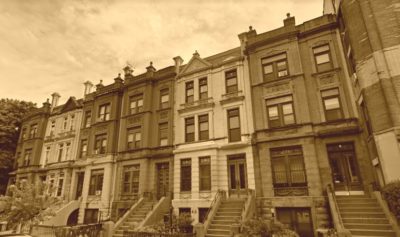
******************************************************************************************************************************** Brownstone Detectives investigates the history of our clients’ homes. The story you are about to read was composed from research conducted in the course of one of those investigations. Do you know the history of YOUR house? ******************************************************************************************************************************** Much of the design selections made by designers in the last part of the 19th century are comprised of a coterie of materials, patterns, and tools either no longer available today or much changed in their appearance. Although most builders used simple materials that did not require the knowledge or training of a master designer, some of the more high-end brownstone constructors utilized the services of those who would tailor their interiors toward the more affluent members of society. In the late 1880s, the Brooklyn Daily Eagle started a series of articles which described – in great length and detail – the interiors of individual newly-built or renovated houses. These houses were usually brownstones belonging to those affluent or upper-middle-class members of society. Not only did such articles describing the interiors of neighbors’ homes sell newspapers, but the articles also served as advertising directed at those in the market for a townhouse to have a home of their own. These advertisement-articles were placed, likely at the expense of the designers responsible for the “interior decorations” being described, as each piece ended with what readers wanted to know. “Who did the work?” THE WORK WAS DONE BY HALBERT In 1886, a row of Queen Anne style 3-story and basement “brown stone houses” […]
THE BOY AUTHOR OF 224 MONROE ST (1914)
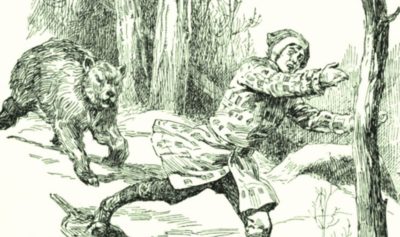
******************************************************************************************************************************** Brownstone Detectives investigates the history of our clients’ homes. The story you are about to read was composed from research conducted in the course of one of those investigations. Do you know the history of YOUR house? ******************************************************************************************************************************** In 1914, Gilbert P. Simons was being lauded for his first book. Simons, however, was no typical writer – he was a 13-year-old Brooklyn boy who had just written and published his very own book. “Shadorok Tales,” Simons’ work, was a foundational “collection of stories by him and his cousins and friends, none of whom is a great deal older than he.” WRITING THE BOOK ON MONROE STREET The entire affair began when Simons, who “in the winter lived at 224 Monroe street (near the corner of Nostrand Avenue), and in the summer at Blauvelt, N.Y.,” was given “a printing press and type by his father on Christmas of 1912,” noted the Brooklyn Daily Eagle. Little Simons appears to have had a leg up in his young publishing career by a father who worked for the Daily Eagle, which was Brooklyn’s newspaper of record. Simons started at first printing invitations, cards, circulars, billheads, &c., but then “the big idea of the book took hold of Gilbert and his father. “Everyone who was asked to contribute did so,” noted the Daily Eagle of the compilation volume of stories, “and soon there was enough ‘copy’ on hand to begin ‘setting it up.’” In 1915, the book was finished and printed up by the Shadorok […]
BROOKLYN’S PLAN TO SAVE DAYLIGHT (1917)
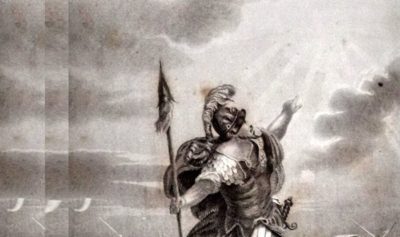
******************************************************************************************************************************** Brownstone Detectives investigates the history of our clients’ homes. The story you are about to read was composed from research conducted in the course of one of those investigations. Do you know the history of YOUR house? ******************************************************************************************************************************** It’s difficult to believe that just over 100 years ago there was opposition to Brooklyn’s plan to “save daylight.” But in 1917, when Brooklyn State Senator Calder was talking up his “Daylight Saving” idea, many future-opponents started, at that time, to smell (and prepare for) a fight. As such, when the bill was actually lodged the following year, these opponents of sunlight came out from the dark in full force with every reason NOT to have daylight saving – under the sun: (1.) The theaters would go out of business, as no one wants to attend while the sun is still shining. (2.) The Bible is opposed to it – read Joshua, chapter 10, where he fought the Amorites – during the battle of which God held the sun from going down for one hour – long enough for Joshua to win his battle. (3.) Too much sun is bad for us, claimed some doctors. (4.) Steamship and railway lines would suffer, as their adjusted timetables would confuse passengers. (5.) It violated Home Rule, said Governor Al Smith. The reasons were as endless as they were interesting. But just as the sun will rise tomorrow, so was it eventual that Daylight Saving would come. In the end, the measure won the […]
THE “WET SPECIMEN” OF HALSEY STREET (1899)
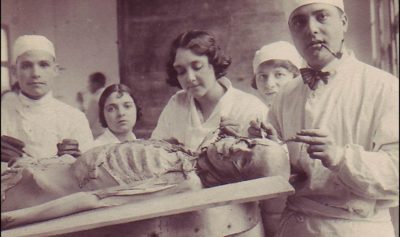
******************************************************************************************************************************** Brownstone Detectives investigates the history of our clients’ homes. The story you are about to read was composed from research conducted in the course of one of those investigations. Do you know the history of YOUR house? ******************************************************************************************************************************** When a body was discovered in the cellar of a brownstone on Brooklyn’s Halsey Street, the police were immediately notified and the “owner” hunted down… The medical profession, like most other professions, was much less regulated in the 19th century than it is today. Those who worked within the medical studies of the period – involving the dissection of corpses, the experimentation on recently live human organs, or the display of exoskeletal remains – were just as similarly unregulated. There was a medical practice, however, which was associated with the medical profession but which also appeared more morbid – it provided for education of medical students through the preservation (and display) of certain organs, animals, or tissue specimens. This practice appears to have fallen, however, into an altogether different grouping of practices – at least as regarded the general public. This was the practice – long important to the preservation of biological specimens for observation and continued study – of the preservation of biological tissue within alcohol-filled jars – otherwise known as “wet specimens.” While these specimens were a common site within a laboratory, hospital, or teaching school, such specimens were rarely known to disappear from these locations and, more rarely so, to find themselves upon the cellar shelves of a […]


