THE BOY WHO COULDN’T MEND (1914)
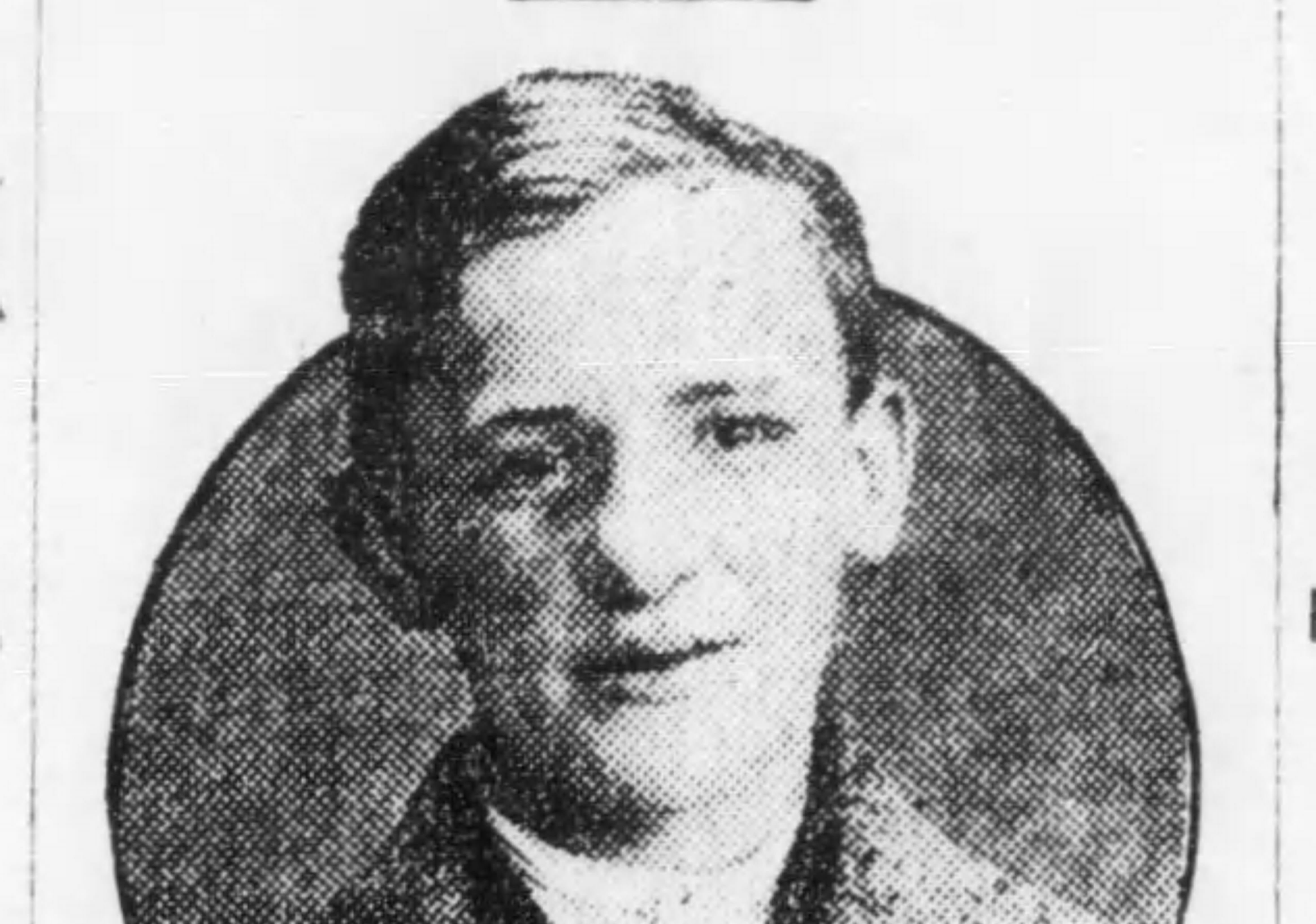
Some criminals just cannot reform. Young Raymond “Angel Face” Beck was a good example. 100 years ago today, the 14-year-old Brooklyn boy was pawning stolen silverware on Atlantic Avenue when the police happened into the pawn shop. NO JUVENILE ASYLUM BUILT COULD HOLD THE “ROBBER CHIEF” Known mostly for his escapes from “prison,” at the time, Raymond Beck, “son of well-to-do parents of 7 Cypress Avenue,” and a self-described “Robber Chief,” had broken out of the Dobbs Ferry Juvenile Asylum a total of four times by 1914. Each time young Beck, “blue-eyed, fair-haired and innocent-looking,” made a B-line directly for Brooklyn and the houses of new victims. Beck would make a career of illegal activity and escaping asylums and reform schools throughout his life. The newspapers are replete with his stories of burglaries and escapes at least through the mid-1920s, when he would finally disappear from the news. But, for the majority of this period, whenever the name Raymond Beck was mentioned in the papers, Brooklynites locked their doors and hid their valuables, as there was a good chance they’d end up in his possession. “ANGEL FACE” RETURNS TO BROOKYLN After the “boy burglar” had most recently been paroled in 1914, he ended up in Brooklyn once again – this time in the parlor of Edward A. Peterson of 567 Eighth Street in Park Slope. Now, Peterson did not know “Angel Face,” but that was not only because the two had never been introduced. Beck simply arrived at Peterson’s home […]
WAS POT GROWN IN THIS BROOKLYN PARK? (1952)

******************************************************************************************************************************** Brownstone Detectives investigates the history of our clients’ homes. The story you are about to read was composed from research conducted in the course of one of those investigations. Do you know the history of YOUR house? ******************************************************************************************************************************** Around the 1920s, Americans began to become aware of “hop.” Known alternatively as “marihuana,” the “loco weed,” “drugged cigarettes,” and a laundry list of other names, the narcotic became the focus of Fed struggles in the ’30s as its use became widespread. Raids were conducted, while drug-crazed citizens went on “1-man riots” because of the drug, and a herd of milk goats grazed on a “5-acre crop” of it at Floyd Bennett Field. In the end, though, the marijuana craze would become a difficult crop to spike. By the 1950s, raids had become an almost daily occurrence, and the City of New York was cooperating with Federal agents as it turned to conducting “operations” of its own to locate and destroy large crops that seemed to be growing just about everywhere in Brooklyn and Queens – mostly on vacant lots. A BROOKLYN PARK GROWS WEED At one point, the City conducted a public campaign with the Sanitation Department and the Police Department at the lead. The police did the locating and the sanitation workers did the destroying. During one raid, in 1952, a rather large marijuana crop seemed to be growing in a wide open park area “in the shadow of the Brooklyn Federal Building, one block north of Tillary St.” […]
MACON STREET VS. CHARLIE CHAPLIN (1913)
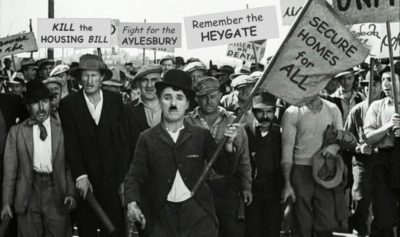
******************************************************************************************************************************** Brownstone Detectives investigates the history of our clients’ homes. The story you are about to read was composed from research conducted in the course of one of those investigations. Do you know the history of YOUR house? ******************************************************************************************************************************** In 1913, “Charlie Chaplin” was set to hit Bed-Stuy – in a big way. Let me explain. The residents of Stuyvesant Heights – 100 years ago – were concerned about any proposed construction developments that might encroach upon the way of life to which they’d grown accustomed. New people were moving into the neighborhood, new businesses opening up, and the residents felt they were losing control of what was going on around them. Specifically, they were justifiably troubled with the type of buildings the local developers might be planning to construct in their midst. In 1913, it was the movie houses. NOT IN MY BACKYARD! The construction of a “moving picture show” on Macon Street (near Lewis Avenue), was so unpopular, in fact, that its residents would take drastic measures against the proposal to build one “directly opposite the Public Library in Lewis Avenue.” The new theater was to go up on the northwest corner of Macon Street and Lewis Avenue, where a 3-story wooden structure (with a 2-story addition at back) had existed since the last century. Surrounded by their “fine residences,” the residents expected the lot to attract an establishment that would be more in keeping with the status of the neighborhood. When residents discovered, though, that the owners […]
PARDONED THAT HE MAY HANG (1905)
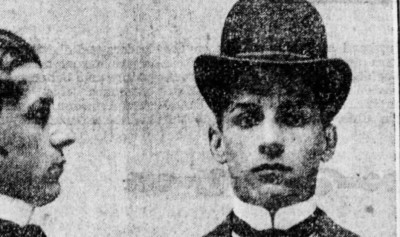
******************************************************************************************************************************** Brownstone Detectives investigates the history of our clients’ homes. The story you are about to read was composed from research conducted in the course of one of those investigations. Do you know the history of YOUR house? ******************************************************************************************************************************** He was a “desperate young crook,” according to the Governor of New York. But the governor went ahead and pardoned him anyway. Charles Bassett, 19, of Brooklyn, had committed enough crimes that the State decided that he needed to be put away for eight years in Sing Sing. Amongst other felonies, he “broke into Nicholas Weinberg’s jewelry store on Fifth Avenue” and “assaulted Jeweler Bridger and stole his diamond on Fulton Street.” And these were the crimes that they knew about. Bassett was a bad apple – plain and simple. But Governor Higgins in an agreement with Connecticut’s governor, made a deal that scared and surprised everyone. And in the process, he practically opened Bassett’s cell door himself, escorted him through the yard, and watched as he walked out the prison gates. ROBBING PETER TO PAY PAUL These listed crimes, however, were but mere child’s play when his solitary darker and fouler crime was taken into account. As all good thieves do, Bassett had a criminal network to which he belonged. As soon as there was a chance to make a quick buck without having to do work of any kind, Bassett could smell the opportunity. In Bridgeport, Connecticut, a $20,000 haul was the glimmering bauble that lured Bassett’s attention. It […]
SNOWBALLS TO BULLETS IN BROOKLYN (1888)

As the snow piled up during the Blizzard of 1888, Brooklynites began to experience countless fights. Snowball fights, that is. Most were lighthearted and fun, romps in the snow bringing joy and relief from the endless shoveling and the stress of everyday life with the white stuff. But sometimes these snowball fights turned ugly, exposing the more unsavory side of Brooklynites. They showed how quickly a snowball fight could evolve from a joyful game into mayhem-filled terror. Two cases, in particular, made the pages of the Brooklyn Daily Eagle during the week of the historic blizzard.Yesterday’s story involved a razor. Today’s involves a gun. THE GUN Seventeen-year-old James Fallon of Flatbush, Brooklyn, a “very quiet lad” who was working two jobs at the Hunter’s Point docks (as a plumbers’ apprentice and as a telegraph operator), fell in with a youth “of his own age,” one Joseph Woods, on the way to work two days after the Blizzard of ’88 struck. At the dock, the two boys noticed a “great pile of snow” – likely carted there by city contractors who were attempting to clear the streets. The two “for some time pelted each other with snowballs,” having great fun together. At one point, though, James managed to strike Joseph in the mouth with a snowball. This particular snowball “made him angry, whereupon he drew a revolver” and firing it at James, “struck him over the left eye.” James fell in the snow. Joseph ran away. THE TREK Most 17-year-old’s shot […]
A BEER CALLED MÜNCH (1904)
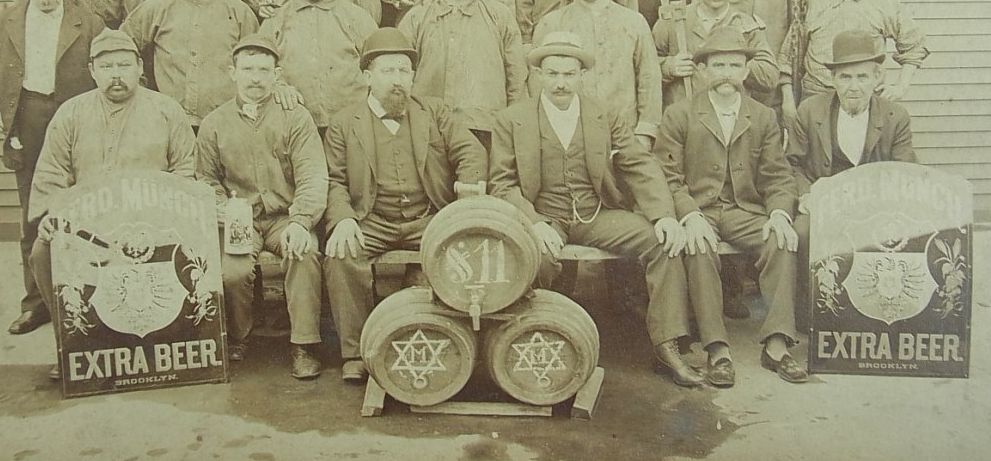
******************************************************************************************************************************** Brownstone Detectives investigates the history of our clients’ homes. The story you are about to read was composed from research conducted in the course of one of those investigations. Do you know the history of YOUR house? ******************************************************************************************************************************** One might wonder if a beer called “Münch” had at one time been on the receiving end of an unfortunate and slightly counter-intuitive moniker. Today, product names are usually selected based upon their abilities to stir some positive emotions – within the minds of the consumers – about their products. “Munch,” though, was not always an informal term describing a way of eating. More than 100 years ago, it was also a German name that was connected in the minds of many Brooklynites with a very satisfying “table beer.” THE MUNCH BREWERY The Ferdinand Münch Brewery, located at 277-299 Vernon Avenue from the late-1870s through to about 1920, when Prohibition spelled its end, satisfied the palates of Brooklyn, as a “family” beer, for more than 40 years. Housed originally within a building of old stone construction, Ferdinand Münch replaced the brewery building with a structure of brownstone and brick shortly after he purchased the property. Münch, though, would pass within the decade and leave his brewery to his sons, one of whom was William Münch. WILLIAM MUNCH AND HIS BROADWAY BUILDING In 1904, Sigmund Eisenbach, of 227 Gates Avenue, built a 4-story office building on the corner of Myrtle and Broadway, selling it to Ferdinand’s eldest son, William Münch, who had […]


