“GROUND TO PIECES” IN THE CUT (1914)

Martin Conly was the first to die by the cut in 1908. He and a boyhood “chum” were back from Coney Island at about 1 a.m. when the automobile they were traveling in ran into the low iron guard rail. Conly, the son of a prominent Brooklyn Democratic ward leader, was thrown from the vehicle and onto the tracks below. He was killed instantly. The Long Island Rail Road, which was not held accountable in court for the death, would later remove the light iron fencing and replace it with a thick concrete wall to prevent the same thing from happening again. Just a month later, though, before they could eradicate the danger – it happened again. Five young men, enjoying a “joyride” in a “large touring car,” heading north on Howard Avenue toward Atlantic Avenue, plunged into the wide trench and landed on the tracks “25 feet below,” just as a train was scheduled to pass. It was 2:10 a.m. It wasn’t until 27 December 1914, though, that an automobile would plummet into the cut while a passing train “ground to pieces” a man and his automobile. It had been traveling south on Howard Avenue towards Atlantic Avenue, when it crashed into the iron fencing. Unfortunately, the Long Island Rail Road had not found it necessary to build the same type “re-enforced” concrete wall on the north side of the cut (as it had on the south). MITIGATING THE CUT Today, the mitigation is noticeable – but just barely. […]
SURVIVING THE ATLANTIC AVENUE “CUT” (1920)
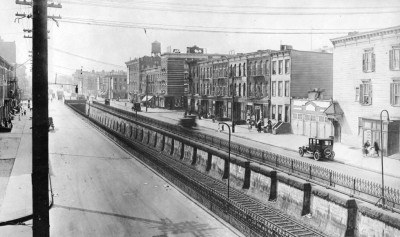
O! What a difference 90 years makes. The Long Island Rail Road (L.I.R.R.) “Cut,” which divided the eastward and westward sides of Atlantic Avenue, was a much more scenic feature back in the day. In this photograph taken looking eastward from Howard Avenue, a small family walks with a baby carriage at the lower right, and a woman, above them, looks out of the window. Shoppers along with residents of the houses fill the sidewalks, as they run errands, talk with one another, and take in the streets scenes, themselves. These scenes were representative of the entire stretch of the avenue of the time. As the automobile came into prominence, though, and repair shops and filling stations began congregating along the avenue, the people began to disappear, along with their residential buildings, the latter of which were really not that old at the time. Sadly, none of these buildings appear to be standing today. Notice the number of ornate Victorian-era wood-frame houses that were in existence then. Also, notice the cast-iron fencing that the L.I.R.R. used to keep pedestrians from falling – and drivers from plunging – down into the “cut.” Unfortunately, for a number of motorists driving in the direction of the tracks, this fencing was of little help. With the low height of the old cast iron fence that lined the “cut,” many night-time drivers had a difficult time realizing – as they perpendicularly approached the “cut” in the dark – that there was actually no path between […]
YOUR BROOKLYN BROWNSTONE – IN THE ’80s
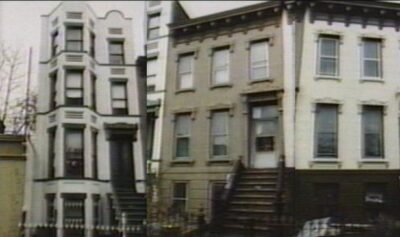
****************************************************************************************************************************** Brownstone Detectives investigates the history of our clients’ homes. The story you are about to read was composed from research conducted in the course of one of those investigations. Do you know the history of YOUR house? ****************************************************************************************************************************** Ever wonder what your home looked like in the 1980s? Do you know if that drive-way was recently installed at your house? Do you lie awake at nights wondering when your iron gate was stolen? All of these answers to the riddles and mysteries of your Brooklyn Brownstone may be just a few clicks away… TAX PHOTOS Sometime in the 1980s city government workers went around the city snapping photographs of every house, building, and lot to update or establish a baseline for the Department of Finance’s tax records. They were known then – and now – as “tax photos.” According to the department’s website, 262,624 images exist in their online gallery: “By the early 1980s, the Department of Finance determined that the 1939/40 photographs were too out-dated for property tax appraisal purposes. “From 1983 to 1988, using 35mm cameras, they photographed every property in the five boroughs, including vacant lots and tax-exempt buildings. They used color film stock producing over 800,000 photographs in both print and negative formats. “Taking advantage of then-new technology ca. 1989, they recorded each print as a single frame on Laser Video Disks (LVDs), using analog video capture. The Archives extracted low-resolution tiffs of each frame from the LVDs for viewing in the gallery. High-resolution scans […]
STRAIGHTENING A CROOKED CHURCH (1904)
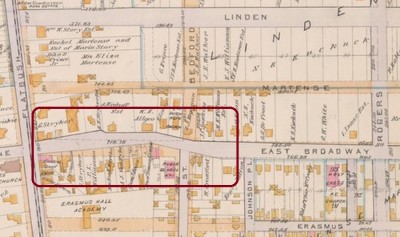
******************************************************************************************************************************* Brownstone Detectives investigates the history of our clients’ homes. The story you are about to read was composed from research conducted in the course of one of those investigations. Do you know the history of YOUR house? ******************************************************************************************************************************* “You can’t drive straight down a crooked road.” So goes the old saying which implies the difficulty of staying the course in precarious surroundings. And the saying proved to be of true portent in the center of Flatbush in 1904. BUT TO BEGIN AT THE BEGINNING… Before the Town of Flatbush was unceremoniously subsumed into the City of Brooklyn, it was still a rustic expanse of farmland, dirt roads, and farmers. When that great event happened in 1894, one of the challenges Brooklyn faced – which Brooklyn had taken on some 50 years earlier itself – was making the Flatbush roadways congruent with the rest of Brooklyn’s streets and avenues. This challenge would prove to be even more decidedly troublesome as the Department of Streets began to study the lay of the farmlines which made up the old town. Nearly all of them – in the 1600s – were set at an angle. CROOKED CHURCH One of the roadways which ran alongside several of these farms was Church Avenue. Church was named after the Flatbush Reformed Protestant Dutch Church, which sat at the corner of Church and Flatbush avenues. As Church Avenue (formerly East Broadway) passed Flatbush and moved in an easterly direction, the avenue, according to a current newspaper article, […]
UMBRELLA WEEK…ALREADY? (1920)
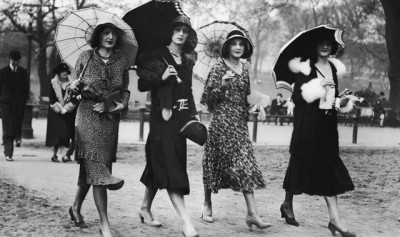
******************************************************************************************************************************** Brownstone Detectives investigates the history of our clients’ homes. The story you are about to read was composed from research conducted in the course of one of those investigations. Do you know the history of YOUR house? ******************************************************************************************************************************** If it was October of 1920, then you knew it was National Umbrella Week…right? Yaaaaaaaa……riiiiiiiiiiight…… At the very least, they were celebrating the occasion down at 114 Court Street. A product of the post-war marketing boom, “National Umbrella Week” was never celebrated again after 1920. But it was good while it lasted. Maybe it sold an extra umbrella or two. Who knows? THE BROOKLYN UMBRELLA COMPANY Today, we know 114 Court Street – that squat, 2-story, brick building in downtown Brooklyn – as a pizza joint. Back in 1919, though, it housed the Brooklyn Umbrella Company. The company sold umbrellas and they fixed umbrellas. This was back in a time when umbrellas were an investment in inclement weather – not throwaways cheaply mass-produced in China. Offering “linen gloria” and “union taffeta,” they sold “umbrellas that are a pleasure to carry.” Owned and operated by Isaac Smith Strong, The Brooklyn Umbrella Company started manufacturing umbrellas at this location around 1895. They finally closed up shop just a few years before the beginning of the depression, after which the location became a beauty shop and then later a restaurant. THE STRONG UMBRELLA Strong, himself, though, produced umbrellas well before 1895, but under his own name at 170 Fulton Street, and then later at […]
IS THIS THE SITE OF A MASS GRAVE? (1905)
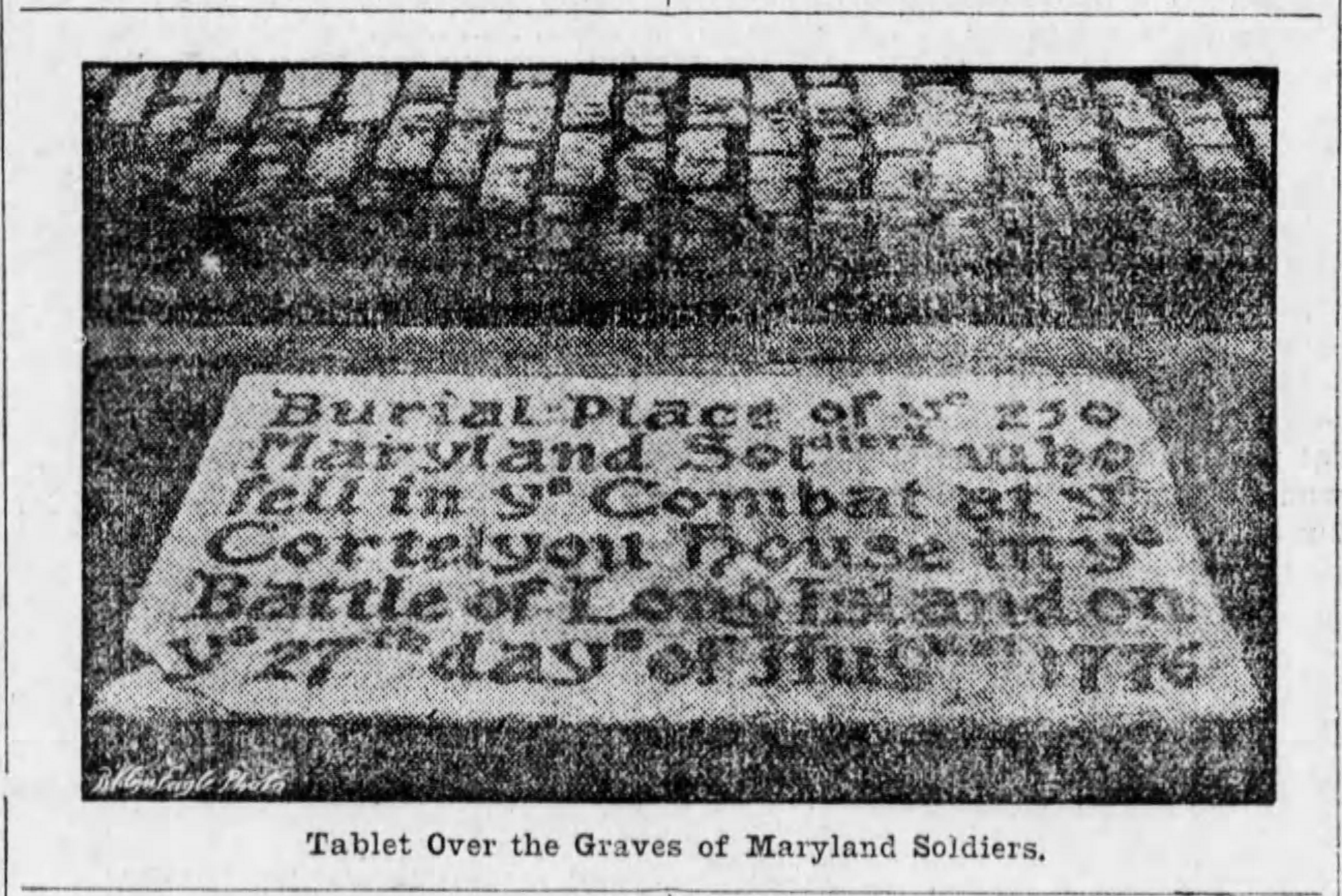
This year will mark the 241st anniversary of the day that, in 1776, our gallant soldiers of the 1st Maryland Regiment “fell in combat” in Gowanus, Brooklyn. Gen. George Washington was being routed by the British in the battle that might very well have ended our colonial bid for independence, were it not for these brave men, who held the British off while the rest of the American army could escape to fight another day. While Washington’s troops were spiriting away towards the East River, soon to escape in a fog so dense that the British did not know it was happening, the Maryland soldiers were dying and being captured at the hands of the representatives of our former enemy, the British Army. In the words of Walt Whitman, describing Washington as he watched the discomfiting scene through his telescope: Now of the old war-days . . the defeat at Brooklyn; Washington stands inside the lines . . he stands on the entrenched hills amid a crowd of officers, His face is cold and damp . . . . he cannot repress the weeping drops . . . . He lifts the glass perpetually to his eyes . . . . the color is blanched from his cheeks, He sees the slaughter of the southern braves confided to him by their parents. Ultimately,” according to the New York Times, “of the the original Maryland 400 muster, 96 returned, with only 35 fit for duty.” The mass grave, consisting of six […]


