TURNING No. 51 HICKS INTO A HOME (1948)
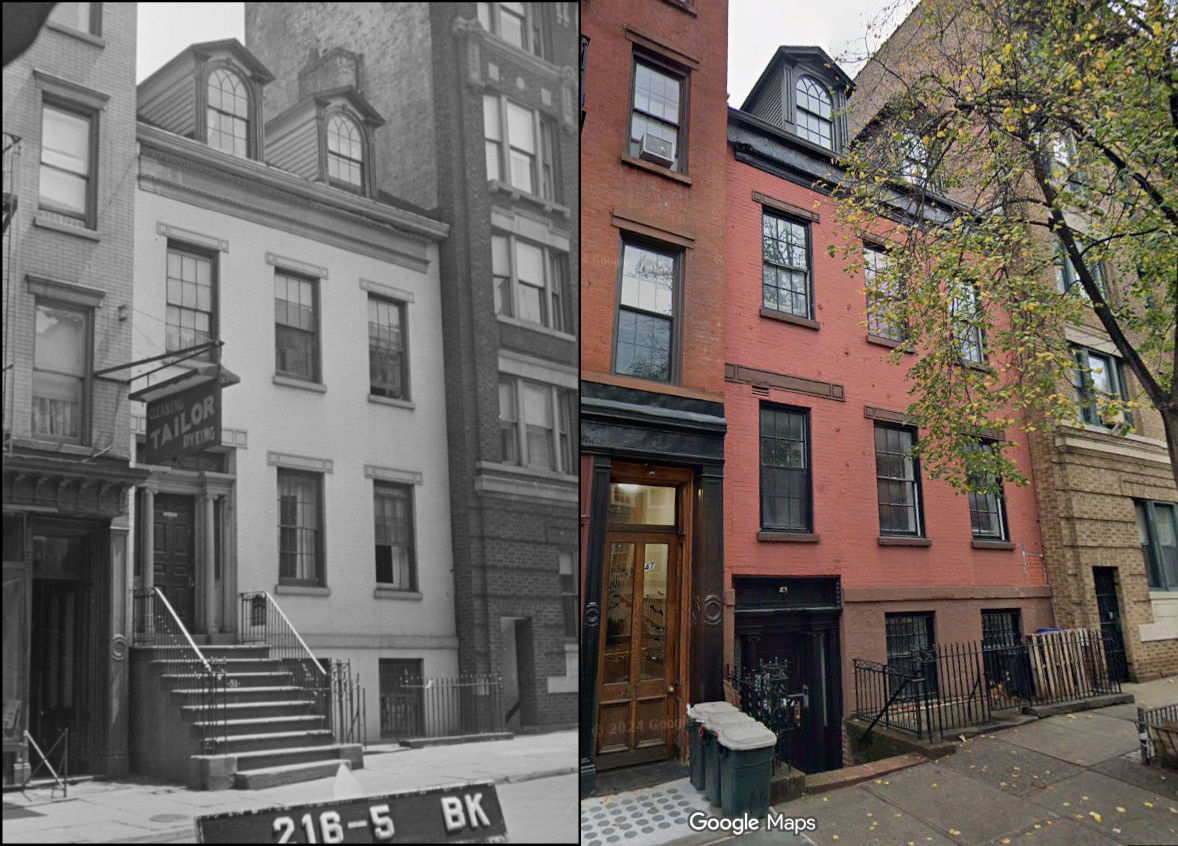
Brownstone Detectives investigates the history of our clients’ homes.
The story you are about to read was composed from research conducted in the course of one of those investigations.
Do you know the history of YOUR house?
********************************************************************************************************************************
(From the Brooklyn Daily Eagle, Mon., 22 November 1948.)
Ed.’s Note – The residents of Brooklyn Heights were the first in the borough to see old brownstones as treasures to be valued. In the 1930s and 1940s, as some were reparting to the suburbs, others were taking advantage of the availability of old brownstones at bargain basements prices. One such homebuyer was a dress designer and her husband who moved into No. 51 Hicks Street and modernized it.
Certainly in passing 51 Hicks St., the second and third floors of which are tenanted by Mr. and Mrs. William Brackett, no one would suspect the changes which this typical old-fashioned Heights brownstone has undergone to effect a modern interior.
Confronted with the usual problems of that type house, the Bracketts had to decide what to do about the exceptionally tall ceilings, the extra large rooms, the narrow hallways and the lack of a modern kitchen (it having been a three-floor private home with the kitchen located on the street level).
First credit goes to the landlord who in eliminating the typical high stoop stone entrance, recognized the simple and beautiful lines of the doorway and iron railing and saved it to be installed as the new entrance on the ground floor, What, was formerly the large vestibule on the second floor has been cleverly converted to a compact and efficient kitchen.
True, it took five coats of paint to perk up the somber colored living-dining room but it seems it was worth it. The color, a blue-green strong, in gray, was borrowed from the fabric of the draw-draperies at either end of the room. Mrs. Brackett, who professionally is Joan Norton Irwin, junior dress designer, chose a faille dress material for these window coverings. It took 90 yards to do the job properly. The ceiling was painted the same color, only two shades lighter, to minimize its height.
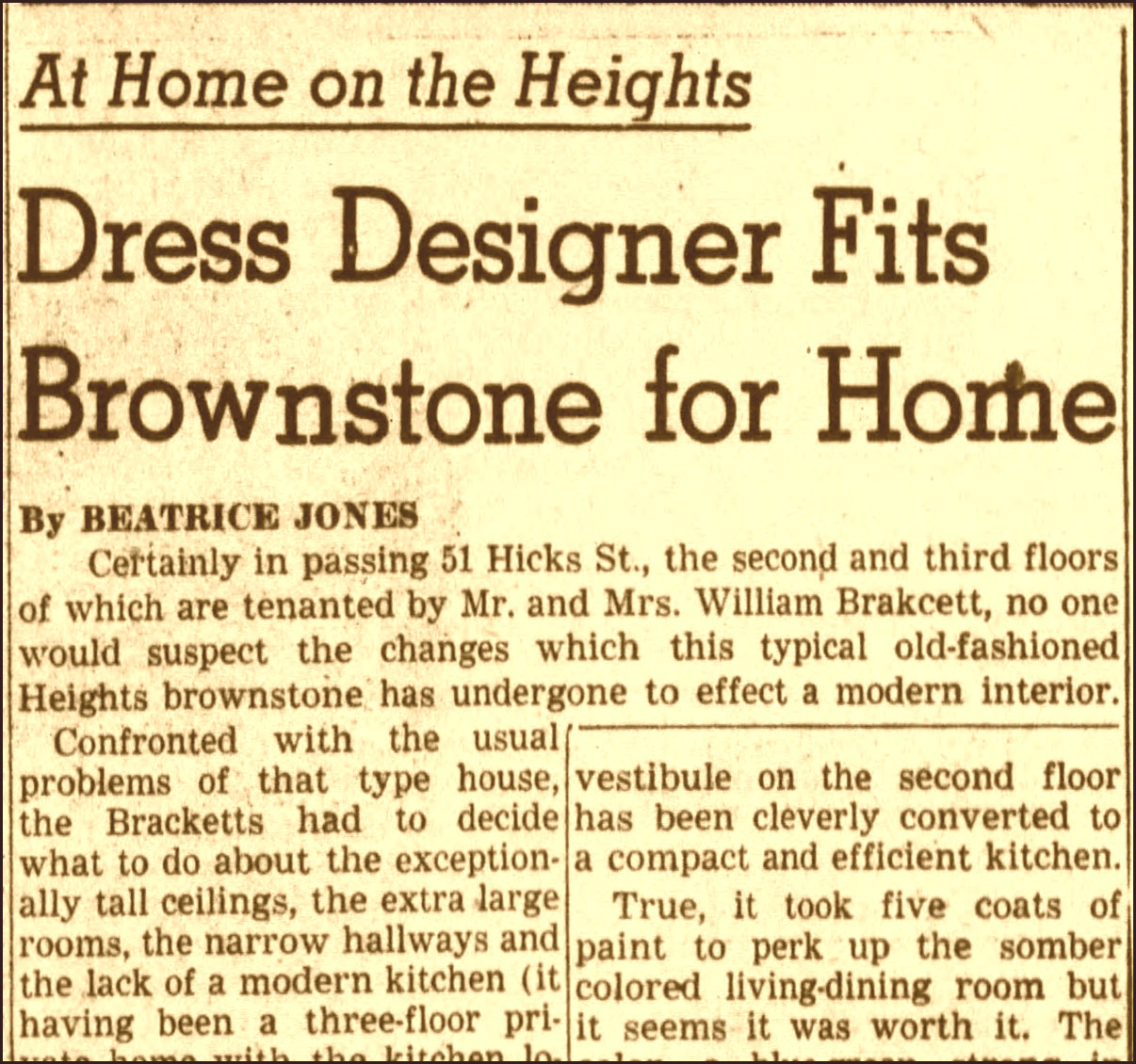
Evidently this 35 by 16-foot area had at one time been two rooms for there are two fullsize fireplaces. For any other family this would have entailed additional expense for double fireplace equipment. To Mr. and Mrs. Brackett it just meant that each could use the andirons, screens and candle sconces which they had had in their separate apartments before they were married.
Refinishing the wide floor boards was a project, one which was started by machine but which finally had to be finished by hand due to the spikes which were encountered as the scraping proceeded.
A four-fold screen, finished with colorful Chinese teabox lining paper, hides the entrance to the kitchen from the dining end of the room. At the other end, windows look out on the space planned for al fresco dining, lounge terrace and play section for William, Jr. The blank brick wall which separates the yard from the next door neighbor’s, is to have a scenic mural painted on it in the Spring. Then the dining level is to be equipped with durable wrought-iron furniture.
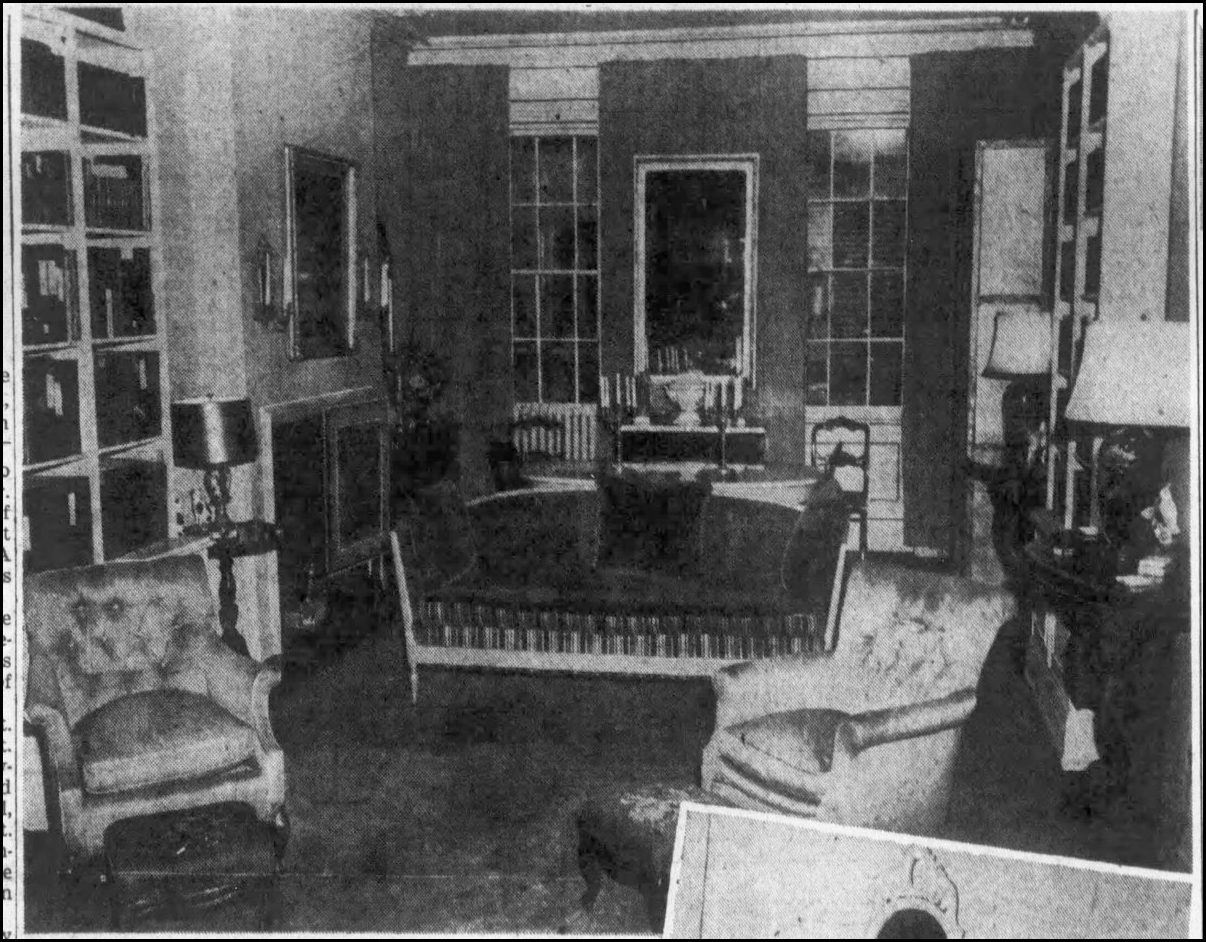
A narrow hallway leading to the two bedrooms and bath on the upper floor, is painted on the side areas and wallpapered at the ends to minimize its length. On the upper floor is William Jr.’s own domain. This is a large room, the lower half of which is painted navy blue— practically finger mark-proof— and the furniture in yellow. The rope molding, which marks the division between the upper and lower halves of the walls will also frame the large illustrated maps of other lands planned for the wall sections.
Between the Brackett’s room and Junior’s is the space formerly occupied by old-fashioned marble wash basins. Now this area has been practically replanned into sections to house hats and shoes. Another waste space at the end of the second floor hall has been artfully turned into a commodious linen closet with additional high shelves reserved for seldom used luggage.
Throughput the house the Bracketts’; have put old family furniture pieces to good and modern use, as for example, the marble-topped commodes which now serve as matching night tables, with one housing a bedside radio.
———————————————————————————————————————–
 Brownstone Detectives is an historic property research agency. Our mission is to document and save the histories of our clients’ homes. From our research, we produce our celebrated House History Books and House History Reports. Contact us today to begin discovering the history of your home.


